
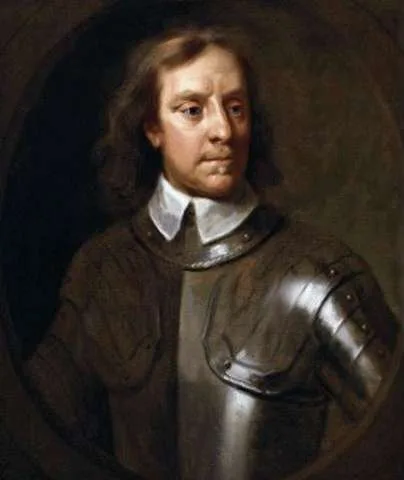
by Joy Horn
This is the story as it is given by Samuel Mann, one of the directors of David Mann & Sons, who died in 1938, in Cranley in ye Olden Days and Cranleigh Today (1930):
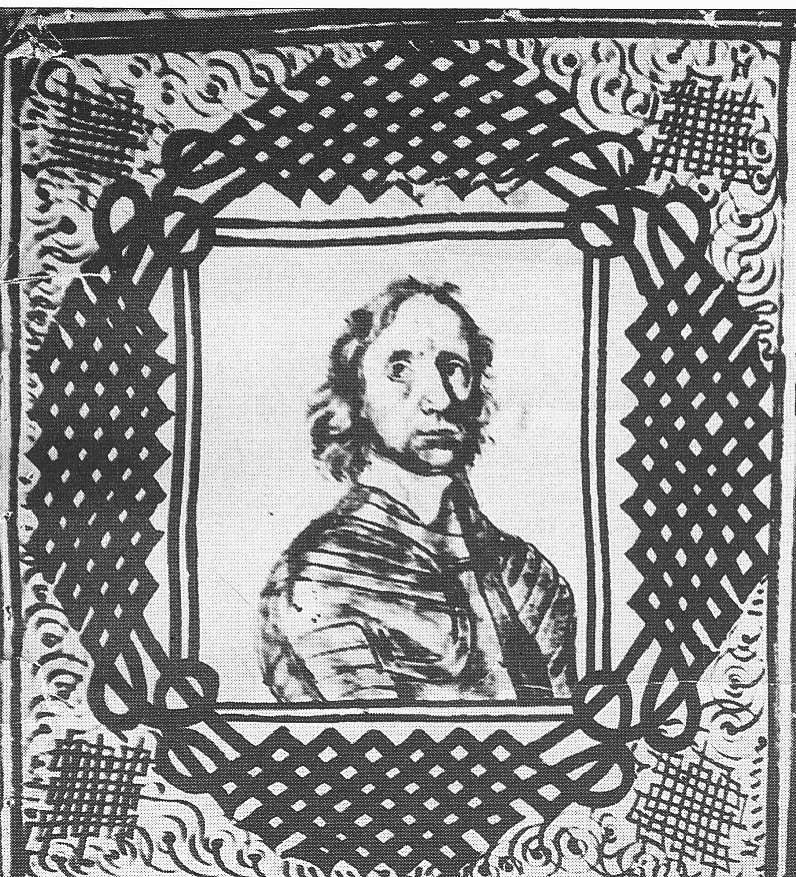
‘In 1657 Oliver Cromwell, the Lord Protector, with his staff, visited the village, and whilst he himself stayed at Knowle as the guest of Sir Richard Onslow, some of his staff were billeted at the house known as Oliver House, and the fine old fifteenth-century cottage adjoining known as Cromwell Cottage. … The outcome of the visit … was that the Lord Protector granted to Arthur Onslow of Knowle and to Michael Pike and the inhabitants of the parish of Cranley a Charter giving the right to hold two fairs yearly for ever, one being on September 6, “if it fall not out to be the Lord’s day, then on the next day after the Lord’s day,” and the other on Tuesday in Whitsun week. This Charter, which has a pen-and-ink portrait of Oliver Cromwell in the top left-hand corner, and is executed on parchment in beautiful old English penmanship, is in the possession of Sir Eric Bonham, Bart., of Knowle, Cranleigh.’
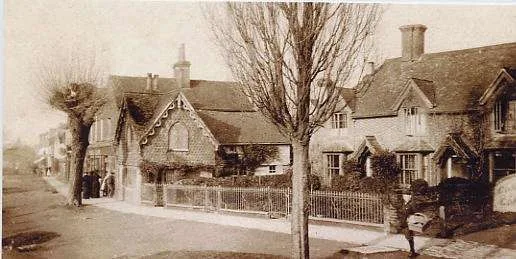
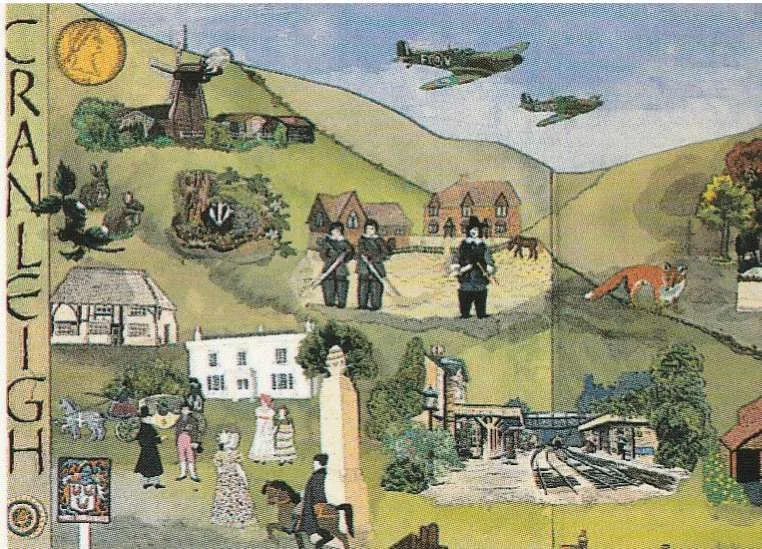
Samuel Mann’s account is followed by the Cranleigh Guide 1963 and the Waverley District Official Guide (1974). Another booklet declares that Oliver Cromwell ‘found the village both receptive and hospitable. In gratitude for his friendly reception here he awarded the village its charter’ (M.J. Carter, Fabric of Time: the Story of the Cranleigh Millennial Wallhanging (2000)).
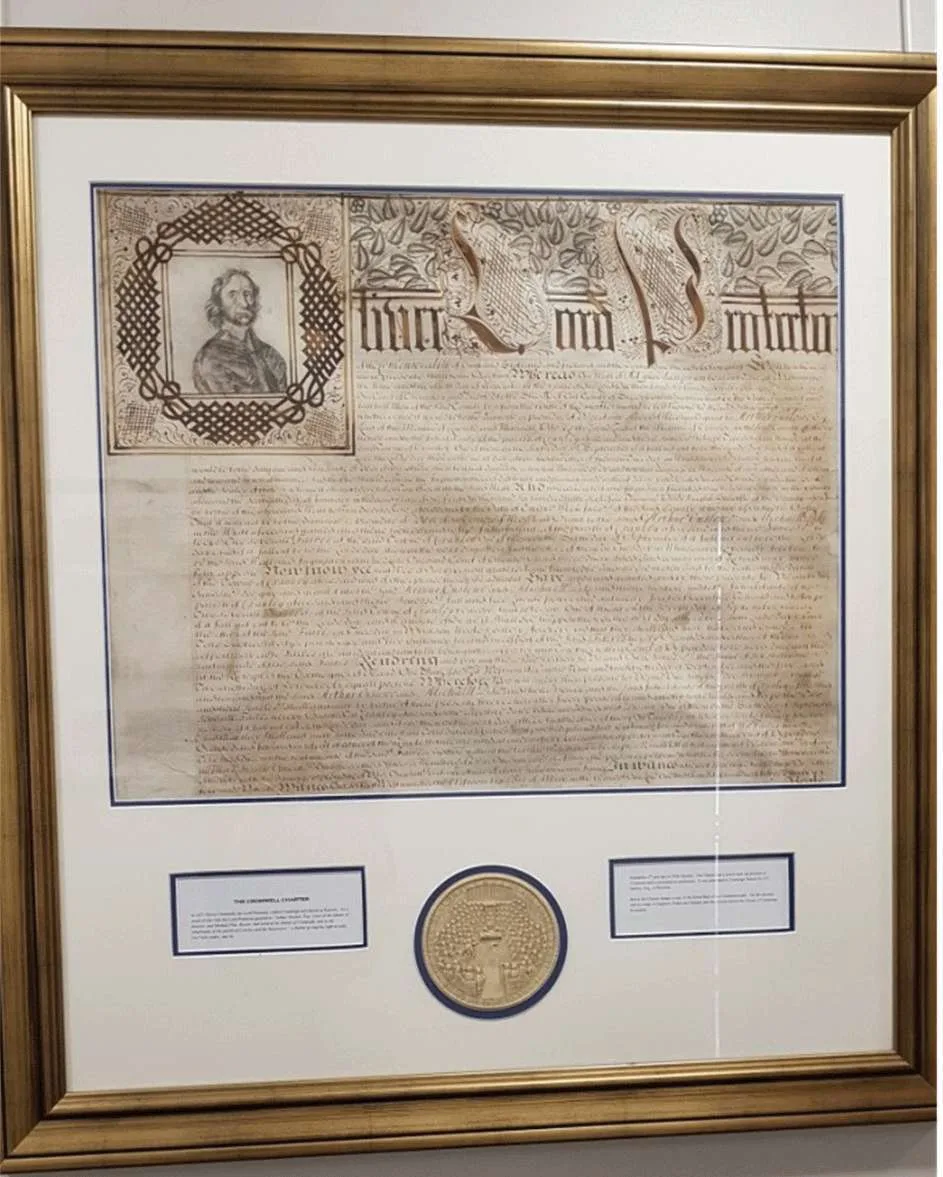
And here is the grant, (pictured below) hanging in a corridor at Cranleigh School. It was kept at Knowle for three centuries, until Gordon Harvey, owner of Knowle 1960-70, passed it to Cranleigh School for safekeeping.
I’m sure you have heard this story. As a result, we have Oliver House and Cromwell Cottage and Cromwell Place. What can possibly be wrong with it?
In the first place, Sir Richard Onslow, M.P., was not a friend of Cromwell, although they were both on the side of parliament in the Civil War. Onslow promised to send a detachment of men in 1651 to Worcester, where a battle was fought against Prince Charles, the future King Charles II. They duly turned up – a day too late, after the battle was over and won. As a result, Cromwell declared that he ‘should be even one time or another with that fox of Surrey’.
No visit to Cranleigh by Oliver Cromwell is mentioned in biographies by John Drinkwater, John Buchan or Christopher Hill. Another historian, Peter Gaunt, has produced a book called The Cromwellian Gazetteer, tracing all the places visited by Cromwell, and he says of Cranleigh, ‘Despite a strong tradition that Cromwell once stayed here, there is no surviving evidence to show that he ever visited Knowle’ (P. Gaunt, The Cromwellian Gazetteer, p. 156).
Moreover, Sir Richard Onslow was no longer living at Knowle in 1657. Knowle at Cranleigh was inconveniently placed for the Houses of Parliament at Westminster, so he had moved to Clandon – not the magnificent house built around 1730, but its modest predecessor – leaving his son Arthur Onslow in charge at Knowle.
We can learn the sequence of events in the grant itself. It is not in Latin, so is perfectly possible to read, once you have got adjusted to seventeenth-century writing. You can probably make out the heading, in large letters and fancy capitals, ‘Oliver, Lord Protector …’. The people of Cranleigh apparently sent a petition to Cromwell for the valuable right to hold two fairs each year, and Cromwell followed the normal procedure. He commissioned an inquiry by the high sheriff of Surrey, Col. Thomas Pride, to discover whether such fairs would cause any ‘damage or prejudice’. And when the inquiry, held at Shere, was favourable, the grant of two fairs was made (correctly) to Arthur Onslow, the rector Michael Pyke, and the inhabitants of the ‘towne’ of Cranleigh, and issued in the normal way, at Westminster, on May 15th 1657.
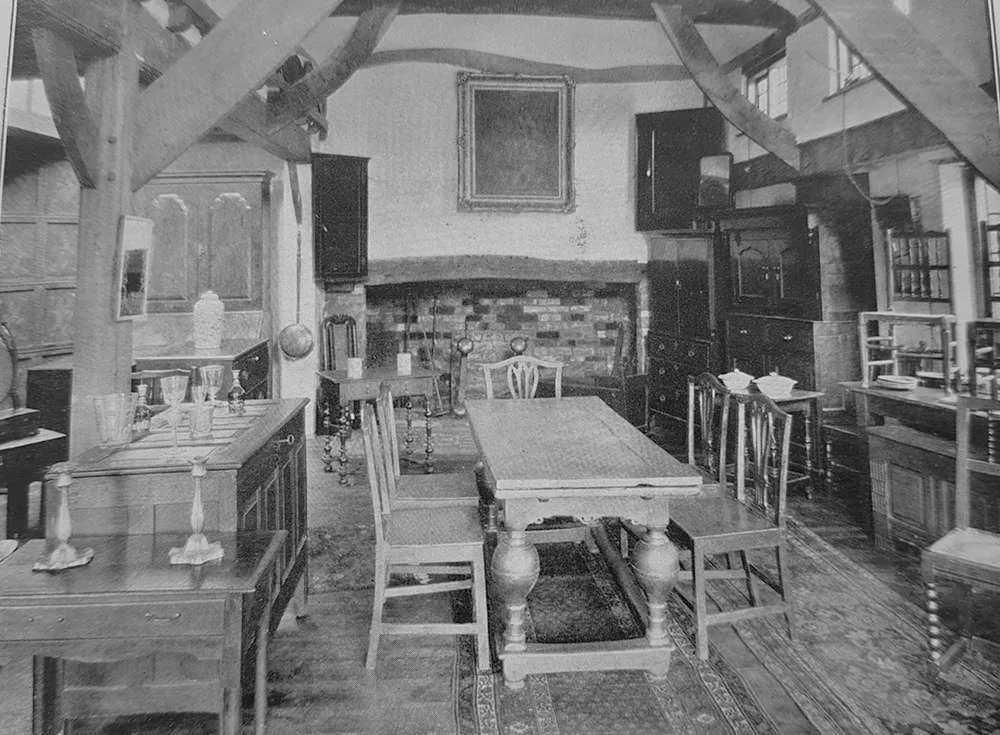
The names ‘Oliver House’ and ‘Cromwell Cottage’ do not go back far in history. Oliver House has this name in the 1881 Census, but no earlier, although the house is 17th century. Ebenezer Holden was the owner in 1881, and his father, George Holden, founder of the big timber works and pastor of the Baptist chapel, had been there since at least 1841. House-names were gradually coming into vogue in the late 19th century, as the number of houses increased. ‘Cromwell Cottage’ does not seem to occur until the 1920s, not long before it was incorporated into the shop of David Mann & Sons.
So, knowing that Oliver Cromwell had made this grant to Cranleigh, was Ebenezer Holden (or even George) responsible for starting the story that Cromwell visited here and his men stayed at the house later called Oliver House, which the Holdens happened to live in? It’s a guess only, though Cromwell may well have been a hero of theirs.
Apologies to everyone who likes the old story, but remember that Cromwell did grant Cranleigh its valuable right to hold these fairs, even if he didn’t stay here. So it is appropriate that Cromwell Place should be named after him.
The Cranleigh History Society, which celebrates its 25th anniversary this term, meets on the second Thursday of each month at 8pm in the Band Room. The next meeting is on Thursday October 9th, when Trevor Brook will speak on ‘Albury Park Mansion’.