
by Joy Horn
This month we celebrate the 10th anniversary of the Cranleigh Magazine! And, because the Joy of Cranleigh has featured from the very beginning, this is article number 120. Why, ten years ago, Paul Higgins should have asked me to contribute an article to the new magazine is a mystery, but each article has been a pleasure to work on, with the extra enjoyment of the contact with Cranleigh people that it has brought.
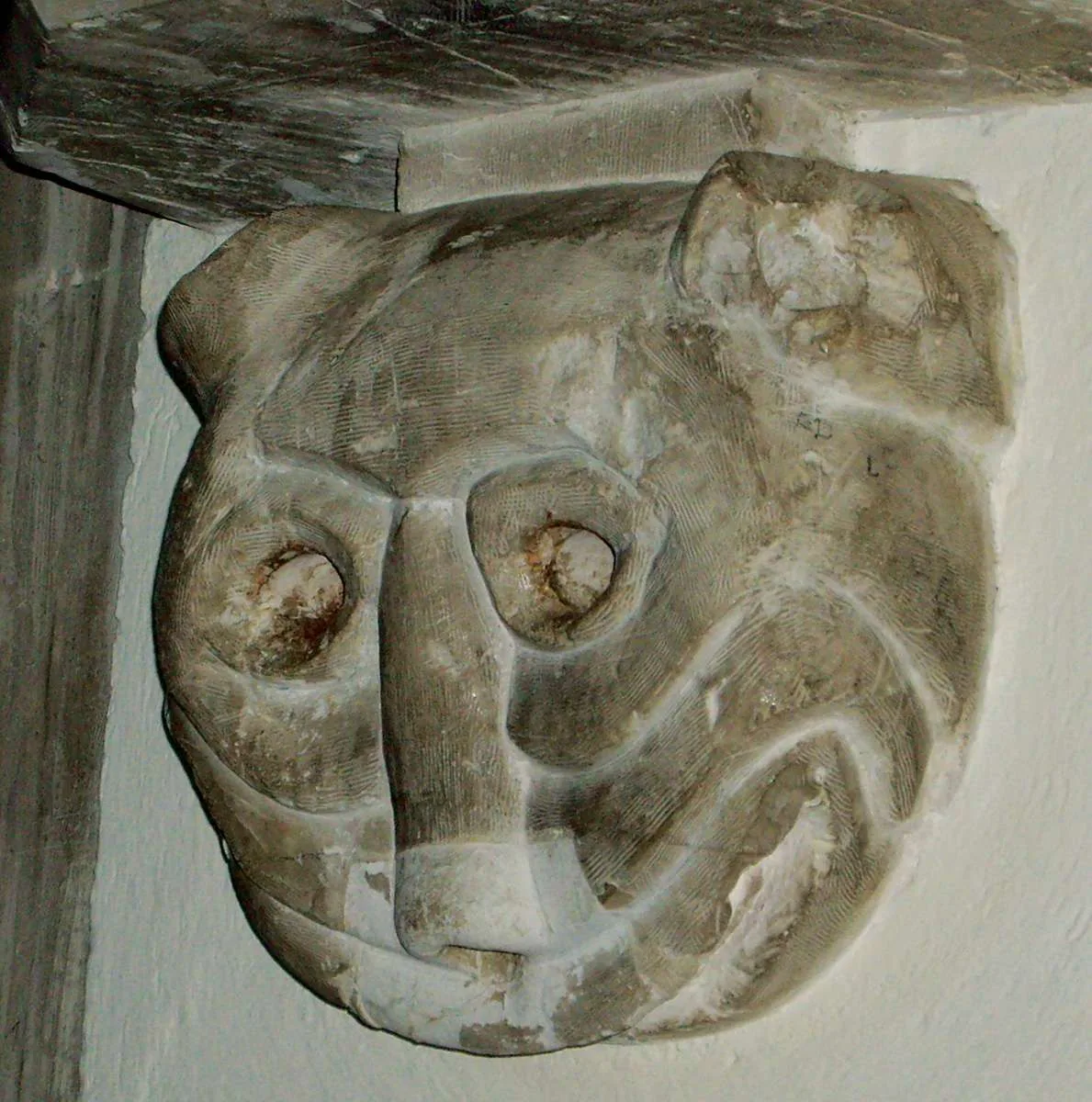
And Cranleigh still inspires plenty of interesting topics! Another Cranleigh story that deserves investigation is whether Charles Dodgson (Lewis Carroll) based the Cheshire Cat of Alice’s Adventures in Wonderland on the carved cat head in Cranleigh church. If true, this would be a significant contribution by Cranleigh to English Literature!
The head is in the North (left-hand) aisle, on the right-hand side as you go through into the transept. Some medieval stonemason was having a bit of fun.
And here is the Cheshire Cat, drawn by John Tenniel, Lewis Carroll’s illustrator.
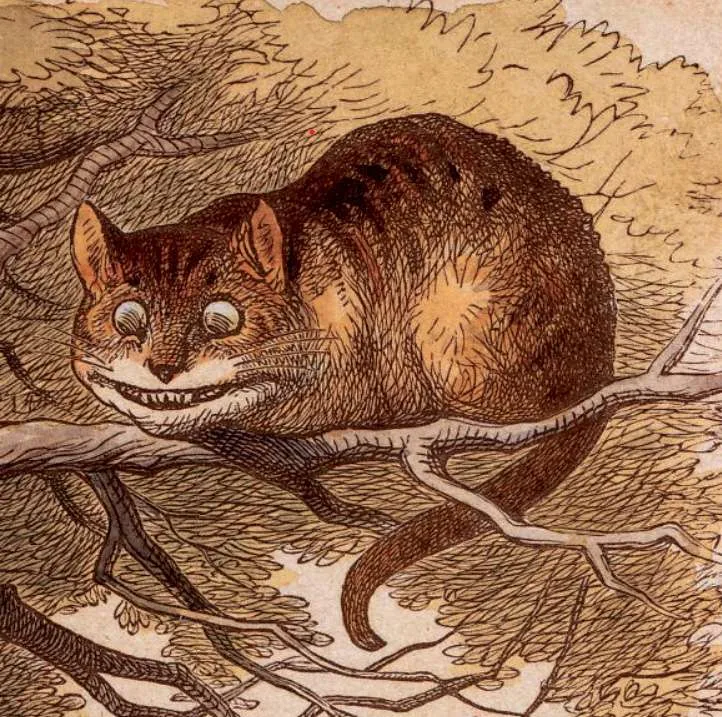
The Cranleigh Guide (1963) says ‘It seems likely that Lewis Carroll (The Rev. Charles Dodgson) who lived in Guildford, got the suggestion for his Cheshire cat from this carving.’ By 1981 the Cranleigh Guide (p. 20) has become more confident and adds an anecdote. ‘It is said that Lewis Carroll … was once asked: ‘What was the Cheshire Cat really like?’ The Author of “Alice” replied: ‘Go to Cranleigh Church and have a look at the stone carving in the north transept.’
The Rector at that time, Jack Roundhill, seems to have been more sceptical and the next year he posted a query about the cat in the Parish Magazine 1982:
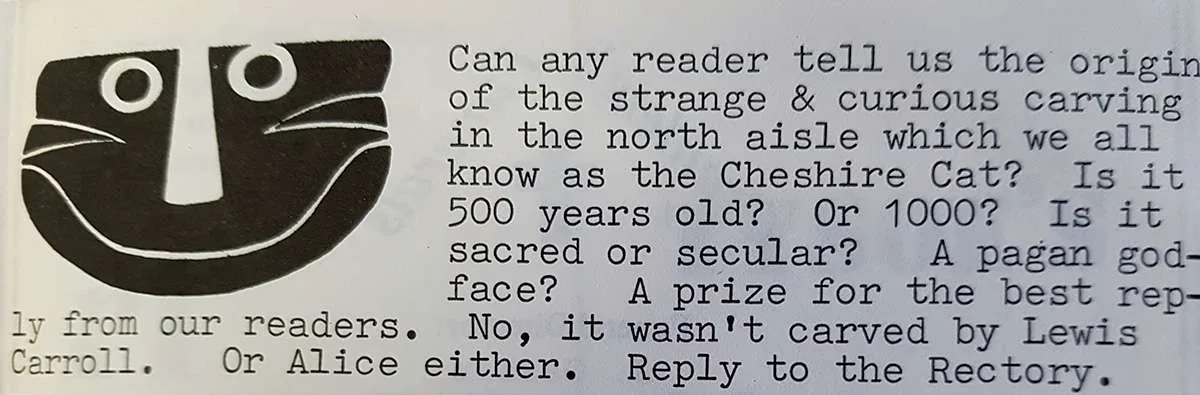
I’ve been working through the Parish Magazine, but haven’t found any response to this.
However, here is the sequence of events. Charles Lutwidge Dodgson was a Mathematics don at the Oxford college of Christ Church. It was a requirement of the time that all dons had to be ordained, so he was the Revd. Charles Dodgson. It was on a summer afternoon in 1862 that he and a fellow academic took the three little daughters of the Dean of Christ Church (one of them called Alice) for a boat ride on the river Isis, during which he invented the story of Alice to entertain them. The real-life Alice subsequently badgered him to have it published as a book and eventually Alice’s Adventures in Wonderland was published in 1865 – remember this date. Dodgson used a pen name for it, so that it would not be confused with his mathematical books. He called himself Lewis Carroll (‘Carroll’ from the Latin ‘Carolus’ for ‘Charles’, and ‘Lewis’ replaced the ‘Lutwidge’, a family name). The illustrator was the famous Punch cartoonist John Tenniel.
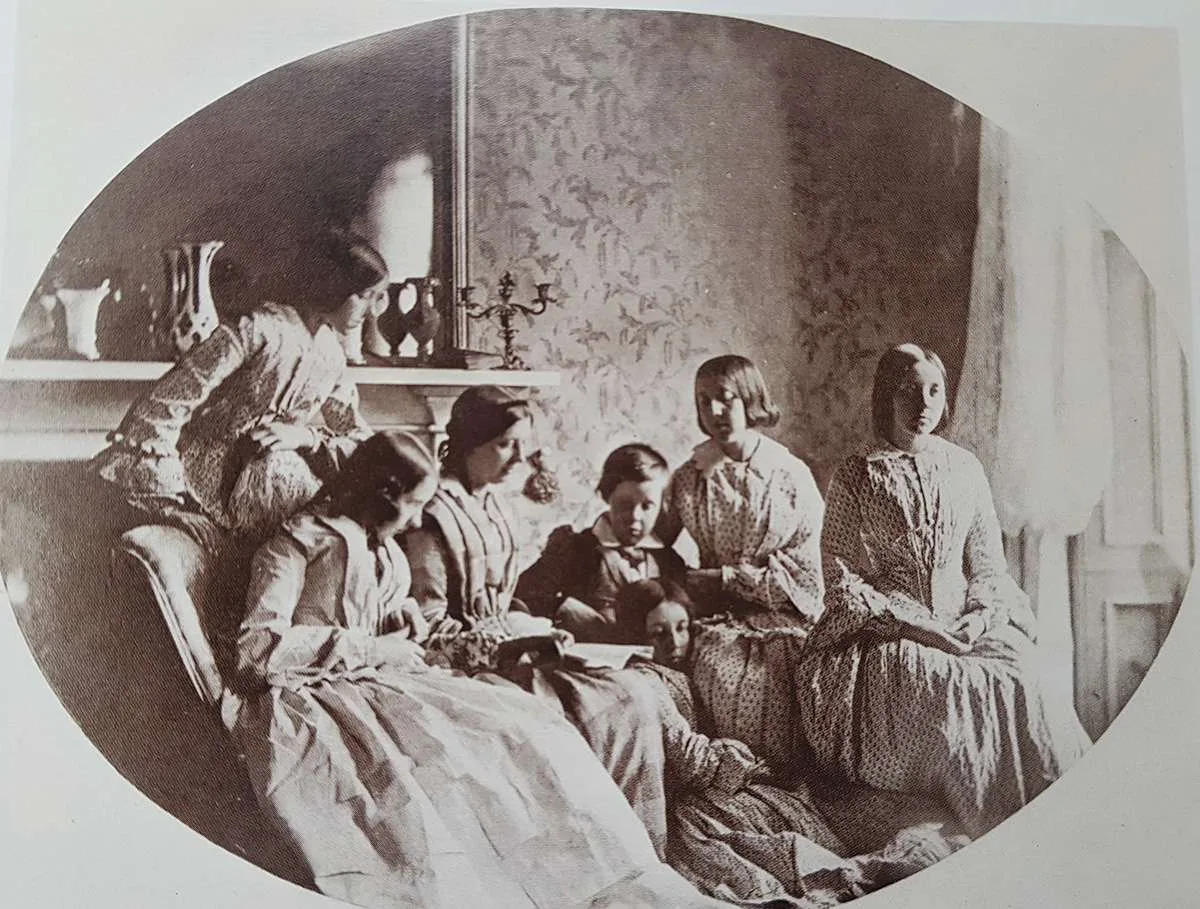
At the time of the book’s publication, Dodgson lived during University terms at Oxford, and during the vacations at Croft in North Yorkshire (now called Croft-on-Tees), where his father was rector. Charles was the eldest of eleven children. The picture taken by Charles in 1857 shows six of his sisters and their youngest brother, Edwin.
When his father died in 1868, Charles took his responsibility towards his siblings very seriously. He went house-hunting in Guildford and bought a house there called The Chestnuts for his six unmarried sisters. They moved in on September 1st 1868. Dodgson used to stay with his sisters in Guildford during the vacations. Please note that this was three years after Alice was published in 1865. He is unlikely to have had any reason to visit Cranleigh before then.
What about his illustrator, John Tenniel? Though I can’t say I have ever heard any suggestion that he might have visited Cranleigh and spotted the church cat. Tenniel was the chief cartoonist for the satirical magazine Punch from 1850, responsible for the principal political cartoon each week. In all, he drew 2,165 cartoons for Punch, some of them very famous, but he is probably remembered more for his 92 illustrations in the two Alice books (1865, 1870). His illustrations there are a mixture of the realistic and the grotesque. I found them disturbing as a child, and not surprisingly modern editions of Alice have much brighter and more child-friendly pictures.
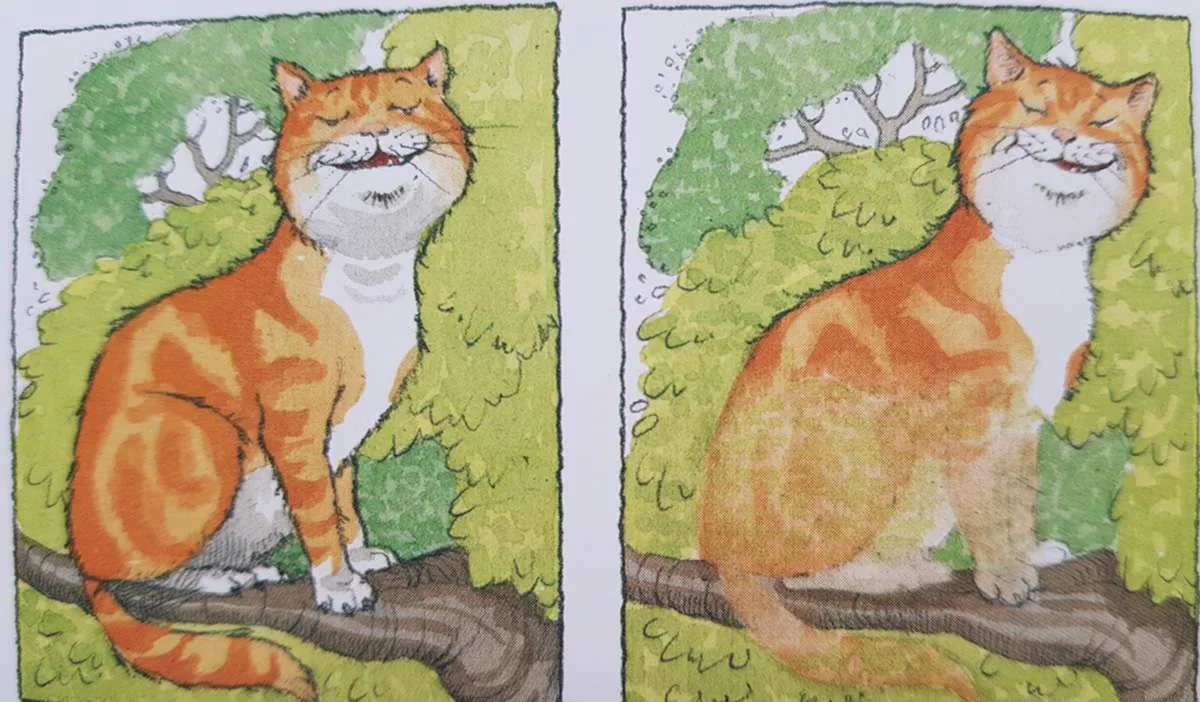
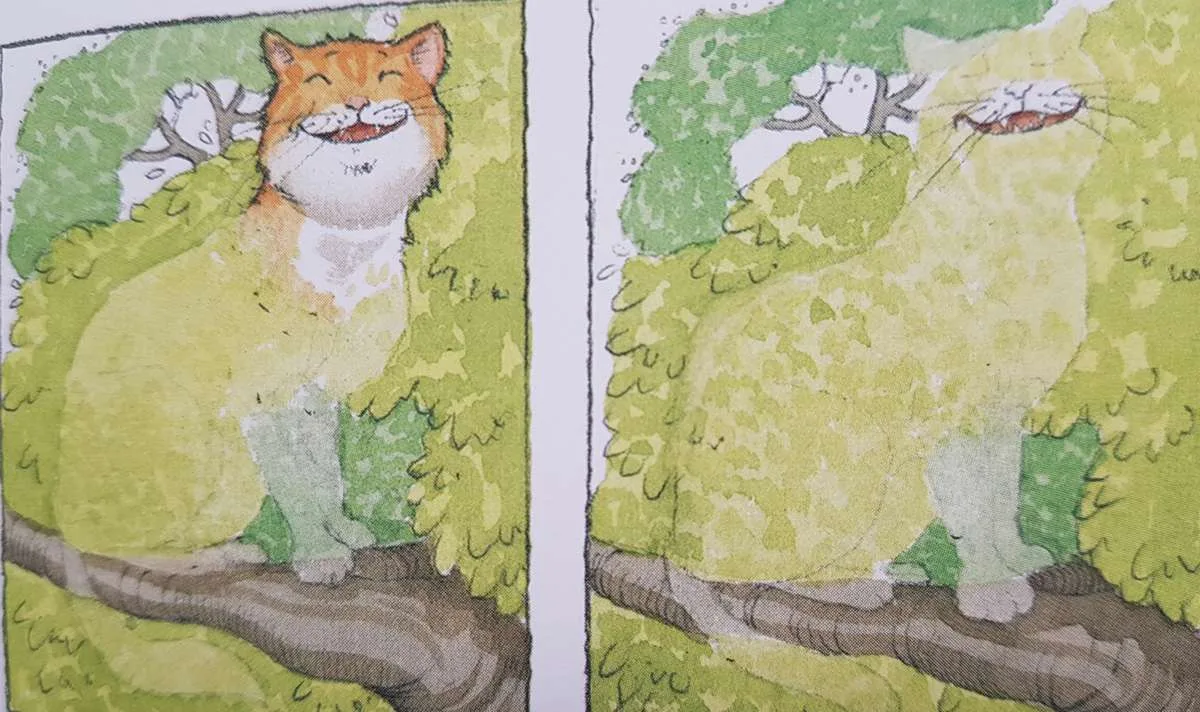
Tenniel was knighted by Queen Victoria in 1893 – the first illustrator or cartoonist to be honoured in this way.
In fact, the expression ‘to grin like a Cheshire cat’ was not made up by Lewis Carroll. It is found in print in the 18th and 19th centuries, and I have found it in a novel on my own shelves by W.M. Thackeray, The Newcomes (1855), ii. 44 : ‘What are you grinning at, you old Cheshire cat?’
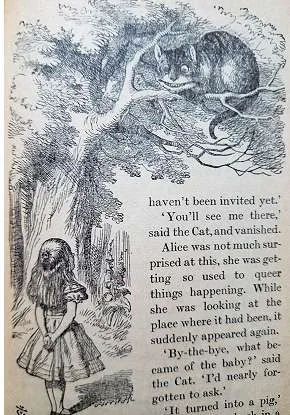
Apparently, grinning like a Cheshire cat was a current expression. Cheshire cats grin. Just as, today, Essex girls are dim. Nobody knows for sure how it arose. People in Cheshire like to think that, because of all the dairy farms in that county, Cheshire cats grin because of the abundance of milk and cream. Lewis Carroll took this expression and gave the Cheshire Cat a personality, in particular his habit of disappearing unexpectedly and gradually, leaving his grin to disappear last. Lewis Carroll himself had been born in Cheshire, when his father was vicar of All Saints, Daresbury, near Warrington, from 1827 to 1843. There is apparently a delightful stained glass window to Lewis Carroll in the church. (Sadly Wikipedia did not provide a picture: would anyone going to Cheshire in the near future like to look for Daresbury church and search for the Lewis Carroll window in it and take a photo of it? Just a thought!)
I was amused to find the Wikipedia entry on Croft-on-Tees asserting that ‘Historians believe Lewis Carroll’s Cheshire Cat was inspired by a carving in Croft church’! (Anyone going to Croft-on-Tees in North Yorkshire like to search for this carving of a cat? Or is Wikipedia confusing Croft with Cranleigh?)
The carving in our parish church is a delightful cat for us all to enjoy and show to visitors, but I don’t think we need to associate it with Lewis Carroll. I’m sorry!
The Cranleigh History Society meets on the second Thursday of each month at 8pm in the Band Room. The next meeting is on Thursday November 13th, when Neil Harding will speak on ‘From valves to virtual reality: a history of electronics’.