
Memorable encounters with birds are personal affairs. For one person it might be their first Nightingale singing. For another it could be witnessing a murmuration of Starlings. Or finding a rarity.
But people often tell me they regret not seeing many birds these days so, as Cranleigh Magazine celebrates a decade of publications, I have selected 10 top local avian spectacles that are fairly easily witnessed, subject of course to your health and mobility.
1 Flight of the geese
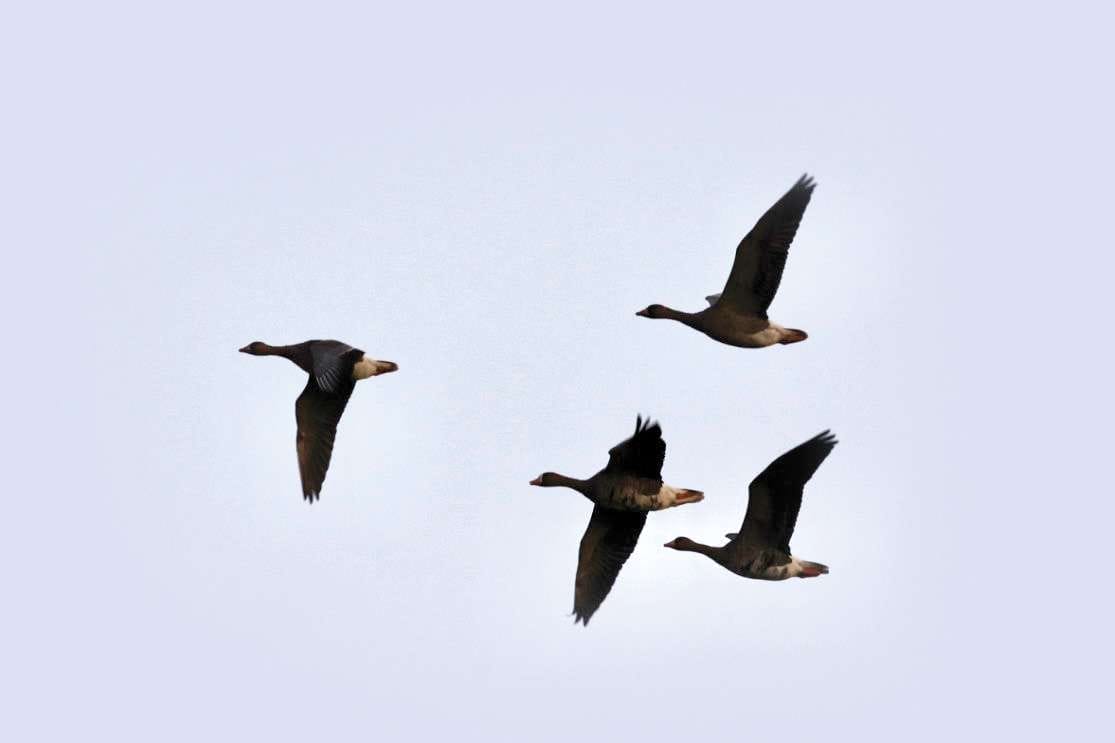
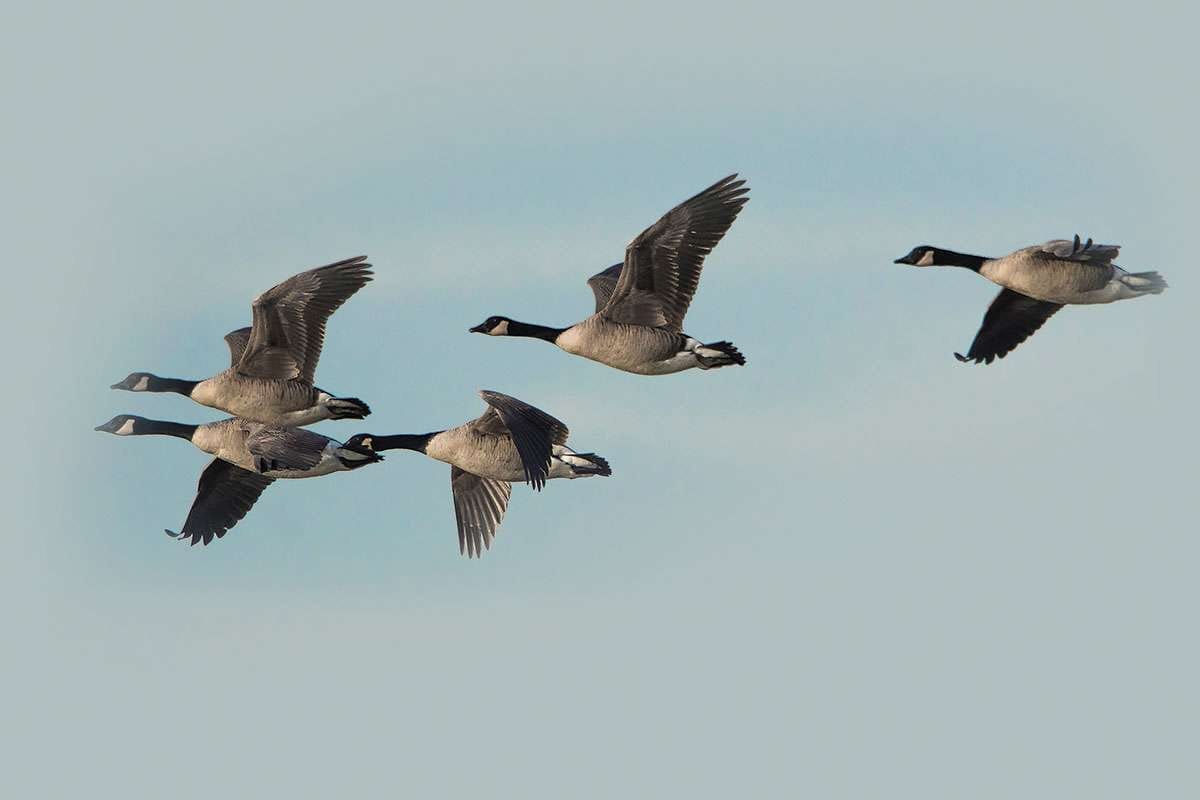
Goose numbers have taken off this century and it is hard to miss the daily flypast of hundreds of Greylag and Canada Geese honking overhead in V shapes from autumn into winter. No binoculars are necessary.
Their noisy nightly parades heading south-east are often regarded as evidence of migration but they are only going to roost nearby. If you are up early enough just after dawn, or even when it is still dark, you will notice they return north-west.

2 Redwings’ night flight
On clear frosty nights listen for the high pitched ‘tsee’ call of these migrating Scandinavian thrushes as they head south.
They can arrive in spectacular numbers. Four years ago my chums Wes, Mark and I counted a Surrey record of 34,723 in under four hours from Leith Hill early one morning. Okay, we may have missed a few.
You will hopefully see some Redwings in your gardens this winter once they demolish this year’s hefty berry crop.
3 Jackdaws clattering
Trains are long gone here but if you are in the St Nicolas and The Three Horseshoes vicinity outside the breeding season then you cannot fail to miss the nightly ‘train’ or ‘clattering’ of Jackdaws. Hundreds create aerial havoc.
Warning: they are aided and abetted by reinforcements such as Rooks and Crows, so if Alfred Hitchcock’s horror film The Birds still gives you nightmares then stay away.

4 Buzzards buzzing
The Common Buzzard was certainly not common in Surrey after extinction in the county by 1875 (sic). But after years of persecution and pesticides they bounced back and the only breeding pair in the county at the time reportedly raised young in Cranleigh as recently as 1996.
Numbers then dramatically increased and Buzzards are easily seen throughout the village. Watch out in early spring for pairs and rivals jousting, tumbling and mewing. They often swoop down vertically for hundreds of feet before rising again effortlessly in a switchback display. Magic.

5 Swallow spectacular
They say one Swallow does not make a summer but it lifts the heart to spot the earliest arrival after a flight all the way from South Africa. Global warming and other factors mean these birds are seen increasingly earlier in the year and there have been a number of March records here.
Be sure to check out our stubble and weedy fields in September. This year I saw thousands of them, including a supporting cast of House Martins and Sand Martins, enjoying a feeding frenzy in the Alfold Road and Smithwood Common areas. They flew in all directions, some high and others only inches from my head. An amazing show.
6 Finding the first Cuckoo
This has got to be ‘up there’ among the birding year highlights. There is something comforting and exciting about hearing the first, usually in the Surrey Hills, from around April’s second week.
Bluebells are out, butterflies are on the wing, and the haunting, far carrying call of the returning Cuckoo evokes happy childhood memories for many.
And it sparks speech between passing walkers who normally don’t bother. ‘Did you hear the Cuckoo?’ Sadly, fewer and fewer people do.

7 Swift action
Swifts are in decline but a few dozen screaming ‘scythes in the skies’ return to breed from late April. These aerial acrobats fascinate me for hours as they chase, mate and race at up to 69 miles an hour over Cranleigh’s older houses.
Developers and new home residents: please incorporate a ‘swift brick’ in these dwellings to get in on the action – and help save the species.
8 Nightjar manoeuvres
Early May on one of our Surrey heaths could provide an unforgettable experience with these incredibly buoyant birds. They sing like an electric motor pump and seem to be calling one another ‘Rick’ as they hunt moths.
There is no need to walk off the sandy paths and risk trampling nests. Stay still and you may attract them to come and investigate. I’ve had them hovering and flying around my head at dusk in incredible performances lasting up to a quarter of an hour. One of the best British birding experiences!
9 Get chuffed with the Chiffs
Every late summer and early autumn there are many hundreds of slim little brown and yellowish jewels in the countryside bracken and garden bushes.
They are often unnoticed and too fast to see easily because they feed on insects non-stop to fatten up for onward journeys. But their ‘herweet’ calls give them away.
These Chiffchaffs are our first arriving summer migrant and usually the last African visitor we see each year. But some increasingly overwinter to help us reflect that warmer times are nearer than we thought.
10 Tawny tango in the night
Nothing sets off the local dogs more than a Tawny Owl calling. We have good numbers in Cranleigh.
If you hear a ‘kerwick’ then it is the female and the male answers with a ‘who-who.’ They are especially noisy now in the run up to early egg laying in February. Get in the garden under a full moon for a treat and to extend your birding day.