
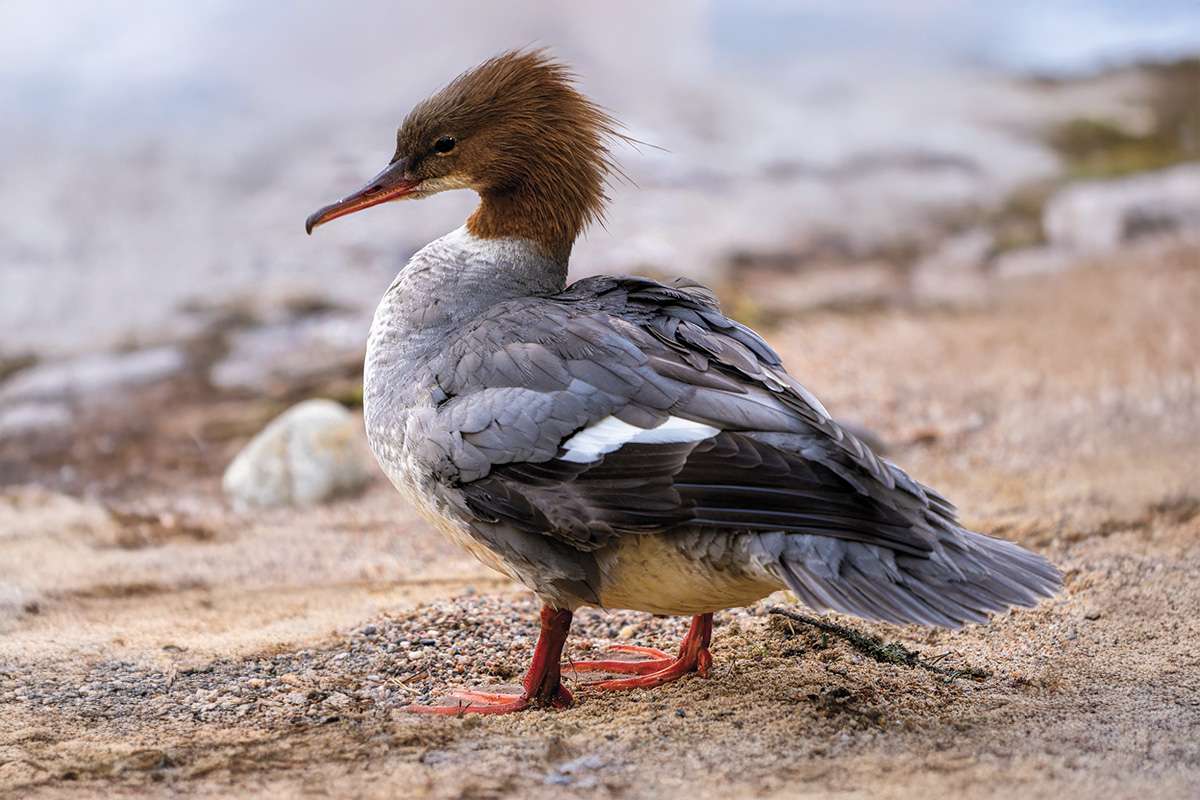
Main Photo: A female Goosander
I’ve done it! Regular readers of my Cranleigh Magazine column may recall how my 2023 attempt to spot as many as 120 different species of wild birds in the year around the village was narrowly missed.
True, I beat my previous record of 118 by one. But 119 was frustratingly just short of my ambitious target.
Well, not to be dissuaded from trying once more, I set out in 2025 to hit the magic number.
And I’m pleased to report that, after countless miles tramping along our footpaths around the fields and up in the hills, I finally hit the jackpot. All those early mornings and forays at dusk proved worth it, both at the time and overall.
It was a bit touch and go but bird number 120 ‘fell’ in early December. There were two of them. Female Goosanders flying in for a winter visit. Phew. As the last days of the year sped by, I had been worried I’d lose out.

Of course, nobody else was pitted against me in this race and I doubt anybody would be greatly interested, or you might say mad enough, to try and do likewise.
The satisfaction in achieving personal goals is accomplishing what you set out to do, be it conquering a mountain, passing an exam, or completing marathon.
I thought it might all be over at 120 but one nice surprise was to come. I finally caught up with a Water Rail just before Christmas as it squeaked briefly by its stream. I nearly squealed back in delight.121!
Further bird possibilities on my ‘hit list’ failed to materialise in the freezing weather and dark winter days.

My experiences through the year demonstrate the huge diversity of wild birds attracted to our area and they raise issues about our personal and community responsibilities to ensure nature’s precious gifts are protected and preserved for us and future generations. Many once common Cranleigh species are already locally extinct.
Rather than provide a long list of what I saw I will give you a taste of the highlights. No year is the same and some key variables, especially the weather, affect how many birds can be found.
While my 2023 effort proved to be the year of the wader, with 10 species observed, 2025 turned out to be the year of the duck.

I found 10 types. Topping the list was the American Ring-necked Duck I wrote about last April. Other unusual and beautiful versions included a brief visit from a flock of Wigeon, two lusty male Gadwall trying to court a single female, a group of Pochard and a Shoveler.
The year got off to a good start and by the end of January I was on 80 after a friend kindly put out exciting news of a ‘first’ for Knowle Park’s new lake. The juvenile Great Crested Grebe, disorientated in the mist, descended to rest for under two hours before flying away.
Attempts from the hill at Knowle to spy a reported White-tailed Eagle in Dunsfold proved unsuccessful but it was a special year for sightings of the wonderful Barn Owl. I recorded singletons at seven different places. Well done to you landowners who are putting up nesting/roosting boxes. Sadly though, unfavourable weather severely affected this owl’s breeding success in many areas.
One wader I did manage to find was a new arrival from Africa on 16 March. I thought this pair of Little Ringed Plovers would soon be on their way but am pleased to report they ended up staying until at least June and bred successfully. As far as I know this is unprecedented in Cranleigh.

Lapwings bred locally until fairly recently but their numbers have dropped nationwide. I was relieved to find five, followed by two pairs on different fields. My hopes were raised when both attempted to breed but their nesting attempt was aborted, probably due to disturbance from horses and foxes.
I observed new birds each month including a number of highlights such as Brambling, Hawfinch, Firecrest, a Nightingale singing its heart out on the early date of 7 April, Wheatear, a brief Tree Pipit, Common Tern and then my 100th species, a Cuckoo on 21 April.
News of Common Sandpipers (scarce here) arriving in Surrey sent me back to Knowle Park Lake in early May and my luck was in as one flew out from the rocks below the observation point.
Increasingly hard-to-find Spotted Flycatchers put on an unexpected show this year and I was delighted to discover them at four different woodland sites. Migrating Whinchats also put in a good show in the Autumn when there were many hundreds of Swallows and House Martins feeding over the stubble fields. Closer observation eventually revealed a few Sand Martins too.

The acorn harvest last year was huge and invited swarms of Wood Pigeons to our skies. I counted more than 6,000 over Knowle Lane one day and there were many more. I never completed the count because the flock swirled back on itself when a Peregrine attacked and that was that. The falcon focussed on chasing one bird in particular but was unsuccessful.
My list was also fuelled nearer to the 120 by at least two other scarce species I bumped into that I do not normally see during the year. I will save those, and news of another spectacular sighting, to write about in future articles.
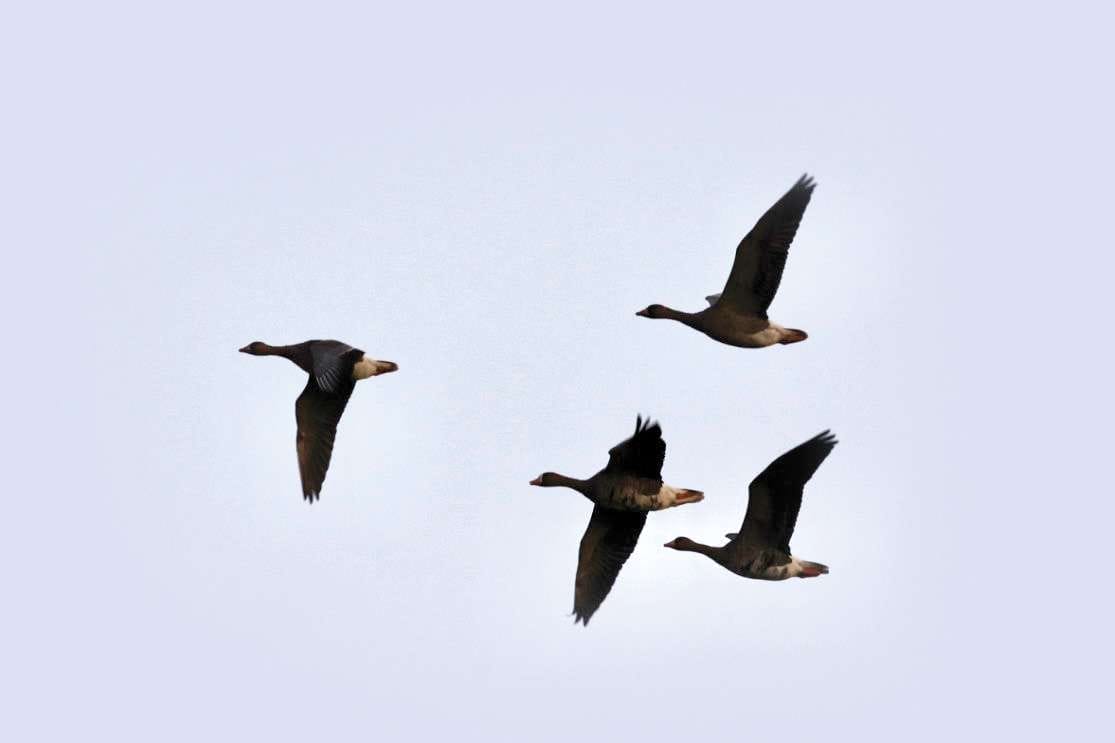
So, 121 it was and, unknown to me at the time, it might well have been 122. If only I’d clocked the Russian visitors lurking at the very small pool which earlier attracted that American duck.
Strange but true. Dunno the odds against that but if they had occupied the territory at the same time I bet it would have been a peaceful encounter. Full story next month.