
Did you spot recent reports of a survey evaluating people’s knowledge of the natural world? It revealed astounding surprises for nature lovers.
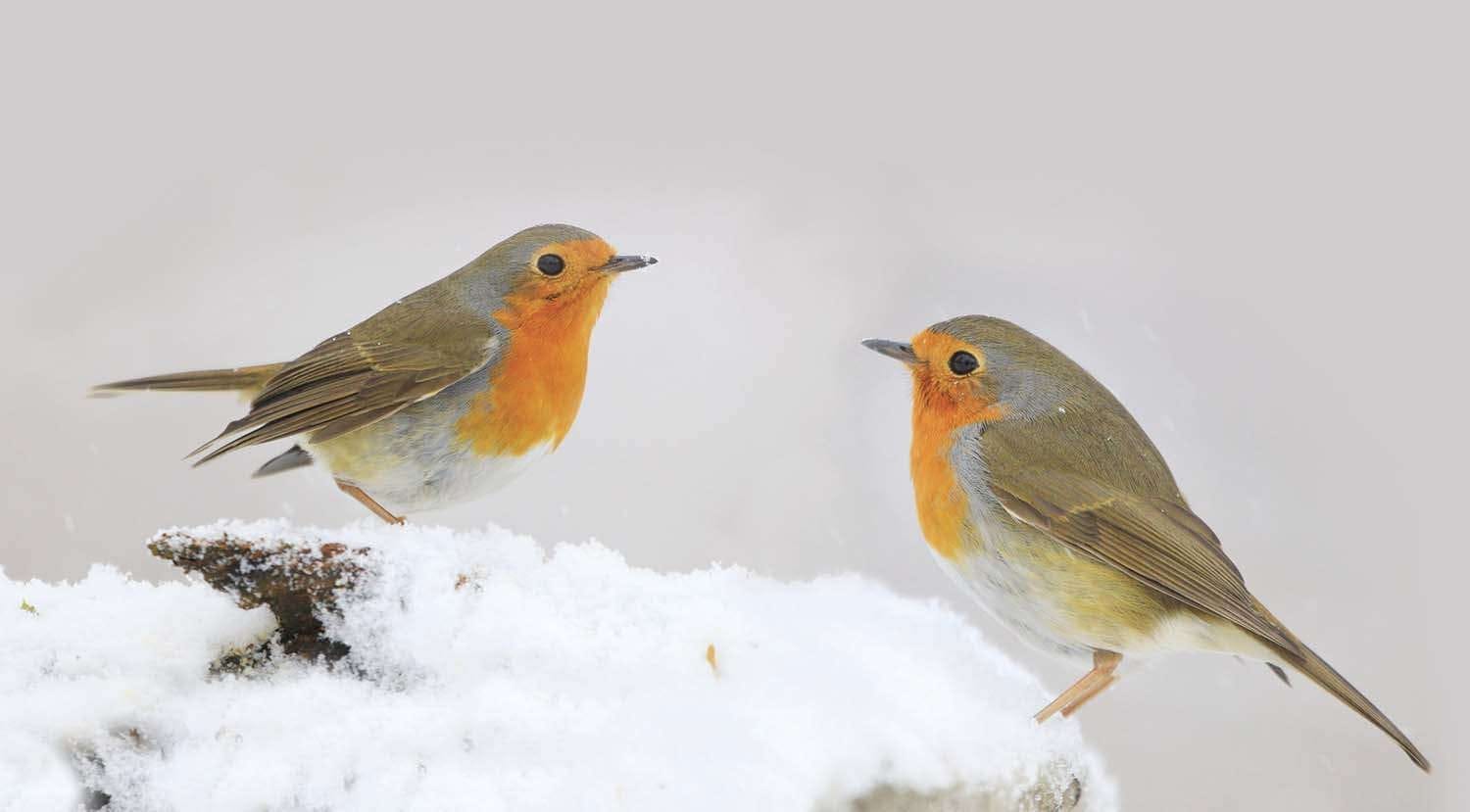
Nearly a quarter of people admitted they would be unable to identify our most iconic bird – the Robin.
The OnePoll.com study of 2,000 adults revealed as many as 22% would be at a loss to know what one looked like.
According to the poll’s commissioners, The Camping and Caravanning Club, wildlife knowledge in this country is dwindling. One in five people would struggle to identify a badger and a quarter would struggle to point out a dragonfly.

They could be right but I’d like to think things are improving because a previous survey I reported just over three years ago, from a different sponsor, found 40% could not identify a Robin.
This month of December sees the Robin fighting back to be identified as it features again on millions of Christmas cards popping through letter boxes around the world.
Strangely, I get more Robins on mine than anything else. The little fellas have appeared on cards since the first ones were posted in Victorian times. These birds are widely regarded as a winter warmer for the soul, setting the season’s mood for rejoicing with those we love.
Now known in ornithological parlance as the European Robin, to differentiate it from 103 other types of robins worldwide, ‘our’ Robin’ not only delights many an eye at this time of year but also the ear.
It is one of the few birds who sing all year round. Streetlights and those silent nights when the traffic has eased in our towns and cities seem to spur them on.

I recall walking back to the car in the chilly early hours after a late finishing carol concert in London and hearing one Robin’s cheery melody non-stop from a tree over a street away. The relative quiet was proving an ideal time to stake out its territory for the welcome days of Spring ahead.
Often called the Robin Redbreast, I was always puzzled why it was not called the Orangebreast because the breast is more orange than red. It turns out that the English word ‘red’ was once used to describe the shade we know as ‘orange,’ while ‘red’ was named ‘scarlet.’
But of course our Robins are not always scarlet or orange. This year I often enjoyed the regular company of a very scruffy individual in the garden.
Its brown upperparts and much of the body displayed fine yellowish/orange speckling, indicating it was a juvenile.
The bird soon worked out it would get some rich rewards for giving me a welcome as I went about my jobs.
If I were digging then I would soon hear its high-pitched call as it flew in to snatch any disturbed insect or worm.

My ever-hungry friend hopped up so close to my trowel that I had to work slowly to prevent accidentally harvesting a kebab.
It would snap up any escaping microscopic organisms and tiny flies it could find. When I moved pots around then it was never far away because it learnt there would be juicy mealworms and other delights underneath.
If I sat down for a cuppa on the lawn it would soon spot me and land on the table in the hope of crumbs. Mow the back lawn and there it was, ready to grab any tasty emerging snacks. Go to the front and guess who would already be there in the hope of another easy meal.
For a real treat I removed the lid from the compost container and the bird had a field day. The odd thing was though – it never appeared to be putting on weight.
This went on for some weeks and then one day while doing some weeding I realised why my companion always seemed so hungry.
It flicked off towards a bush on my left. I resumed my task and there it was again, this time on the right. That was quick! I did a double take.
Our ravenous Robin was not alone. There must have been two of them – at least – the whole time. Seems like I could not correctly identify a single Robin either…
Now it’s nearly Christmas and at least one of them is dressed appropriately after moulting into adult plumage. At least, I think it could be one of them. Then again, it could be another.
The Robins seeking crumbs of comfort at our back doors now are not necessarily the ones who hatched from their nests in the Cranleigh area.
Like some of us, local Robins have been known to take a winter break on the continent. One even turned up in Klosters, Switzerland.