
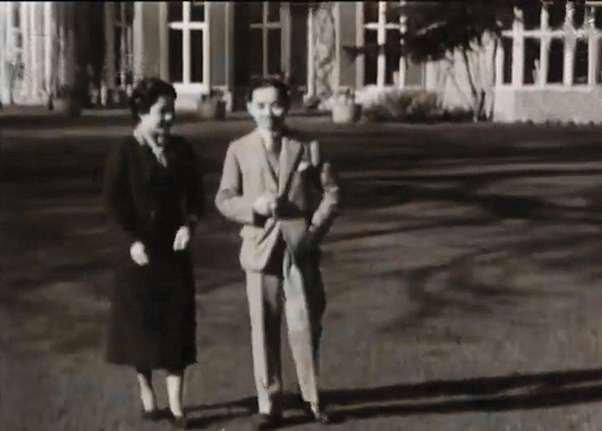
by Joy Horn // Main Photo: King Prajadhipok of Siam in exile at Knowle in 1936
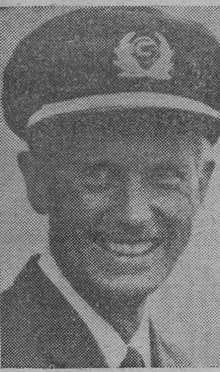
People came to live in Cranleigh for all sorts of reasons. One who is probably little known and who stayed for only a short time was the king of Siam, Prajadhipok (also known as Rama VII), the last absolute king and first constitutional monarch of Siam (now Thailand).
Born in the Grand Palace in 1893, he was the 32nd and youngest son of King Chulalonghorn, who ruled 1868-1910, and also the 76th of his 77 children. He was not expected to become king, and chose to follow a military career. At 13, was sent to study at Eton, after which he went to the Woolwich Military Academy. However, with many of his older brothers dying, and with about two days’ notice, he was suddenly declared heir to succeed his brother Vayiravudh (Rama VI) on the throne in 1925, aged 32.

The 1920’s in Siam were a time of rapid change, with many citizens clamouring for more participation in government. Prajadhipok was largely sympathetic, and over the next few years he oversaw significant reforms. He established a privy Council, modernized state finances and the regulation of public utilities, founded a National Library and expanded university education.
In 1929, as part of an effort to modernize the armed forces, the first aircraft of the Siamese air force were launched, to indigenous Siamese designs. The second, a single-seater biplane and Siam’s first fighter plane, was named ‘Prajadhipok’, after the king.
However, his reforms did not go far enough to satisfy a group of soldiers and civil servants, who proclaimed themselves ‘The People’s Party’. On June 24th 1932, they took control of the Ananda Samakhom Throne Hall in the capital Bangkok, while the king was away at another of his palaces in Hua Hin. They arrested key officials, mainly princes and royal relatives. They threatened to declare Siam a republic unless Prajadhipok gave up some of his rights and powers, and became a constitutional monarch.

The king immediately accepted these terms, and the 1st permanent constitution of Siam was announced on 10th December 1932. However the agreement soon broke down, with disagreements over the king’s right to veto laws, and over the royal assets. There were various attempted coups on the part of the People’s Party and of the adherents of the king.
In 1934 Prajadhipok, who was not a fit man, went to Europe, and met such varied notables as Adolf Hitler, Ramsay MacDonald (Labour prime minister of the U.K.) and Pope Pius IX. He then came to England for medical treatment. He also visited the garden at Eton which he had donated to his old school in 1928.
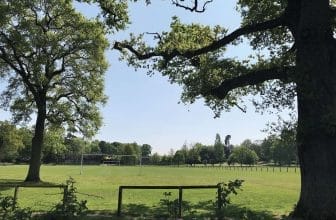
He took up residence with his entourage first at Knowle, south of Cranleigh. Sir George Bonham, 2nd baronet, had died in 1927, and his heir, Sir Eric, lived at Betchworth rather than Knowle.

From Knowle, Prajadhipok announced his abdication as king of Siam, on March 2nd 1935. He was ill, and may have been weary of the political struggles in Siam. This did not lead to much improvement in the state of the country. A new king was appointed – a 9 year old prince, who was living in Switzerland. The People’s Party became increasingly autocratic. In the background loomed the army, waiting for the opportunity to intervene. In 1939 the name of the country was changed from Siam to ‘Thailand’ (Tyang-tai), which means ‘country of the free’. The young king (Ananda Mahidol), returned to Thailand at the end of the Second World War, but 6 months later, when he was 20, was discovered shot dead in his bed in the Grand Palace, Bangkok. Three royal pages were later executed for murdering him, but much debate and controversy still surround this incident.

Ex-king Prajadhipok spent the rest of his life in Surrey. Knowle did not prove suitable for his health, so he moved after 6 months at Knowle to a smaller house in Virginia Water, which he called ‘Glen Pammant’ (an anagram of an old Thai phrase ‘tam pleng nam’ meaning ‘make a song’). After 2 years he moved to Vane Court, Biddenden, then in 1938 to Compton House, Wentworth. In 1940, to escape the Blitz on London, he moved again, to a small house in Devon, then to the Lake Vyrnwy Hotel in Powys, North Wales, where he suffered a heart attack. He returned to Compton House, because he preferred to die there.

He did indeed die there, of another heart attack, on 30th May 1941, aged 47, and was cremated at Golders Green Crematorium, North London. Queen Rambai Barni remained at Compton House for 8 years before returning to Thailand in 1949, bringing King Prajadhipok’s ashes with her.
Obituaries seem to agree that Prajadhipok was a hardworking and conscientious king, sympathetic to Thai democracy, but convinced that the 1932 constitution was a step too far at the time.

Nearly 100 years later, Thailand has become a popular tourist destination. People in Cranleigh can enjoy delicious Thai food in the High Street, at the Tay Tai Tar restaurant.
So 3 cheers for King Prajadhipok, the only king to live in Cranleigh! Though you may be relieved that your road hasn’t been named after him!
The principal sources for this article are Wikipedia and the Encyclopedia Britannica.
The Cranleigh History Society meets on the second Thursday of each month at 8pm in the Band Room. The next meeting is on Thursday March 12th, when Ray Dunnett will speak on ‘My Dick Turpin connection’.