

John Gaines, Master Builder & Craftsman
I was born in 1958, the youngest of 2 boys, in a bungalow, in the middle of woodland, right on the border of Surrey and Sussex, near Durfold Hall. Not just any bungalow, it was one my parents built themselves. Mum had come down from Newcastle in the land army in 1946. They bought 5 acres of woodland. Mum and Dad cleared a whole acre of land by hand as he was into tree felling at the time and they built that home from the ground up. That’s where I came into the world. Before I could even walk, I was surrounded by sawdust, timber, mud and vision.
I sometimes think that’s where it started. By that I don’t mean my skill, but the idea that if you want something solid in life, build it yourself!

We later moved to Guildford, to a modest 2-up/2-down house in Stoughton. Dad left us when I was about 2 years old in 1960, but he made sure Mum had a house with no mortgage before he departed. They had both worked incredibly hard for that investment. I grew up in that little terrace and although it wasn’t grand, I had what mattered which was freedom, love and the outdoors. I had a lovely childhood, Mum made sure of that. She would play and wrestle with us boys. We were the only children with a cellar housing a snooker table, punch bag and dart board!
Middle Stream and Muddied Knees
At school, I was what they called middle stream. I wasn’t top of the class, I wasn’t bottom, just average. I recently looked back at my school reports from 50 odd years ago. The comments were brutal, things like “Could try harder,” “Lacks attention,” “Must apply himself.” Maths according to my school reports, was my weakest subject. If those teachers could see me now, setting out buildings to the millimetre and calculating building quantities and roof pitches with pen and paper, they might raise an eyebrow.

But if the truth be told, as a child I wasn’t interested in school. When I was in the first year, the school leaving age was increased from 15 to 16 thereby forcing us to take exams. I hated exams and never turned up to take them (I seemed to have a fear of exams). Some people thrive in classrooms but I didn’t. I thrived outside, on a bike, in a boat, up a tree or making something with my hands. When my brother and I were about 10 or 11 we were constantly outdoors. Our pushbikes cobbled together from parts, rowing boats ‘borrowed’ and taken down the river. Canoes ‘relocated’ from the canoe club!
We were little rebels, though responsible ones. Mum told us not to go to certain areas because they were rough but of course, that’s where we went. But we always came home. The combination of curiosity and discipline probably shaped me more than any classroom did.
When I was just 14, I built a staircase down into our cellar. The old one fell apart with woodworm. My brother worked at a timber yard and carried bits of wood home each day. I took an old metal bed frame to school, cut it up in metalwork and used the steel to secure the treads to the strings. It wasn’t architectural perfection but it worked. Standing back admiring something structural, something permanent, something useful I’d created, that feeling was almost overwhelming. I was hooked!

I loved woodwork at school and I still see my old woodwork teacher every year at Christmas. A group of us old Guildford boys meet up each year even though I’m 20 years younger than most of them now they’re in their eighties. But our woodwork teacher comes along every year.
He once told me he was shocked when I chose bricklaying instead of carpentry, as a trade. He hoped I would work in wood but I wanted to build houses.
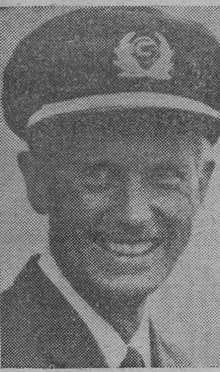
My dad built 3 of his own houses in his lifetime. The first one I was born in, another was a split-level in Headley Down, an Ideal Homes type house and the third was a stone bungalow on a hillside in Swanage. He was my hero. He would say things on site that stuck with me, such as “The early bird catches the worm.” He prayed to the Lord:
Charlie Wood was very good,
He went to church on Sundays.
He prayed to the Lord to give him strength
To carry the hod on Mondays.
Though it sounds funny and it is, there’s truth in it – work hard, be steady, prepare yourself!
Dad had lots of energy. When I stayed with him, we were up at 6 in the morning. Out in fishing boats, working on projects, doing something physical like axe throwing, always on the move. He knew more about trees and outdoor wildlife than anyone I’ve ever met, even though he grew up in Battersea.

He was also a World War II veteran having been with the armed forces on Omaha D-Day beach landings on landing craft, on the north coast of Normandy, France. He didn’t speak much about it when he was younger but he opened up later in life.
At Remembrance dinners he’d stand and speak about it, mixing powerful memories with little jokes to ease the weight of the account. He could command the whole room. When people say I’m a clone of him, I understand what they mean.
As I mentioned my woodwork teacher wanted me to take up carpentry. However I told him, “I want to build my own house” which obviously meant learning bricklaying. I did my apprenticeship with a large Guildford firm (R Holdfords), where I learned discipline as I carefully watch the experienced men around me. I studied how they measured, how they spoke and how they handled problems. However, the day my apprenticeship finished, I handed in my notice because I’d realised something important – self-employed men worked fewer hours, earn more and control their own standards.
From that day on, I worked for myself and when you’re self-employed, you learn quickly. You don’t get paid for turning up, you get paid for what you produce.

Setting Out – The Real Skill
People say bricklaying is simply laying brick-on-brick but it isn’t. The real craft is setting out and constructing the whole building. There’s probably 50-100 thousand parts to a house to be carried and fixed in the right place. Standing in a muddy field with pegs, string lines, a tape measure and a plan. Before anything physical rises, the thinking must be right.
Firstly you establish a benchmark (Datum) base line using tight string between pegs. Then you square it by using the old 3-4-5 principle.
If the diagonal doesn’t match, then it’s not square – get that wrong and the roof won’t sit right, the windows won’t line up and the problems compound. After squaring, you drop plumb lines into the trenches and set foundation positions. You establish a benchmark, using a proper level as levelling is critical. Ten mm out at the foundation level means 10mm out at roof height. Craftsmanship is repetition of accuracy, it’s not flashy, it requires utter patience.

Cutting Roofs – Confidence and Courage
In my early years I worked alongside some very good carpenters of whom Shaun Murphy was one. The tools Rep came every week trying to get me to buy woodwork tools. Then at 19 years old I was only on £13 a day. I worked with him for 6-9 months and learnt loads. But I needed to chase the £s and earn more. Later on I taught myself to cut and pitch roofs. A friend (Clive, who was a metal fabricator) and I learned this skill together, picking up knowledge from others and studying framing squares. As with bricklaying, roof pitch relies on simple trigonometry. In a right-angled triangle, Tangent (tan) is the ratio of the side opposite the angle to the side adjacent to it.
But theory on paper is one thing, standing on scaffolding with expensive timber in your hands is quite another. If you cut it too short that’s a waste, if you cut it wrong that will delay everything. Don’t doubt your measurement and wonder if it’s a mistake – you have to trust yourself. When a roof slots together perfectly, ridge tight, rafters clean, no forcing, that’s satisfaction you can’t buy.

Over 45 years, I’ve employed somewhere between 75 and 100 men. Some have been brilliant, some a bit rough around the edges. Some have been fresh out of prison and others young lads who just needed direction. Construction attracts all sorts so you have to lead firmly with confidence. But I’ve always believed this: don’t employ someone who’s lazy and incompetent because standards matter. Discipline matters and so does respect.
Some of the developers I’ve worked with have become lifelong friends and they’ve watched my sons grow up. My sons did their apprenticeships with me. I taught them everything, from millimetre measurement to roof cutting. They’re excellent tradesmen now, methodical and careful. I’d recommend them to anyone.
I still meet up with those old business friends who are now retired. We talk about jobs we did 30 years ago because in the end, it isn’t just about buildings, it’s about people.

In 2005–2006, I built my own house. We lived in the garden, in a caravan during its construction. I built the garage first, converting it into a kitchen and shower room. My son Danny, stayed in the caravan while my daughter Gemma, moved out. It was tight and chaotic but focused. It took 6 months to move upstairs and 3 more to finish downstairs. It was sheer hard graft but every line was square, every level checked, every brick right. That was one of my proudest achievements, not because it was grand but because it was correct and a lifelong ambition.
Of course, life isn’t all tidy foundations and perfect diagonals, there was the infamous staircase incident. I came home late one night after a few too many drinks. My wife Dawn, put me in the spare room and I got up in the night for the toilet and fell straight down the stairs injuring myself. As a result, I lost 2 days’ work. Amazingly I reckon in my 45 years that’s about all I’ve lost to illness. Self-employment sharpens you, you just can’t afford laziness.

The Award
I’ve worked alongside Waverley Building Control for the last 40 years on and off. I built many starter homes back in the 80s and 90s, probably about 150 in all.
We used to build a lot of class rooms for new schools in the Surrey Area, which were contract jobs for L T Deeprose and Deeks & Steer. Later in my career, a building control inspector nominated me for a regional award. The inspector used to say, “I love coming to your sites. It’s always right.” That meant far more to me than the certificate.
I didn’t win ‘Best House’ though I still think our build was better but recognition from professionals who understand craftsmanship, means everything. It isn’t about ego, it’s about standards being seen.

Why I Still Love Old Buildings
Even now, I walk into cathedrals and look up. In Rochester Cathedral for example, the crypt is stone from around 600 AD. You touch it and think ‘Someone shaped this by hand. How did they lift those beams? How did they square those arches? How did they know?’ That’s the mindset of a builder. When I walk through an old church, I’m not just admiring it, I’m living it, imagining the men, the tools, the effort.
People ask what keeps me going. Well money matters of course, we all have to survive. But deeper than that:
I love being fit.
I love moving heavy things intelligently.
I love solving problems.
I love building something from nothing.
I love decent people.

Work was never about messing about all day. It was always serious, directional, focused. But humour runs through it. Young lads still repeat Dad’s old line back to me:
“Charlie Wood was very good…” As they laugh, I smile because that means something’s lasted.
If you want to master this trade be interested in every aspect. Learn to handle the tape measure properly, it’s a tool to master. Throw away centimetres, think in millimetres and metres. Be accurate, respect levels and don’t rush setting out.
Watch experienced tradesmen carefully, learn from them, finish what you start. And remember it’s about people – clients, workmates, teachers and your children watching you. The old business friends you still meet decades later, the father who showed you how.

I was middle stream at school, on paper I was average. But average doesn’t build houses. Interest does, discipline and character does. Brick by brick, roof by roof, year by year, I’ve built homes, raised children, fallen down stairs, laughed at Christmas reunions, stood in muddy fields turning string lines into something permanent.
When I look at a finished building, square to the millimetre, (+8 – 5) roof sitting true, I don’t just see structure, I see my dad at 6 in the morning. I see my woodwork teacher shaking my hand every Christmas. I see developers who became friends. I see young lads repeating old sayings. I see the 14 year old boy building a staircase from an old bed frame.
A house may be built from bricks, but a craftsman is shaped by people and experience and that in the end is what lasts.