
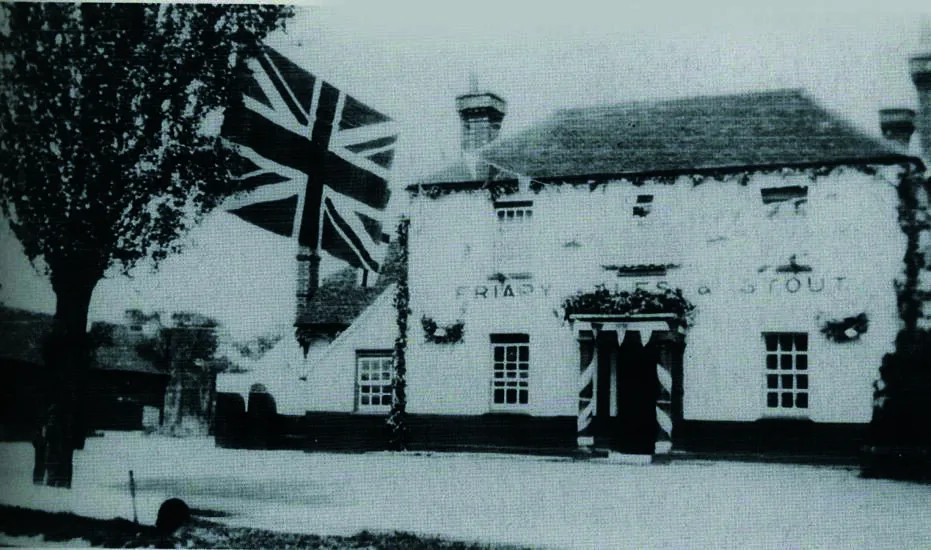
by Joy Horn // Main Photo: The ‘Greyhound’ inn in 1935, on the site of the present post office
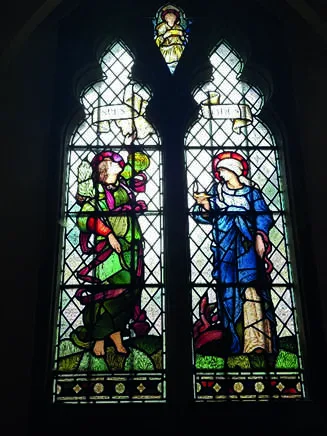
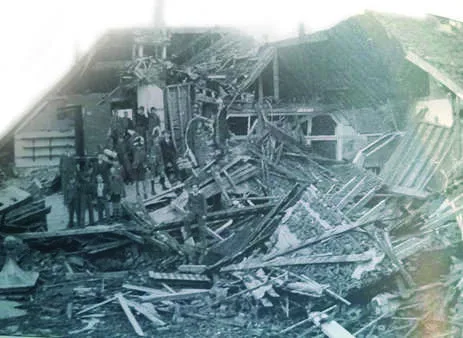
As the end of the war approached, the Parish Magazine gave graphic month-by-month reports on the change from war to peace in the village in 1945. The January issue reported that the church, which had lost nearly all its windows in the V1 rocket attack of 27th August 1944, had not been restored in time for Christmas, and could not be heated, so services were held in a shortened form. The classrooms of the Village School were being repaired as quickly as possible, though all the children were attending, in some building or other.
People gathered for a public meeting on Post-war Housing: the ‘need for agricultural cottages and a number of small houses … is obvious.’ The ‘pre-war zoning and planning scheme for the area is entirely out of date’, but ‘room will have to be found in Cranleigh for very considerable development’. Prophetic words indeed …
The February issue reported on the restoration of the rooms at the Village School, though it was not yet complete. ‘Parents … owe the teachers a very real debt for having achieved so much under such really impossible conditions’. Various ‘Treats’ had been held for the Sunday School and choirboys in the Community Centre (a hut behind the old ‘Greyhound’ inn). The lunches provided there ‘were appreciated by a steadily increasing number of people’. The ‘centre is a real boon’.
It seems that by March everyone was confident of victory in the war. A Central War Fund Victory Gift Sale was advertised, designed to ‘help our men returning from the Forces’. Over £35 was raised. The May issue said, ‘On whatever day the announcement of Victory may be made, there will be a Service of Thanksgiving and Recollection at 7.15 the same evening in the Parish Church’.
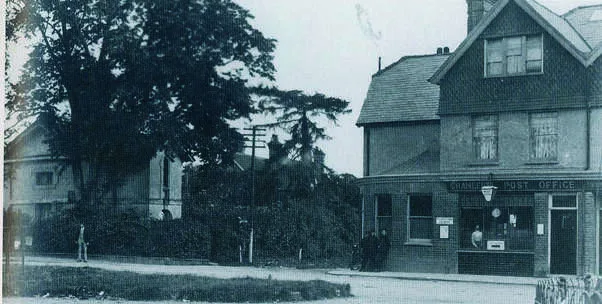
In Cranleigh in 1918, before the days of radio or TV, news of the Armistice that ended the fighting was announced in a very low-key manner. A notice was posted in the window of the Post Office! From there, the news passed by word of mouth until the church bellringers could be assembled to play a joyful peal that announced the news to everyone.
By contrast, in 1945 people had been following the news constantly on the radio throughout the war. So virtually the whole nation heard Prime Minister Winston Churchill make his momentous broadcast announcement from Downing Street at 3pm on 8th May of the end of hostilities in Europe. ‘We may allow ourselves a brief period of rejoicing,’ he said, ‘but let us not forget for a moment the toils and effort that lie ahead’.
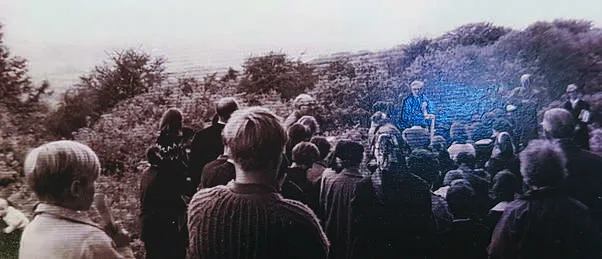
The parish magazine for May has an indication of pre-war activities returning to village life: the Ascension Day open-air service would be held once again at Lord Justice James’s Seat on Thursday 10th May at 11.30am. However, the music on Palm Sunday and Easter was supplemented by a string orchestra, giving the ‘greatest joy’, as the organ was not yet back in action.
In June it was reported that a Thankoffering Fund ‘for the safety of our parish church and preservation of life in Cranleigh on 27th August 1944 would be given to Abinger parish, whose 850-year-old church had been almost completely destroyed.’
The same issue described the ‘wonderful scene as the Prisoners of War had been landed at the various aerodromes. The arrangements made by the RAF for their first reception and the long hours of duty undertaken by members of the Red Cross and St John are beyond praise and will never be forgotten by those they welcomed home’.
In July, it was reported that the hut behind the ‘Greyhound’ was continuing as a Community Centre, offering ‘a mid-day meal at reasonable cost’. At the Village School, however, school dinners were discontinued. They had been held for the past five years, but the Education Authority was now taking over this service: ‘dinners will be sent from the Chilworth Centre, cooked and ready to be served to the children’.
Imperial Japan surrendered to the Allies on 15th August 1945 (VJ Day). Thanksgiving services were held that evening and on Sunday 19th August: ‘the Bellringers … managed to muster in full force for Victory Peals twice on each day’. A bonfire and torchlight procession on Thursday 17th August ‘drew an unprecedently large crowd’. ‘For so good a show at such short notice we have to thank Mr Whittington, Mr Jack Butcher and all who helped them’.
The November issue announced a Special Service on Sunday 11th November at 3.00pm, arranged by the British Legion and Pals’ Club. Men and women on leave from the Services and ‘all those who have already been released’ were specially invited to tea at the Community Centre, immediately after the ceremony at the War Memorial. The Cranleigh Central War Fund was sending a Christmas gift to all still serving in the Forces.
However, repairs to the parish church were dragging on: ‘the Architect is not at all hopeful of the restoration of the windows being possible before next year. Every effort will be made to ensure that the temporary hoardings remain weatherproof. With the furnaces restored to use we can hope that it will be possible to keep the church reasonably well warmed’.
In the December 1945 issue the hope was expressed that the church would be floodlit for Christmas once more. Alas, the January 1946 issue reported that ‘the authorities would not allow the church to be floodlit’.
So 1945 ended with hopes for normality being alternately raised and dashed, and much still to be done. However, summer 1945 had seen the major change from war to peace, to universal thankfulness.
The Cranleigh History Society is not meeting in August.