
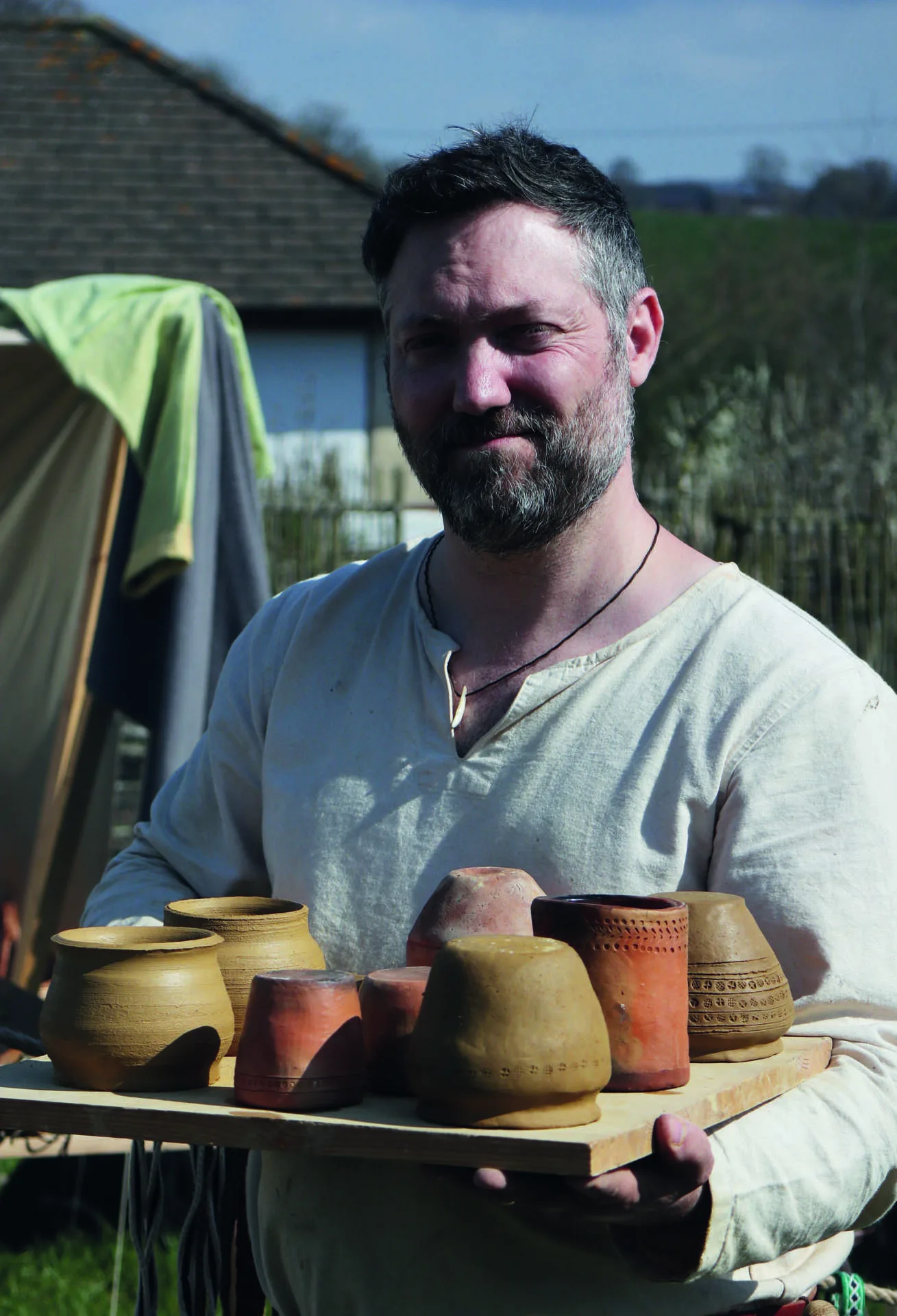
“Osgar the Potter” (Stepping back in time!)
My first experience of ancient history re-enactment began about 5 or 6 years ago. My interest in the Viking and Anglo-Saxon period was sparked as a child, when reading the Usborne “Book of the Vikings” and similar history books. At one point I even imagined becoming an archaeologist although I haven’t pursued that idea.
A friend dragged me along to my first show at Butser Ancient Farm, an archaeological open-air museum and experimental archaeology site located near Petersfield in Hampshire, which features experimental reconstructions of prehistoric, Romano-British and Anglo-Saxon buildings. She was very enthusiastic and told me I’d enjoy it and to my surprise, I did. It was a brilliant day out. I ended up chatting to loads of re-enactors and thought, “This is a group I would love to join.” A few months later, I went along to a training day and got involved.
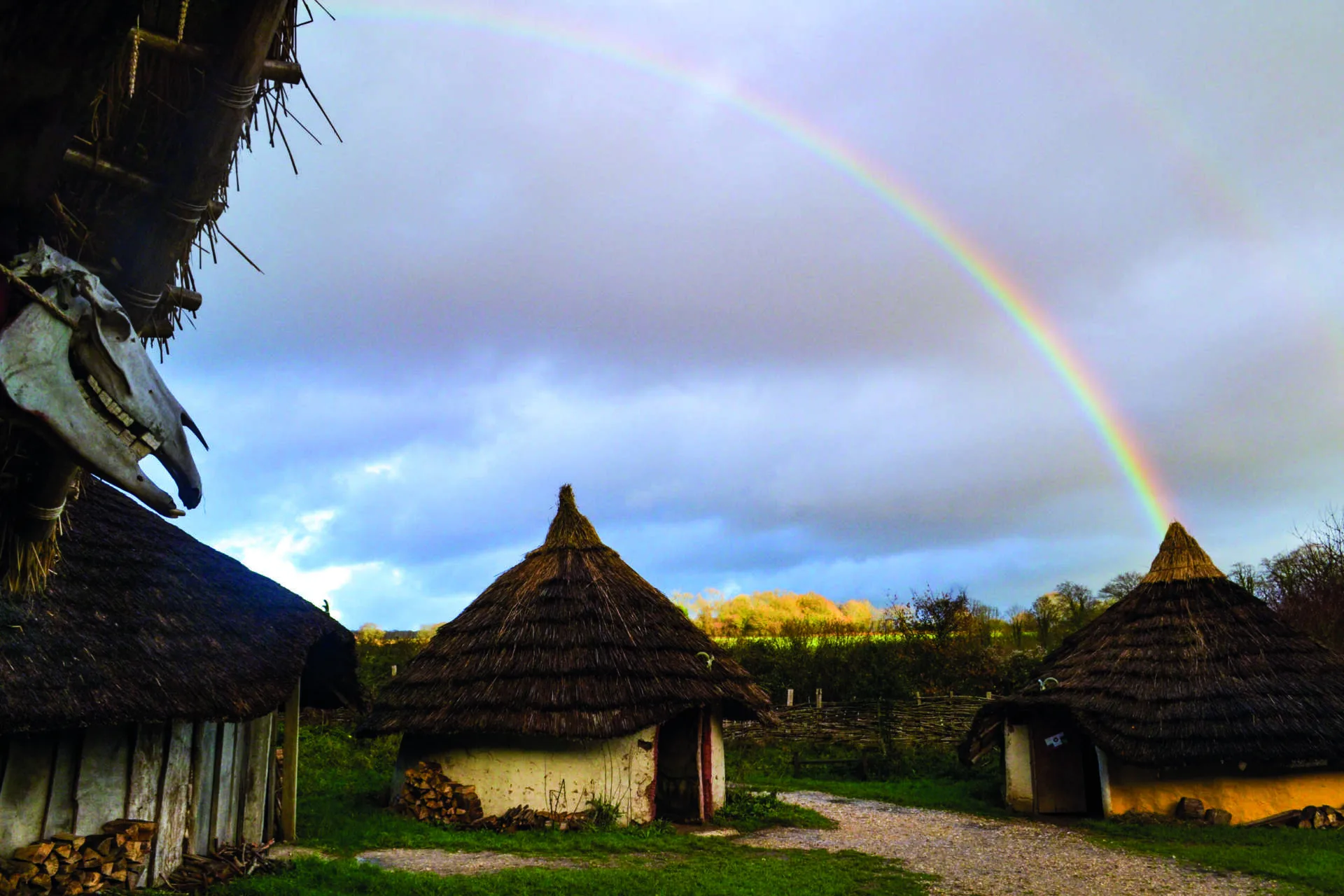
Now I belong to a re-enactment group called Herigeas Hundas, which loosely translated means “Army of Dogs” in Old English. We focus on the early Anglo-Saxon period, just after the Romans left Briton. It was a time of huge upheaval.
The local Romano-British population had been left behind, confused and vulnerable as a wave of migration started across Europe. They wrote to Rome asking for help, not realising the legions had gone for good. They were left with “the barbarians of the sea” as one letter said – these barbarians were what we know today to primarily have been the Saxons, the Angles, the Jutes and the Franks, moving across the continent to settle themselves in different parts of Briton.
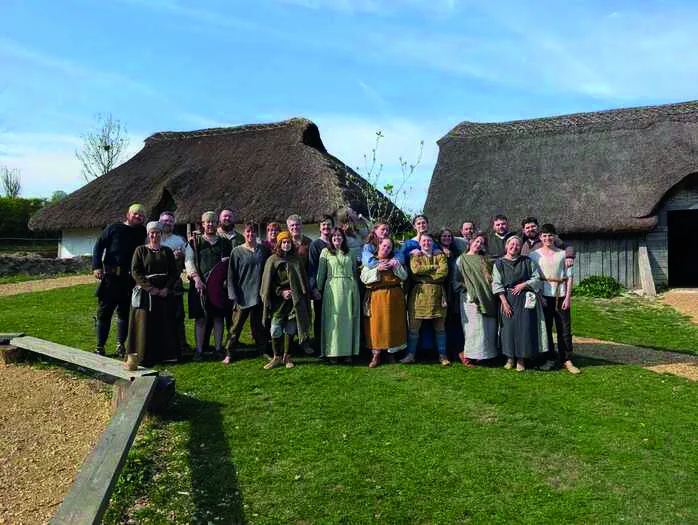
It was a messy time, initially full of small warlords, invaders and settlers all jostling for power and land, eventually giving rise to the concept of the Bretwalda – a kind of lord or high King who from the 5th century onwards had achieved control and influence over larger swathes of land. By 650AD these had given way to form the more well-known Anglo-Saxon kingdoms: Kent, Mercia, East Anglia, Essex, Northumbria, Sussex and Wessex. That turbulent, gritty period fascinates me.
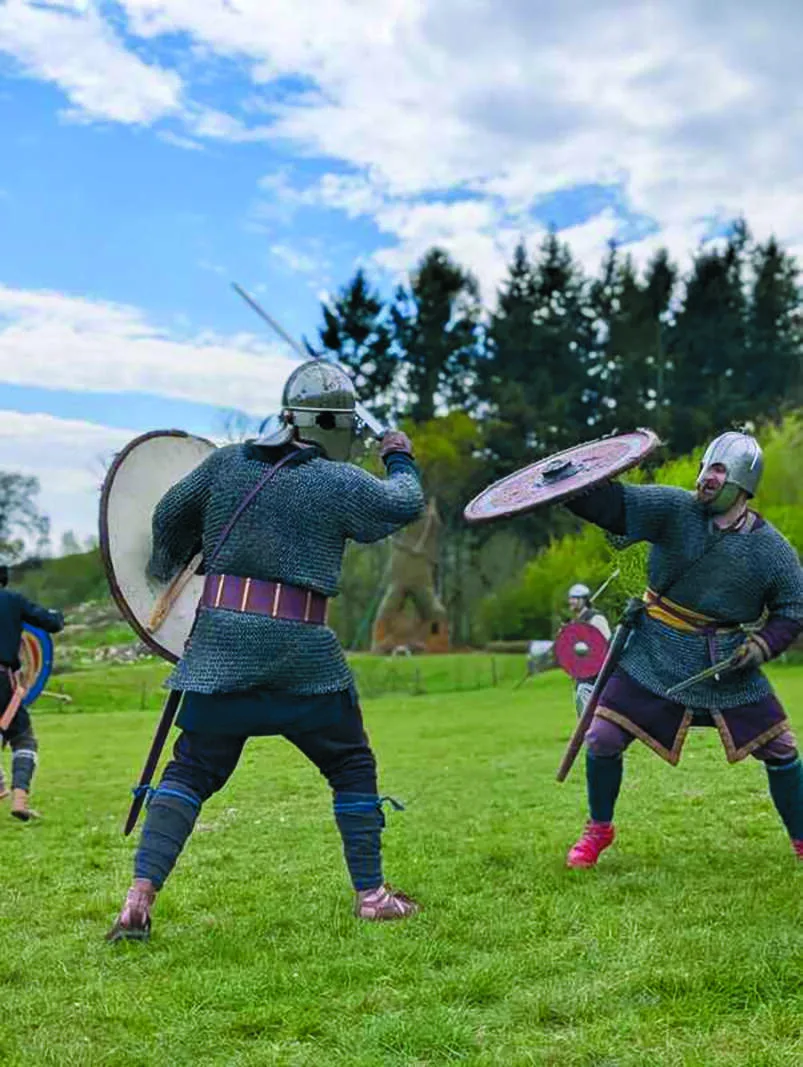
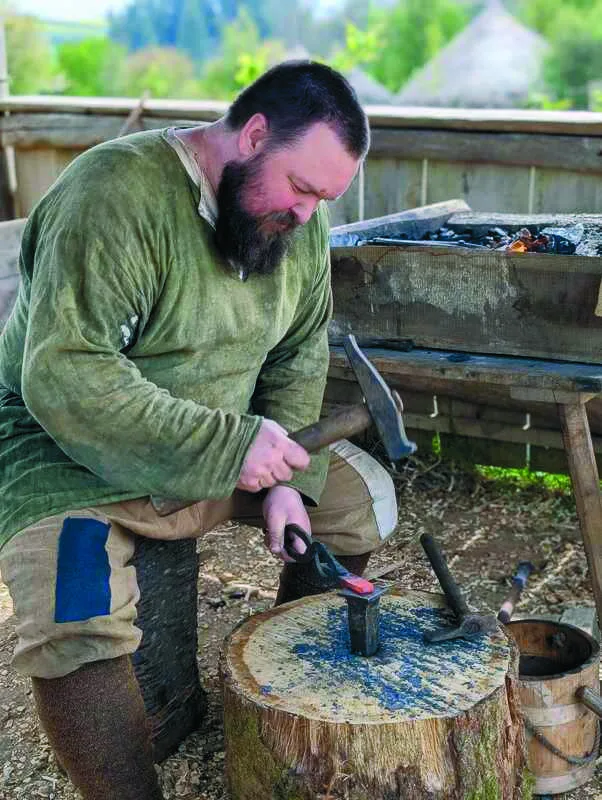
What we try to do in our group is recreate not just the battles, but the lifestyle, crafts and day-to-day experiences of people in that time period. We focus less on the kings and kingdoms, and more on the everyday people. That includes everything from blacksmithing and pottery to textile production and food preparation. All of our group training and battles scenes are practiced safely and we are all fully insured.
Living history on the weekend
At a typical weekend event, we arrive on the Friday evening to set up our tents and get everything ready. These are early medieval-style tents based on what we believe the Anglo-Saxons might have used made of canvas with wooden poles, simple and sturdy. We try to be as authentic as we can, cooking over open fires, wearing period clothing and using historically accurate tools and materials.
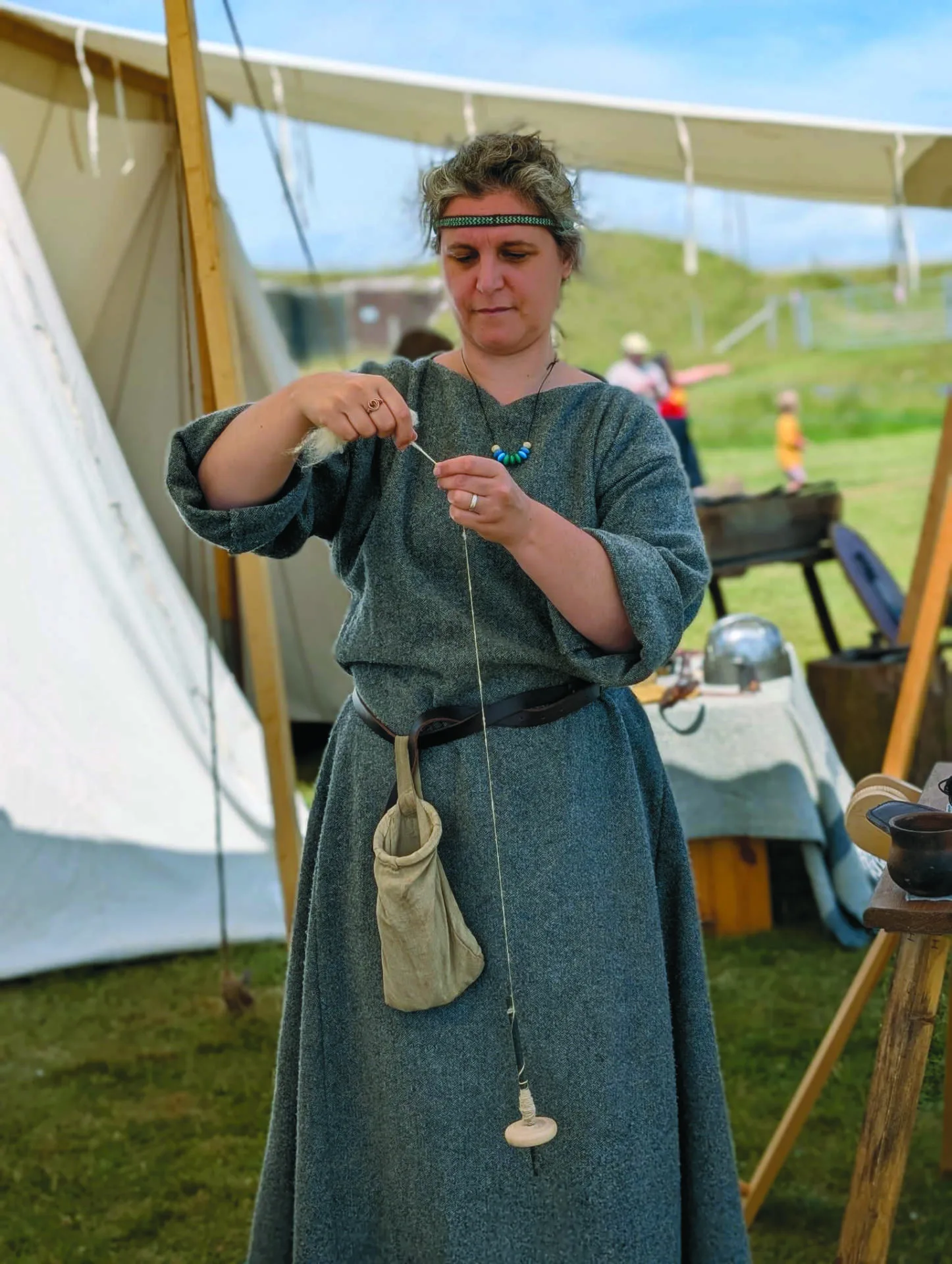
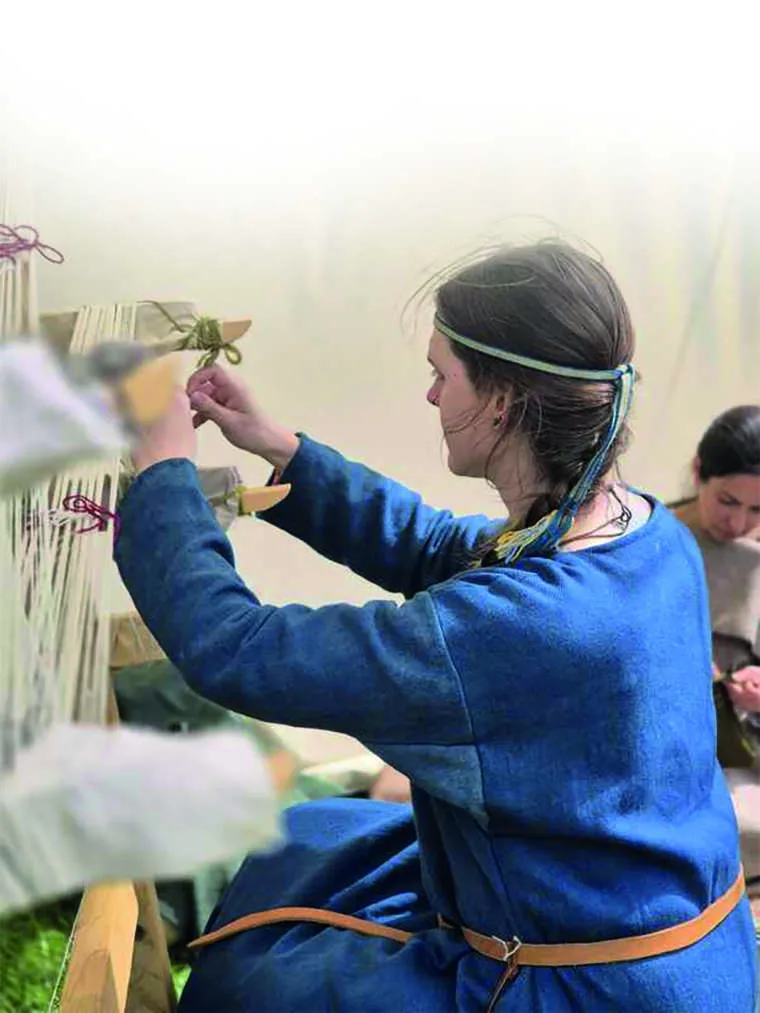
On show days, we’re usually up early for breakfast, getting dressed into kit and preparing for visitors. We showcase traditional crafts: spinning wool, weaving, blacksmithing, dyeing cloth with natural materials and making pottery. There’s often food prep going on too—although sadly the public can’t sample it for health reasons. We can poison ourselves, but not our guests!
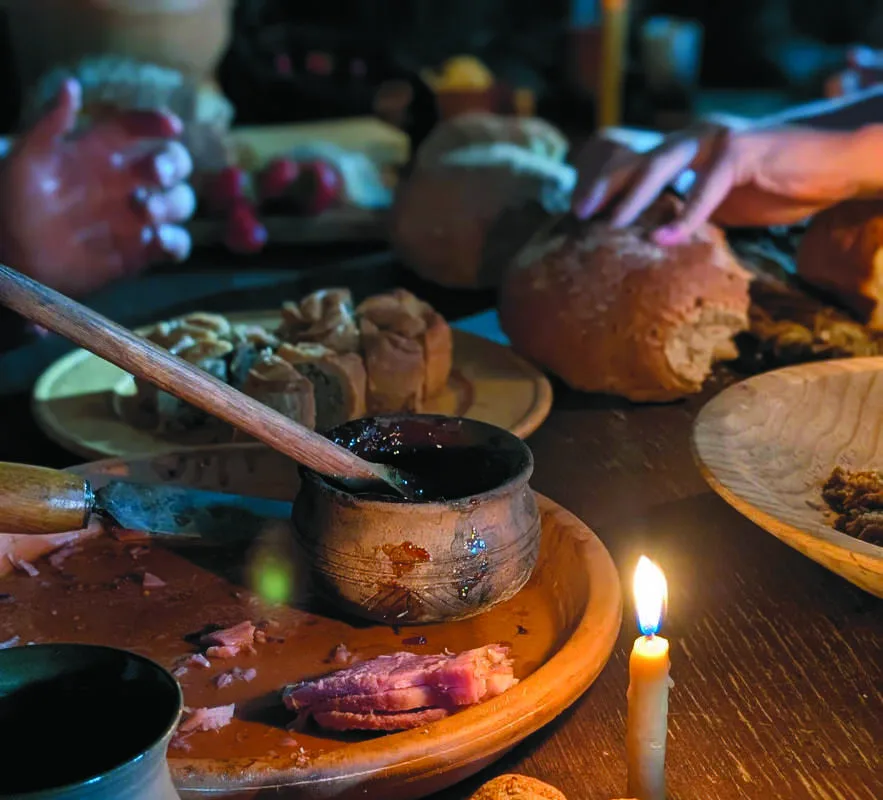
That said, the food is brilliant and really healthy as it’s full of grains, vegetables and wild plants. People assume early medieval folk just ate meat but meat was rare and mostly preserved by salting or drying. Stews, grains and plants made up most of their diet. The food is basic, but nourishing.
Weapons and combat
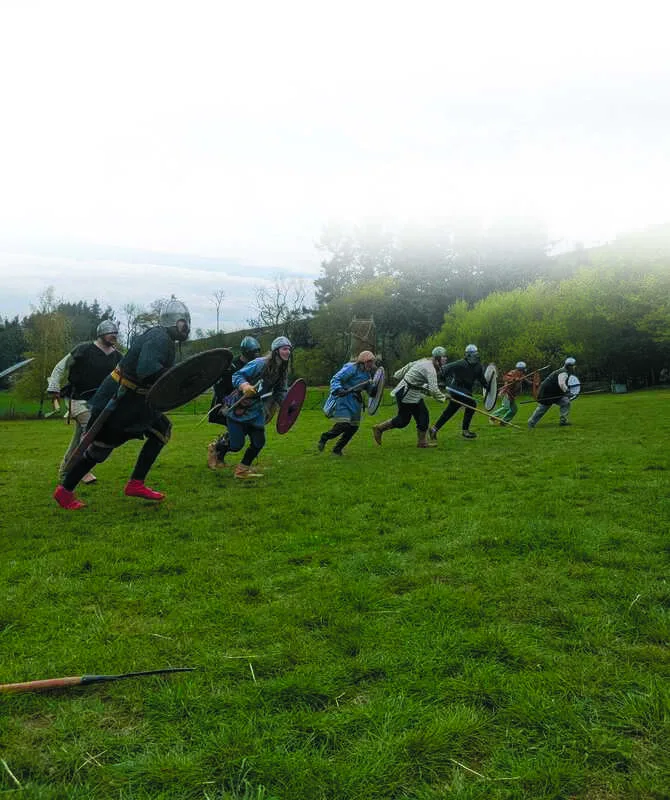
We also run battles and weapons’ displays twice a day. These can last up to an hour and are physically demanding—especially in full kit. The re-enactment isn’t choreographed like a stage fight, but we’re trained to make it look realistic without hurting each other. The aim is to ‘just miss’, or to make contact in a way that looks convincing but doesn’t injure or damage. However, the odd bruise or occasional knock are difficult to avoid. I’ve got a few as I speak—one from a long Seax (a single-edged blade like a machete) to the knee. The guy apologized, but said, “Your shield’s so big, I couldn’t get round it!” which was fair enough.
While we try to keep things as authentic as possible, we find swords are tricky as real early medieval swords wouldn’t stand up to constant fighting. They would chip, crack or possibly get into a worse condition. We therefore commission modern versions made from bright steel that are durable, safe and non-serrated. Spears are simpler because most are just wooden shafts with a blunted metal tip. A lot of injuries can still come from poor timing, getting over-excited, or not paying attention – it’s all part of the fun, but we work really hard behind the scenes on training and fighting safely!
In our displays or re-enactments, we explain that while everyone loves swords, they weren’t the most practical weapons on a battlefield. Swords were prestige items that were expensive and symbolic. Spears on the other hand, were used for hunting and war. They were longer, often 6 to 8 feet, and could strike a swordsman before he was even in range. Archers used bows mostly for hunting, but we show how shield walls worked to defend against volleys.
Our archers shoot with rubber-tipped arrows, which still hurt, so it’s definitely best to keep your head down behind your shield.
One highlight is the “circle of honour” or “circle of dishonour” at the end of a mock battle. Most people choose dishonour because it’s more fun. Backstabbing, team-ups and chaos ensue until there’s one fighter left standing. It’s a crowd-pleaser and allows everyone to let off steam.
More Than Just Fighting
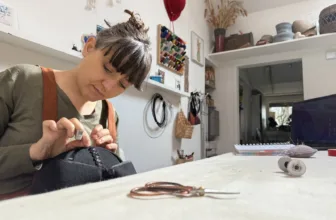
What I love is that this hobby isn’t all about battles. We have members who are weavers, potters, woodworkers or just interested in history. To highlight the craftmanship involved, I’ve got to fix my chainmail this weekend as it has a few holes in it that need patching. A big bundle of chainmail should arrive at my home soon. Crafting the repairs can be relaxing as it requires focus on something simple and physical.
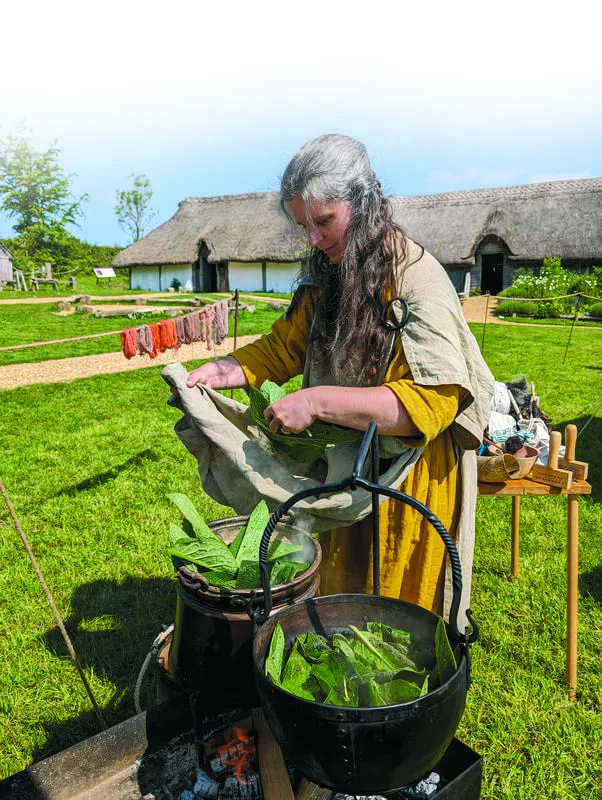
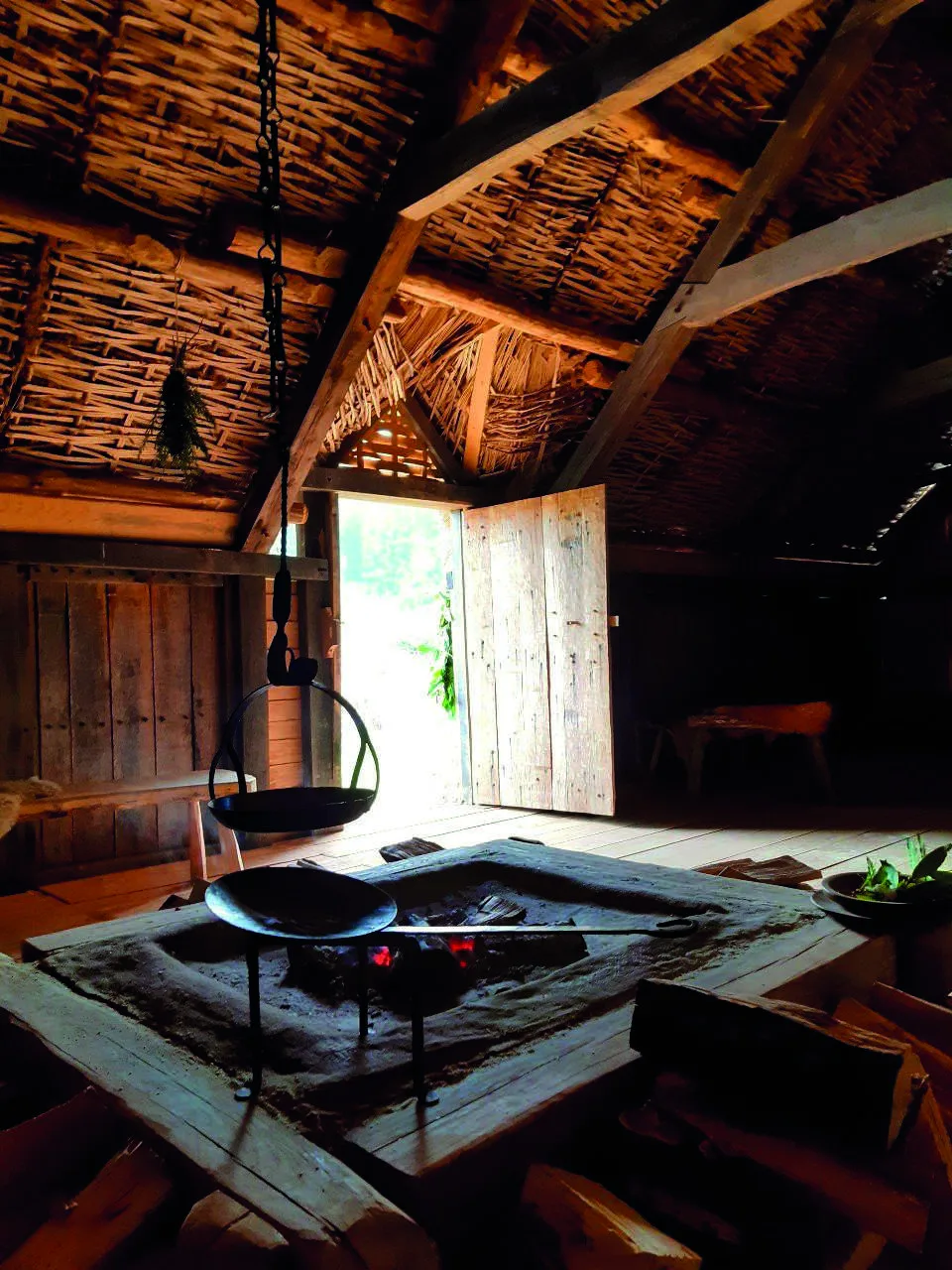
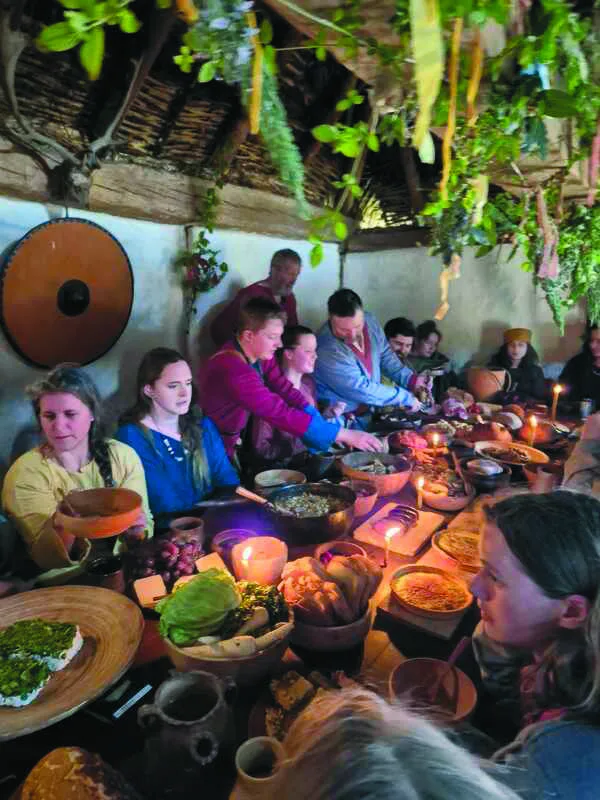
Some of our members sleep in period tents all weekend, cooking everything from scratch. Others nip home or sleep in a van, there’s no judgment. It’s about doing what you’re comfortable with. That said, there’s something magical about sitting around a fire in kit, sharing food, telling stories and just… ‘being’. One rainy Saturday at Buster’s farm stands out in my mind when we’d had no visitors all day, but saw out the day in full costume, cooking and chatting around the hearth. It was perfect.
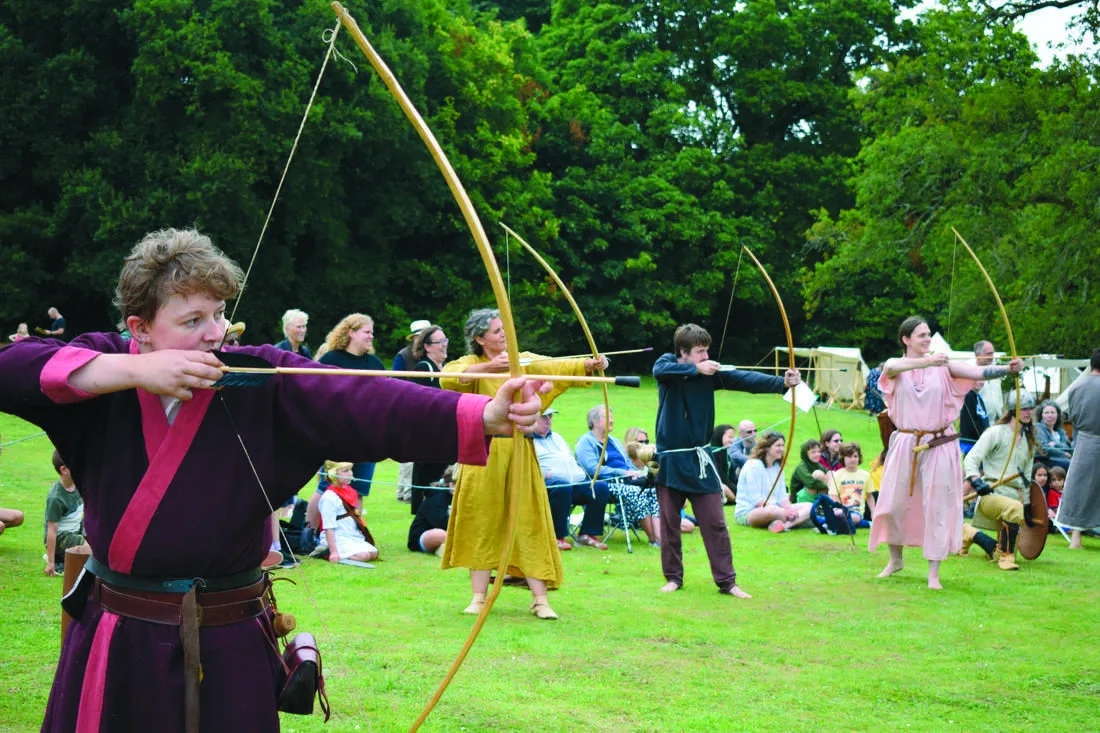
Sometimes I’ll tell old English stories or recite something in Old English just for the fun of it. We’re not just reenacting, we’re re-inhabiting a world and imagining what it might have felt like to live way back then. For instance, in Old English, one common way to say hello is “Wes hal” which translates to “be healthy” or “be well” and is used when addressing a single person.
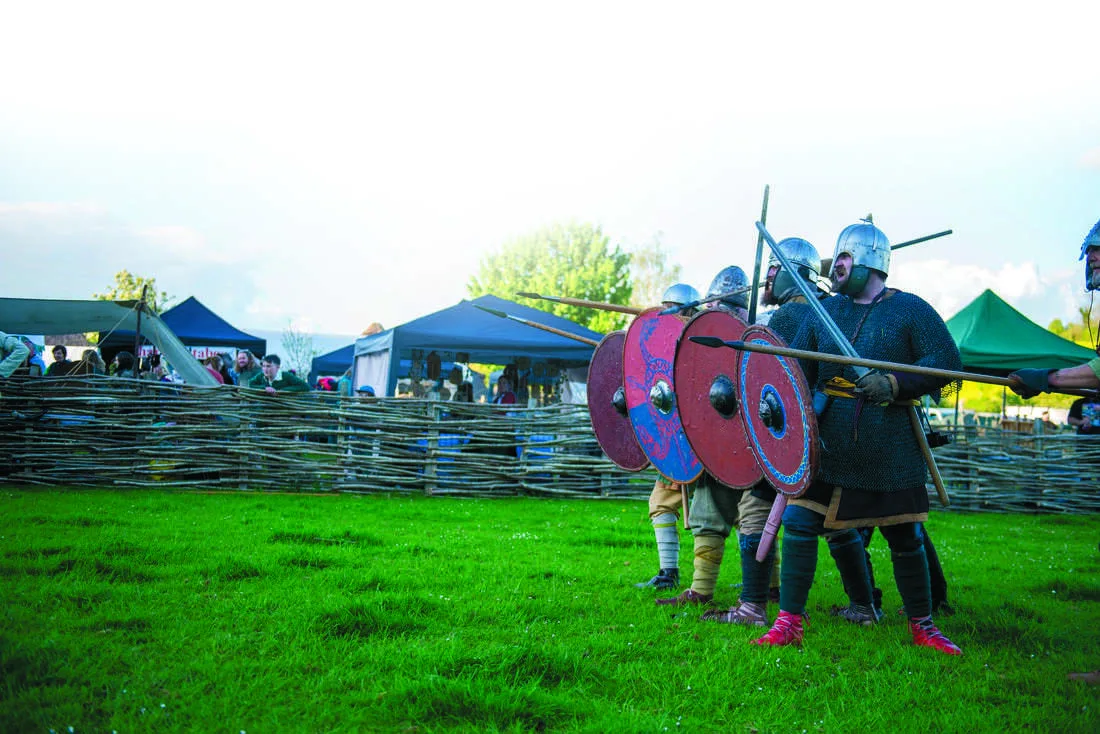
What it’s like to re-enter the Modern World
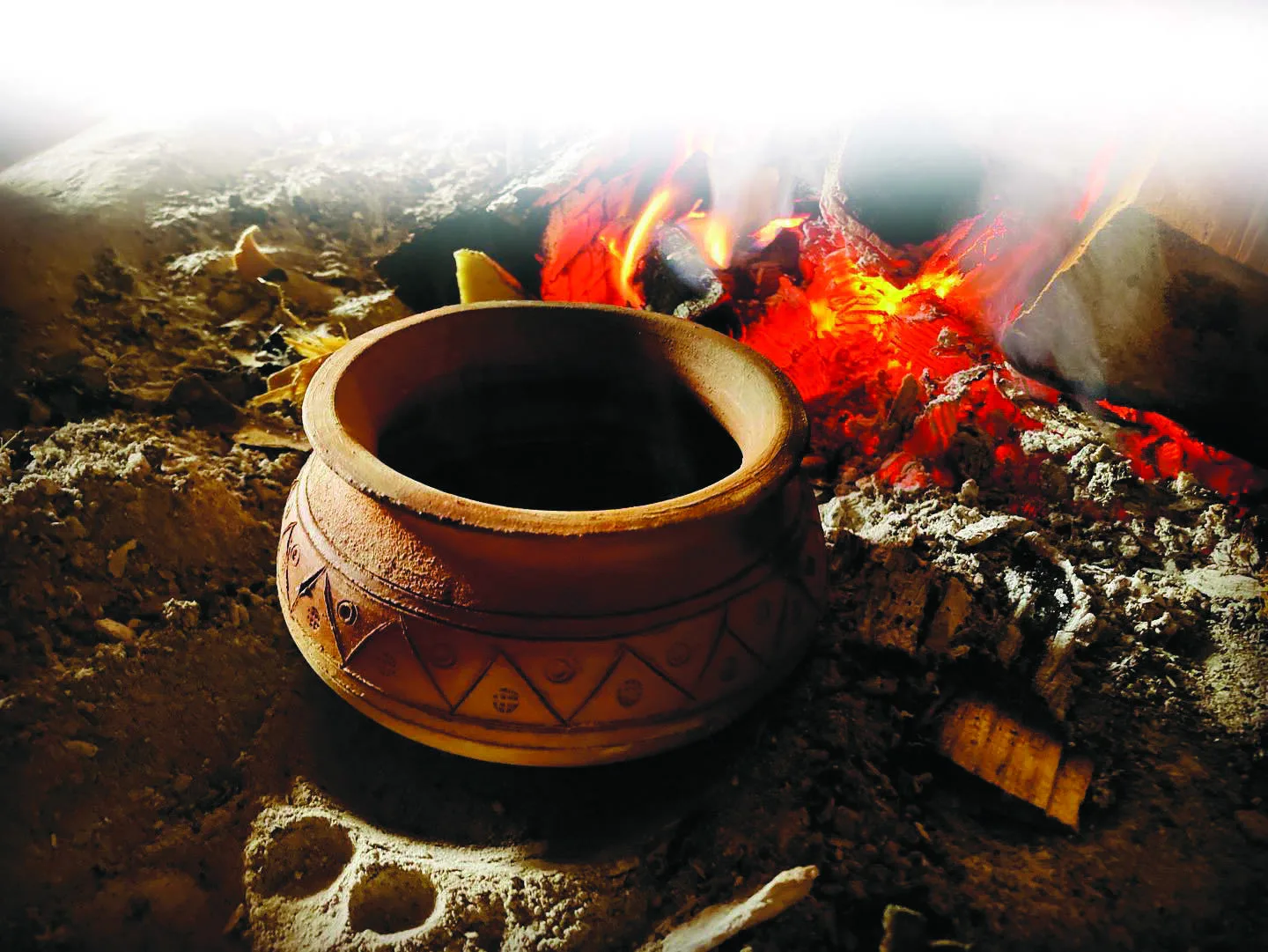
After a weekend in the Anglo-Saxon world, it can be a bit strange coming back to modern life; the emails, phones and shops for example. People often ask, “Would you rather live back then?” The truth is, no, not really. It was a brutal time, anything and everything could kill you. You could get a tick in your clothes and end up with Lyme disease. The water wasn’t clean, food had to be grown, hunted or preserved, it couldn’t just be bought from a shop. Even making a wooden bowl would take weeks – the tree had to be felled, the wood dried and turned and then hope it didn’t crack. Pottery was easier: dig clay, shape it, dry it for a week, then fire it.
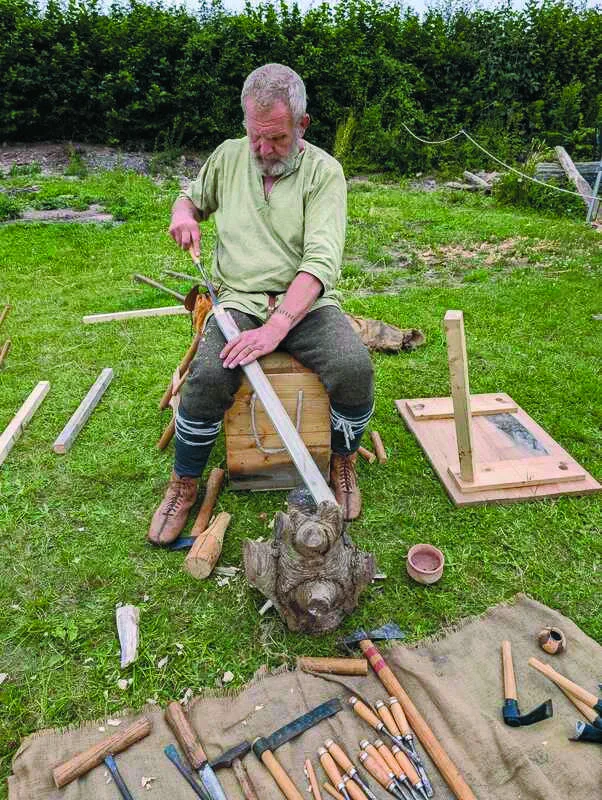
But the simplicity of that world, being close to nature, making things with your hands, spending time with friends around a fire—that part is deeply appealing. And that’s what we try to capture in the re-enactment community.
Spreading the word
For families it’s a fantastic day out. It’s more immersive than a documentary or textbook. Children love it. We show them real tools and weapons, tell stories and explain how people lived. It brings history alive in a way that’s hard to do in a classroom.
For anyone who’s curious or wants to get involved, we’re always looking for new members. You don’t have to fight, you can learn a craft, help set up camp or just enjoy the atmosphere. If you’re interested in history or in stepping back from the stress of modern life, I would really recommend it.
Our group, Herigeas Hundas, has a website where you can find a list of our upcoming shows, and is on Facebook, Instagram and even TikTok! Right at the end of our season this summer, on 28th September, you can find us locally at West Horsley Place for their Anglo-Saxon Open Day! (See the advert on page 53). You’ll be very welcome. We’re like a second family; everyone has a role, everyone contributes.
At the end of the day, I keep doing it because it’s good for my mind and body and it’s fun, social and creative. It helps me switch off in a world that never stops.
– Osgar the Potter
Herigeas Hundas
A group of seasoned re-enactors with a passion for Migration period history, based in Hampshire, focussing on the late 5th century to early 7th century Anglo-Saxon age, providing a complete living history experience, covering many different crafts and skills along with archery and combat demonstrations.
www.facebook.com/Herigeashundas