
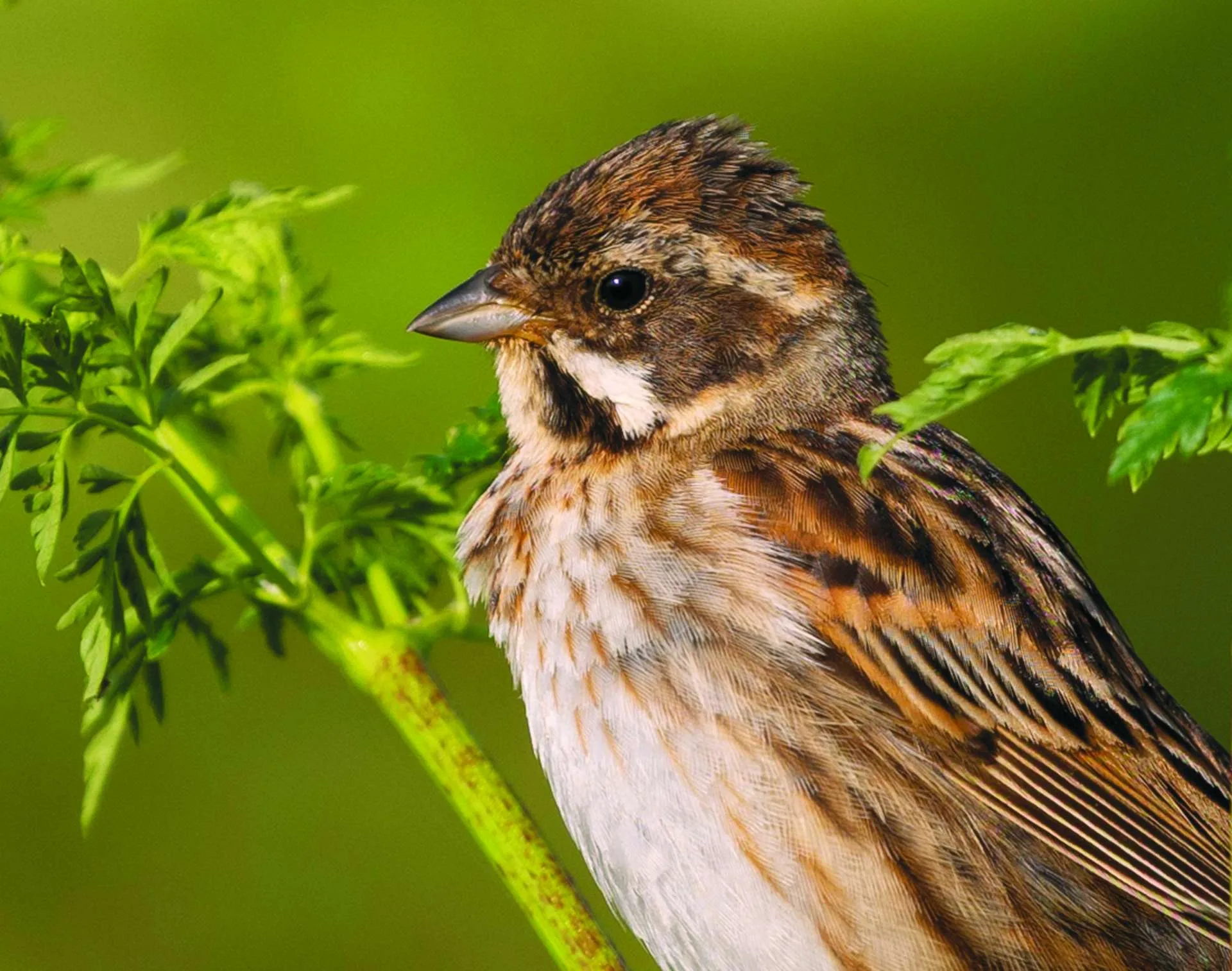
Main Photo: A female Reed Bunting
If you are thumbing through a bird field guide then one of the last entries you will come across is a dapper little fella around the size of a House Sparrow.
The females could be mistaken for one if you are not on the ball but there is – or should be – no confusing the male.
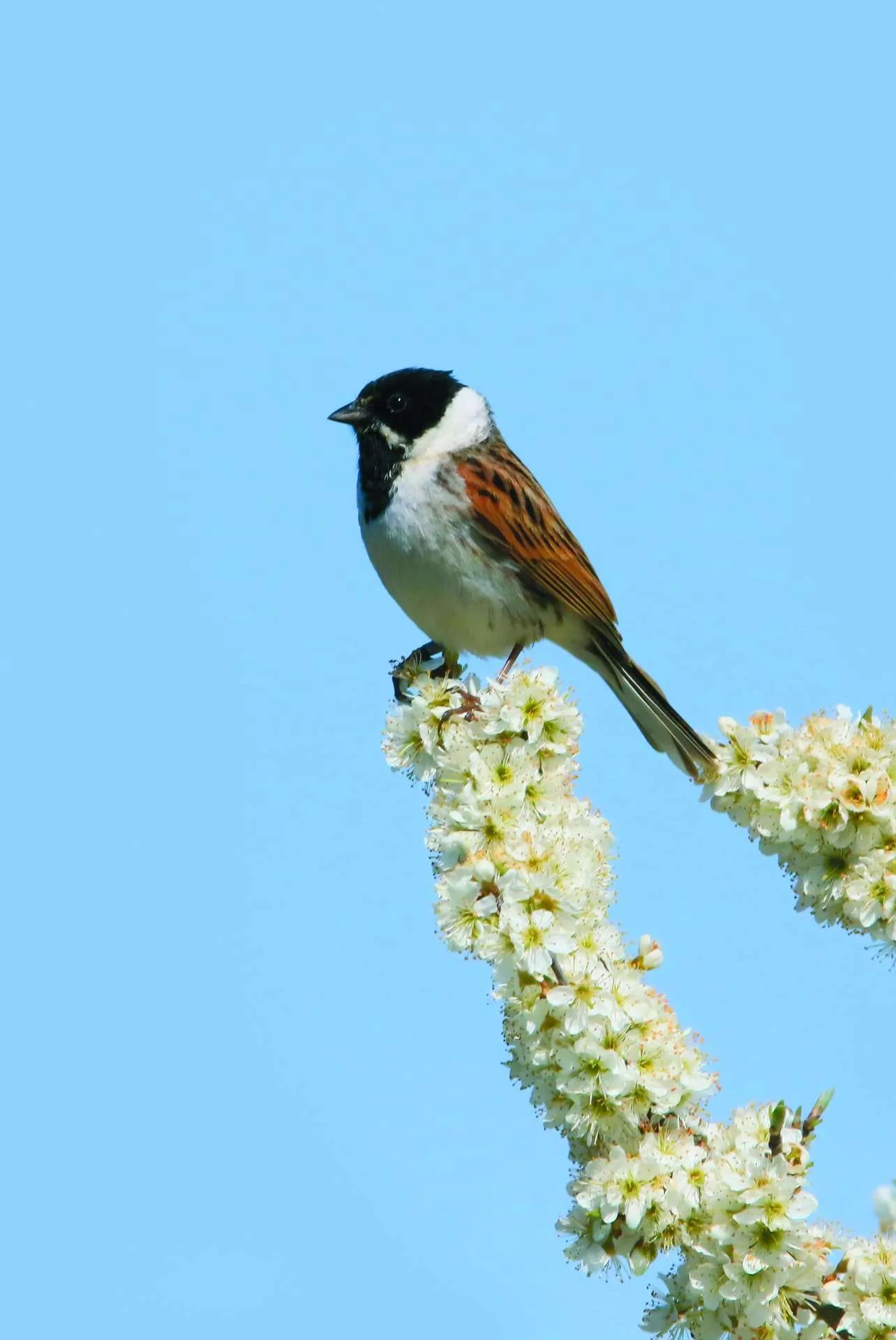
In spring and summer its black head and bib, plus a white neck band and moustache and streaky black and brown back and wings, means it is a Reed Bunting.
Around Cranleigh I am lucky if I even find one a year. With few areas of reeds and wetlands to be found it is a local rarity, although there are plenty of sites in Surrey where you will find this largely resident bird.
So one day in March, when my hopes centred on finding an early Willow Warbler or Wheatear, it was the last thing I expected to come across.
But, thanks to the gradually developing habitat around the lakeside at Cranleigh’s Knowle Country Park, a male Reed Bunting was putting on a good show.
Found earlier in the day by Nick Bamford, I was delighted to catch up with it a few hours later while it sung its little heart out from the top of willows and on prominent branches.
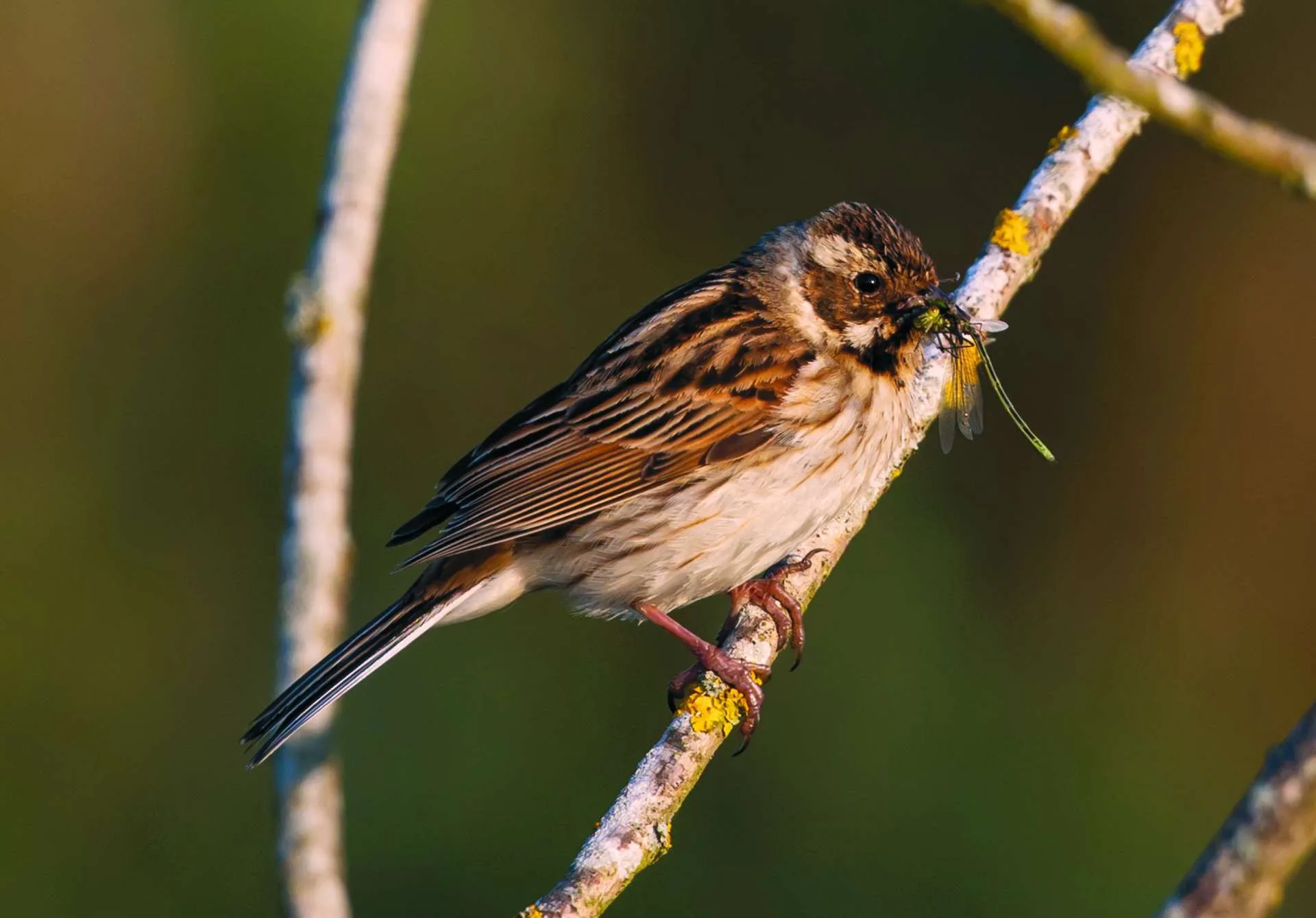
Classified as a songbird it may be, but the Reed Bunting’s voice and calls would win it no prizes. The song is a quick trill and its call sounds a bit like ‘zee zee’. Quite distinctive but not impressive enough to entice any lurking female in the vicinity that day.
As far as I know he did not hang around for long and when I returned a few days later he was nowhere to be found. But I suspect Reed Buntings will be back again at the lake as the habitat, still in its infancy, becomes increasingly to this species’ liking.
It is early days but certainly backs up the conservationists’ unofficial motto: ‘Provide the habitat – and they will come.’ Until now I had never expected the Reed Bunting to stand a chance of being commonly seen in the village. Now I think it soon could be.
This spring I have noticed a number of the fields around Cranleigh are growing many acres of oil seed rape. Yellow may not be your favourite colour, especially if it is everywhere you look, but the crop has been increasingly attracting Reed Buntings in other parts of England to breed. I shall be watching developments here with interest.
With fewer traditional wetlands for this species to breed in, it has gradually been widening its choices to include a variety of cultivated fields. Set aside fields also prove attractive but they are few and far between in our largely green grass locality.
Reed Buntings can also turn up in autumn and winter flocks of assorted finches and other birds. The trouble is they are hidden on the ground most of the time as they forage. But last November I made a big effort to try and find some at one likely field and was rewarded when a ‘ticking’ male popped up on a hedge and was then joined by a female.
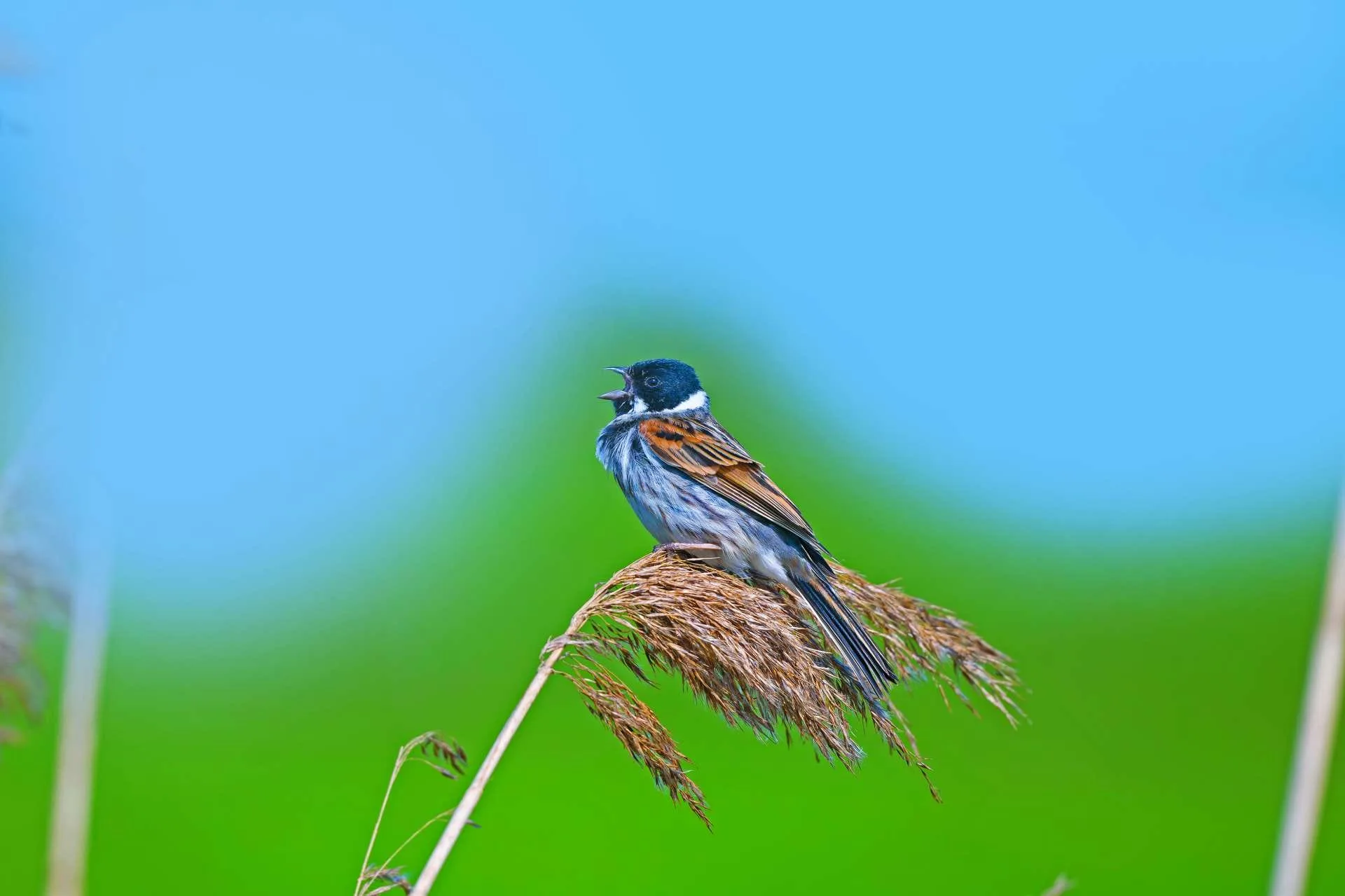
If you cannot get out much then there is hope if you have a garden. Reed Buntings are increasingly coming to take advantage of well stocked seed feeders. So it is worth double checking all those House Sparrows and Dunnocks around your feeding station are not entertaining a visitor.
They may even take bread – a relatively new food for them which some think originated from fishermen leaving it behind or throwing them a few morsels on a cold day. I witnessed a male picking up bread on my bird table way back in February 1989. But it was not until February, 19 years later that I saw another one there.
Reed Buntings are not as numerous as they once were although I like to hope they could make a comeback. But I cannot imagine we will ever witness anything approaching the flock of 186 among a huge mixed bunting flock at Ewhurst in January 1989.
And I certainly do not expect to see a repeat of the incredibly rare ‘bonus bird’ found among them. It was Surrey’s first and only Pine Bunting, a species that should have been wintering in the Indian subcontinent and China. Oops.
Stop press: The male Reed Bunting has been refound and has attracted a female. Could it be a case of ‘Hi, baby buntings’ on the way?’