
by Joy Horn
Did you know that Cranleigh was the choice for retirement for England’s first, youngest and longest-serving football manager? Today we have become accustomed to football managers living in large houses and considerable opulence, but this man, considered by some as ‘the most influential man in modern English football’, lived modestly in Orchard Gardens, then recently built on Arthur Parson’s orchard off Avenue Road.
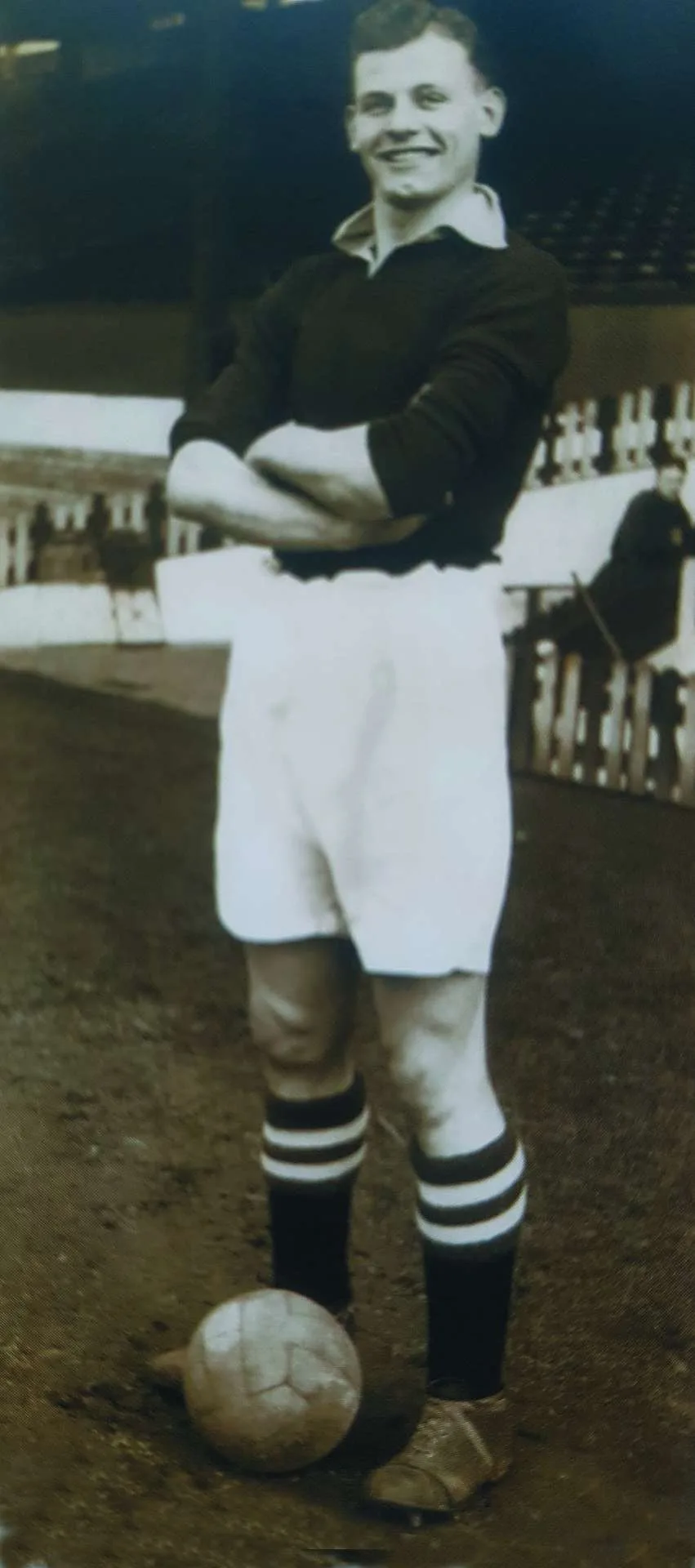
Walter Winterbottom was born in 1913 in the working-class cotton-mill town of Oldham. He might well have followed all his siblings into one of the 360 mills at the age of 14, had not the headmaster of his elementary school entered him for a scholarship at Oldham High School. From there, he won a bursary at a teacher training college. In 1934, he began teaching, at the same time playing football for Mossley and then Manchester United. Teaching and playing football were compatible because clubs had no floodlights then, so football took up only Saturday afternoons. Man Utd paid him £8 per week, with a £2 bonus for a win.
Called up in World War 2, Walter joined the RAF, where he became a squadron leader and chief RAF PT instructor. Ever the teacher, he ran training courses in drill and PT every 6 weeks for 600 selected recruits, who then passed on what they had learnt at RAF stations throughout the world.
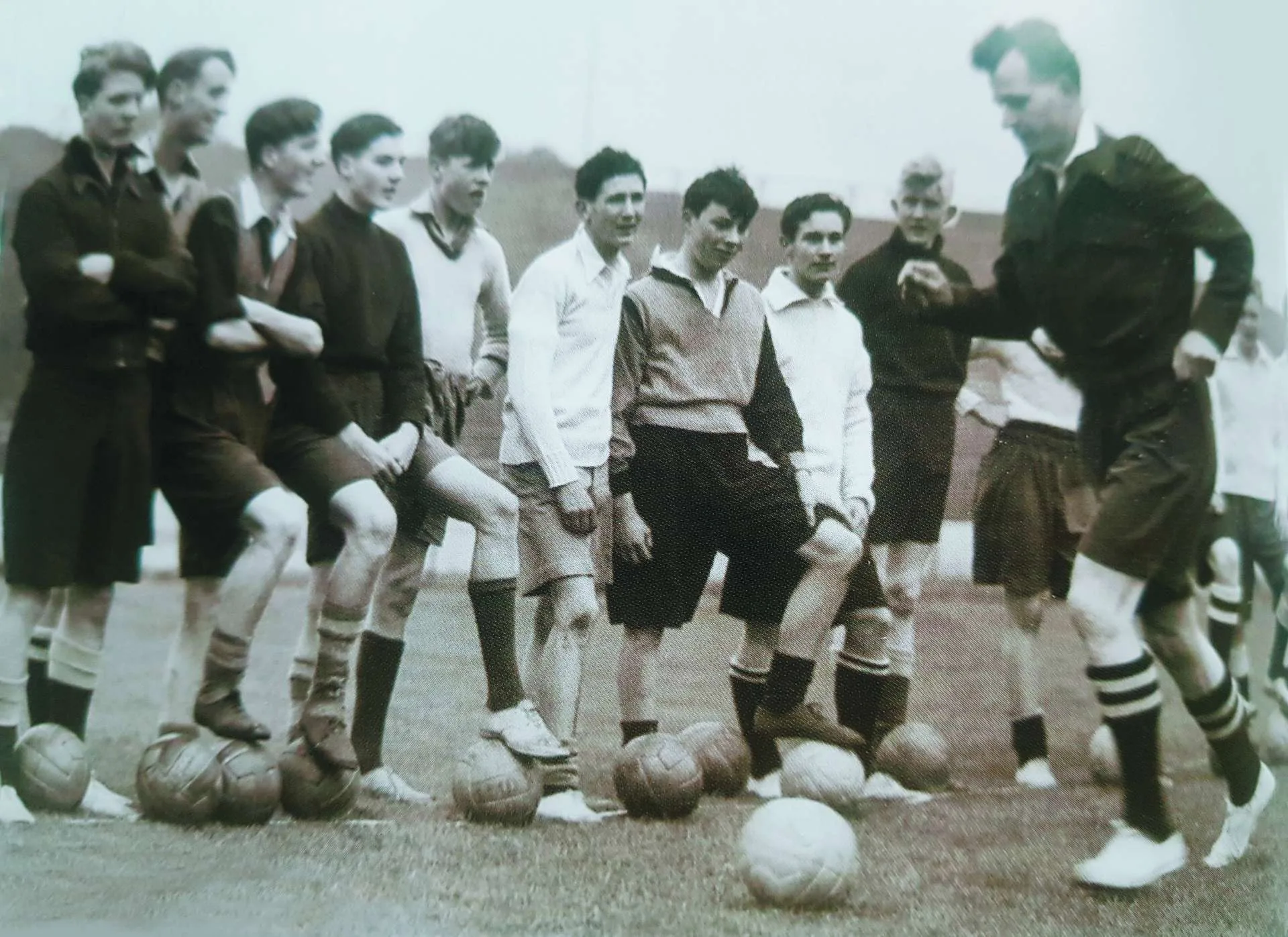
After the War, Walter was made director of coaching at the Football Association. There, education was the cornerstone of his work. He ran courses for coaches, and he encouraged professional players to get this qualification, which opened the possibility of a career in football for them, after retiring from playing. Courses for referees raised standards of consistency. Courses for groundsmen gave instruction on the care of turf and the problems of maintaining pitches in winter in the British climate, when pitches were used both for matches and for training.
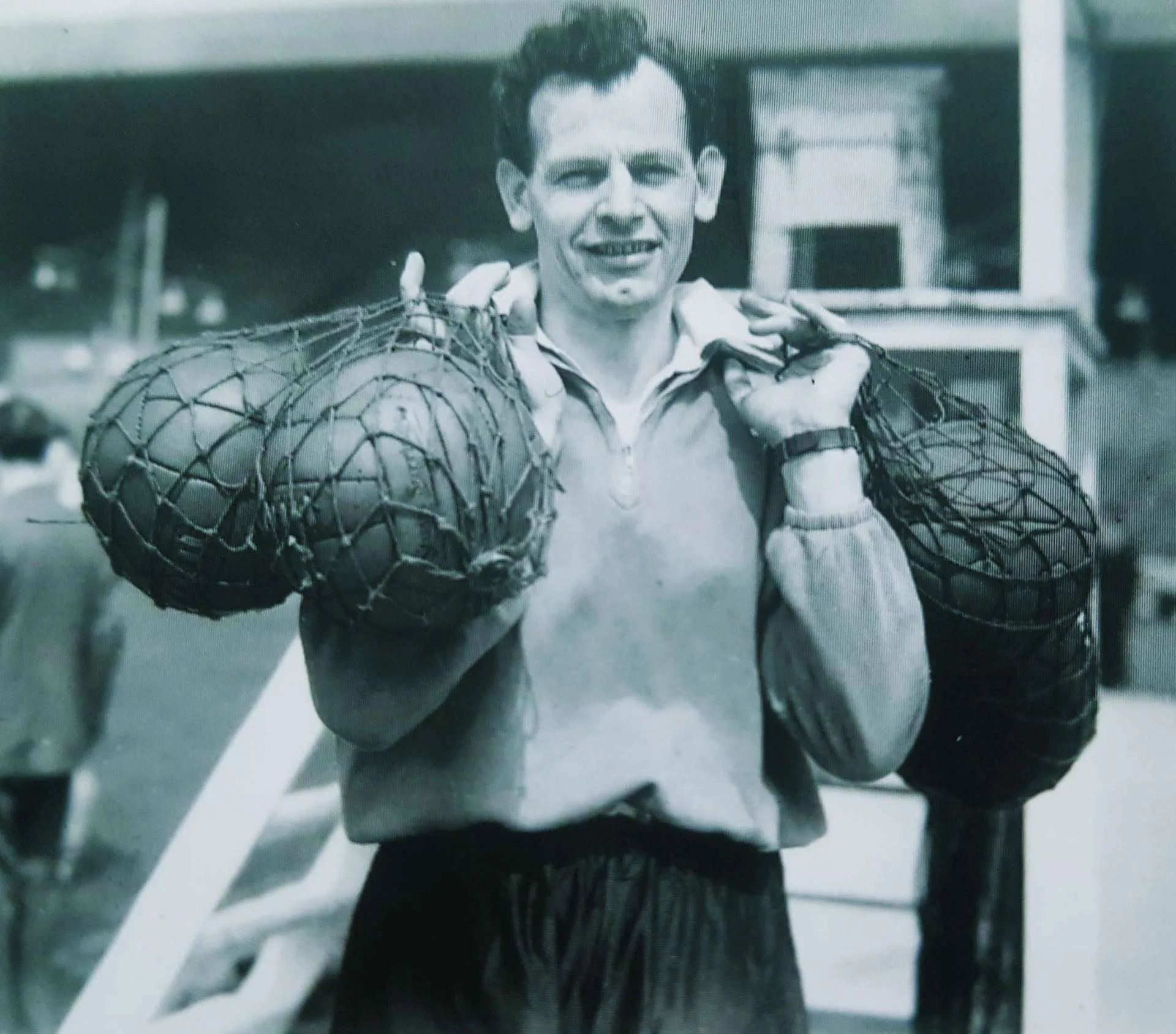
He campaigned for clubs to install flood-lights at their grounds to make evening training sessions possible in winter. And instead of players merely running countless circuits of the pitch, Walter promoted structured sessions to build up strength and skills. Whereas previously teams had often had only 2 balls for pre-match shooting practice, Walter set a standard by providing his visiting coaches with nets of balls, so that each player had his own. He introduced lighter-weight kit and boots.
A series of 10 coaching films was made by Gaumont-British under Walter’s direction, with notable players demonstrating ball control, trapping, kicking, throwing in and attack and defence tactics. These films were very popular and were distributed free of charge to colleges, schools, clubs and public libraries.
From 1948, an annual publication, The FA Book for Boys, combined education and entertainment, with articles by famous players, coaches, referees and sports journalists. Walter wrote Soccer Coaching (1952), the very first book of its kind.
The job of manager of the England team went with that of director of coaching, but initially this meant little more than paying the players their cheques. The manager did not choose the team: this was the preserve of a selection committee, who chose the best player in the country for any given position, regardless of how the players were likely to work together. Nor was the manager expected to decide the tactics for any match. Instead, the senior players decided these among themselves. The manager had access to the team only 2 days before an international match.
Gradually, Walter succeeded in gaining more control over the selection of the team and the tactics. He formed a structure of under-18, under-23 and England B teams, and eventually a squad of 18 top-level players. He then persuaded the Football League to release these for ‘get-togethers’ of 2 to 3 days between international matches, which proved invaluable for relationship-building.
During Walter’s time as England manager, England played 139 matches, winning 78, drawing 33 and losing 28. And the foundation had been laid for England’s World Cup success in 1966, under Alf Ramsey.
Walter had a second career as director of the Sports Council, where he promoted sports development at a national level. Space forbids more than 2 incidents.
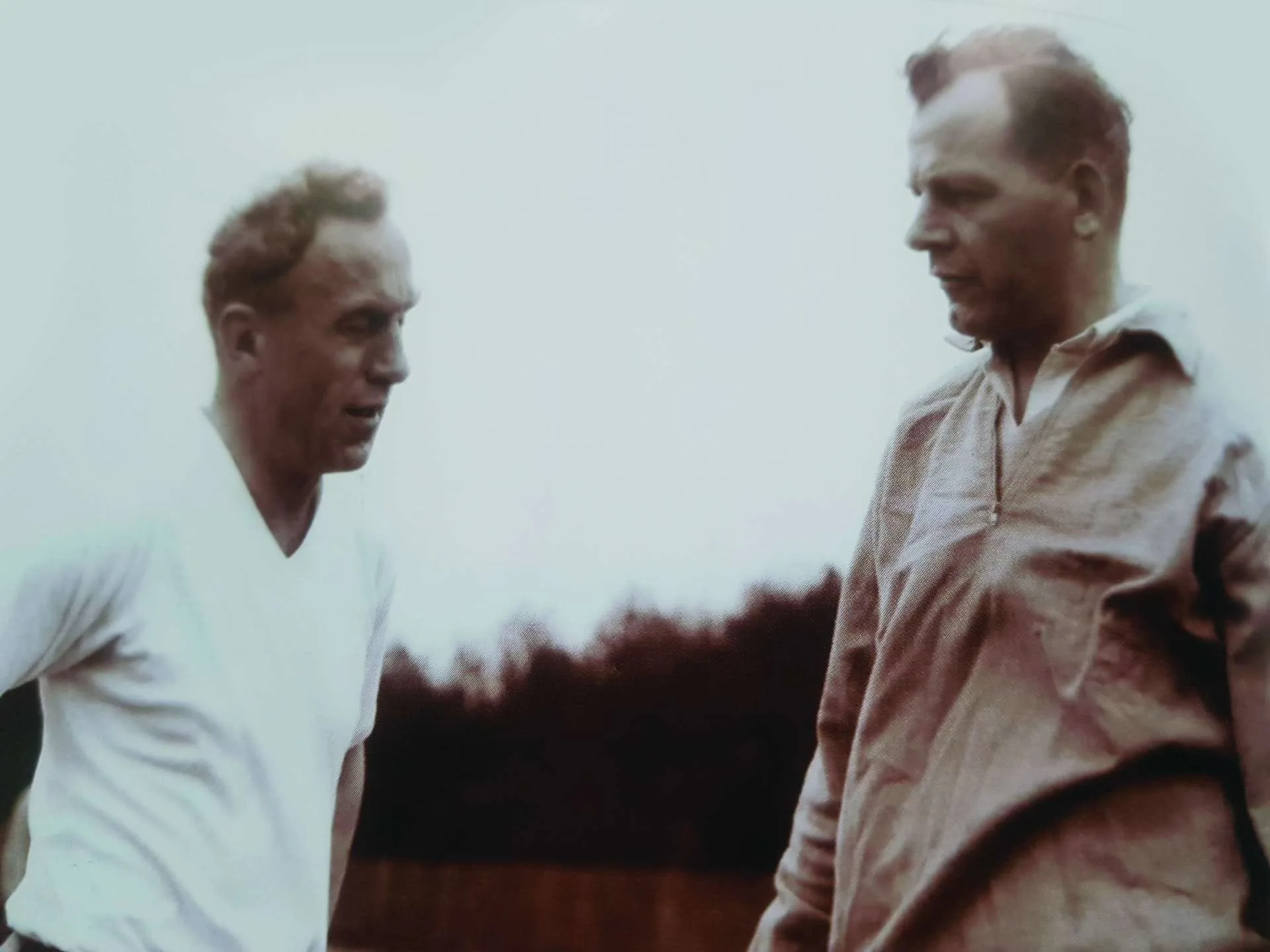
Walter had an appointment with Prime Minister Margaret Thatcher to discuss the widespread selling-off of school playing-fields. Mrs Thatcher however, wanted to berate Walter on football hooliganism. After 20 minutes Walter, untypically angry at being unable to speak on the agreed topic said, ‘I can see, Madam, that we are wasting your valuable time’, and left the room. Aides apologized profusely at once, saying that Mrs Thatcher had not been properly briefed.
The other anecdote concerns Princess Diana, whom Walter sat next to at the lunch before an England match at Wembley. He told her, ‘Years ago, the guest of honour used to go on the pitch and kick the ball off before the start of a game.’ She clapped her hands together and declared, ‘Oh I would like to do that!’ The rest is history.
The Winterbottoms retired to Cranleigh in 1978, the same year as Walter was knighted ‘for services to Sport’. People in Cranleigh who remember him invariably describe him as ‘a real gentleman’, with interest in, and concern for everyone he met. He joined Probus. He was able to get on with people of all types, both old and young.
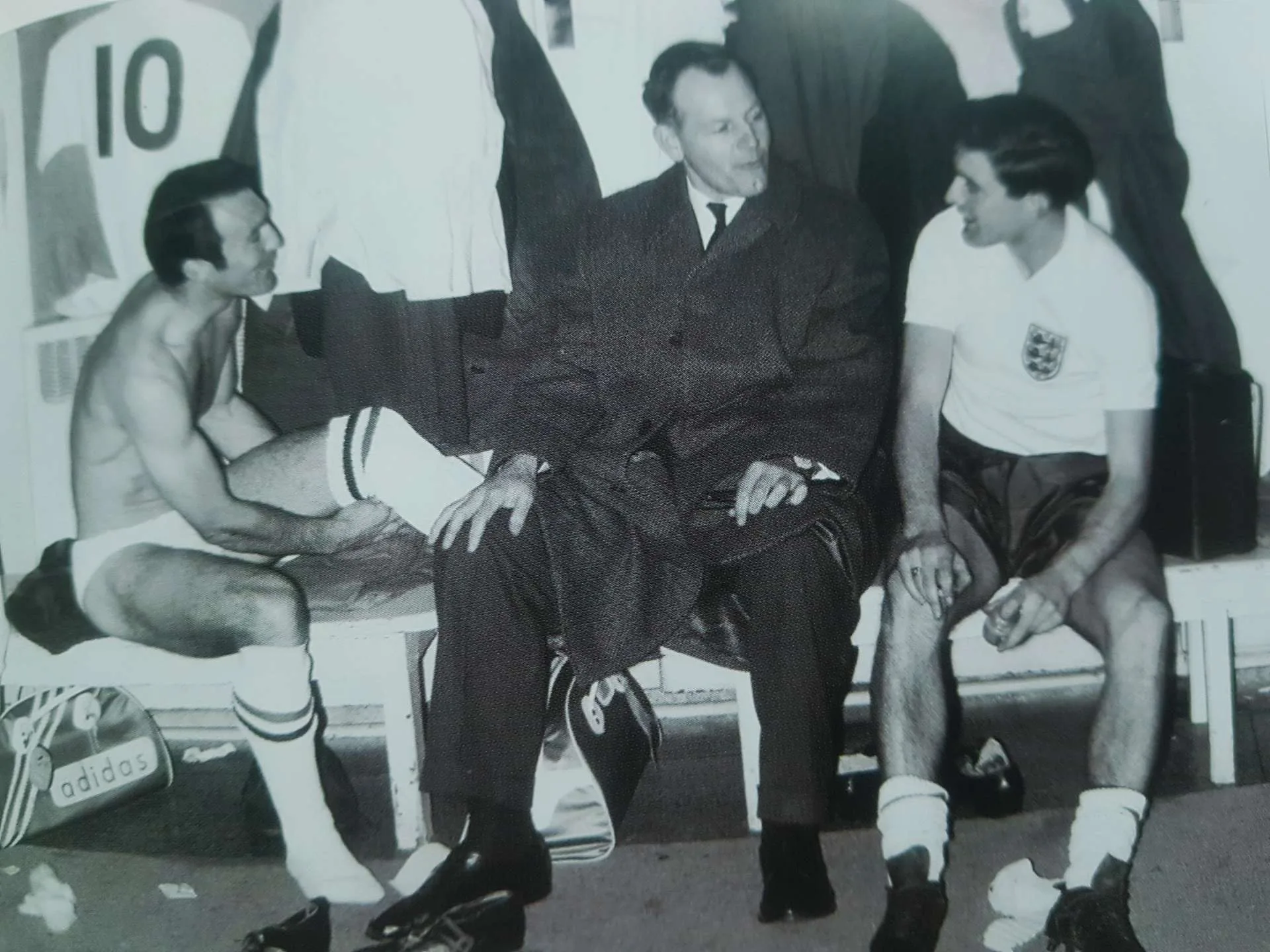
Lady Winterbottom became a regular member of the Mother’s Union at St Nicolas church and at the age of 78, Walter applied to be confirmed there. He attended classes, where he and the Rev Nigel Nicholson engaged in lively discussions. At the church confirmation service, when Walter went forward to be confirmed by the bishop, ‘the whole congregation rose to their feet unbidden in a spontaneous and silent expression of their love for the man’.
Walter died in 2002. Three years later an iron Easter candle-holder was given to the parish church in his memory. Andy Nicholls, the Essex wrought-iron smith who made it, portrayed the 3 bags of gold coins traditionally associated with St Nicolas as 3 footballs!
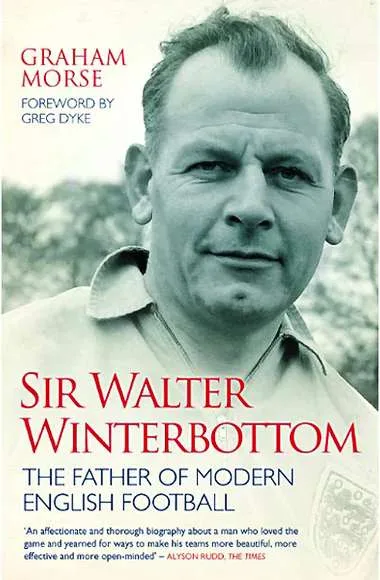
For footballing matters and most of the photos, this article has drawn on Graham Morse, Sir Walter Winterbottom: the Father of Modern English Football (2013). For Cranleigh, it is greatly indebted to Hazel Cherry, a close friend of the Winterbottoms, Brian Bagot and Angus Henderson and warm thanks go to them all.
The Cranleigh History Society meets on the second Thursday of each month at 8pm in the Band Room. The next meeting is on Thursday May 14th, when Iain Kennedy will speak on ‘The Special Relationship’.