
by Miki Marks
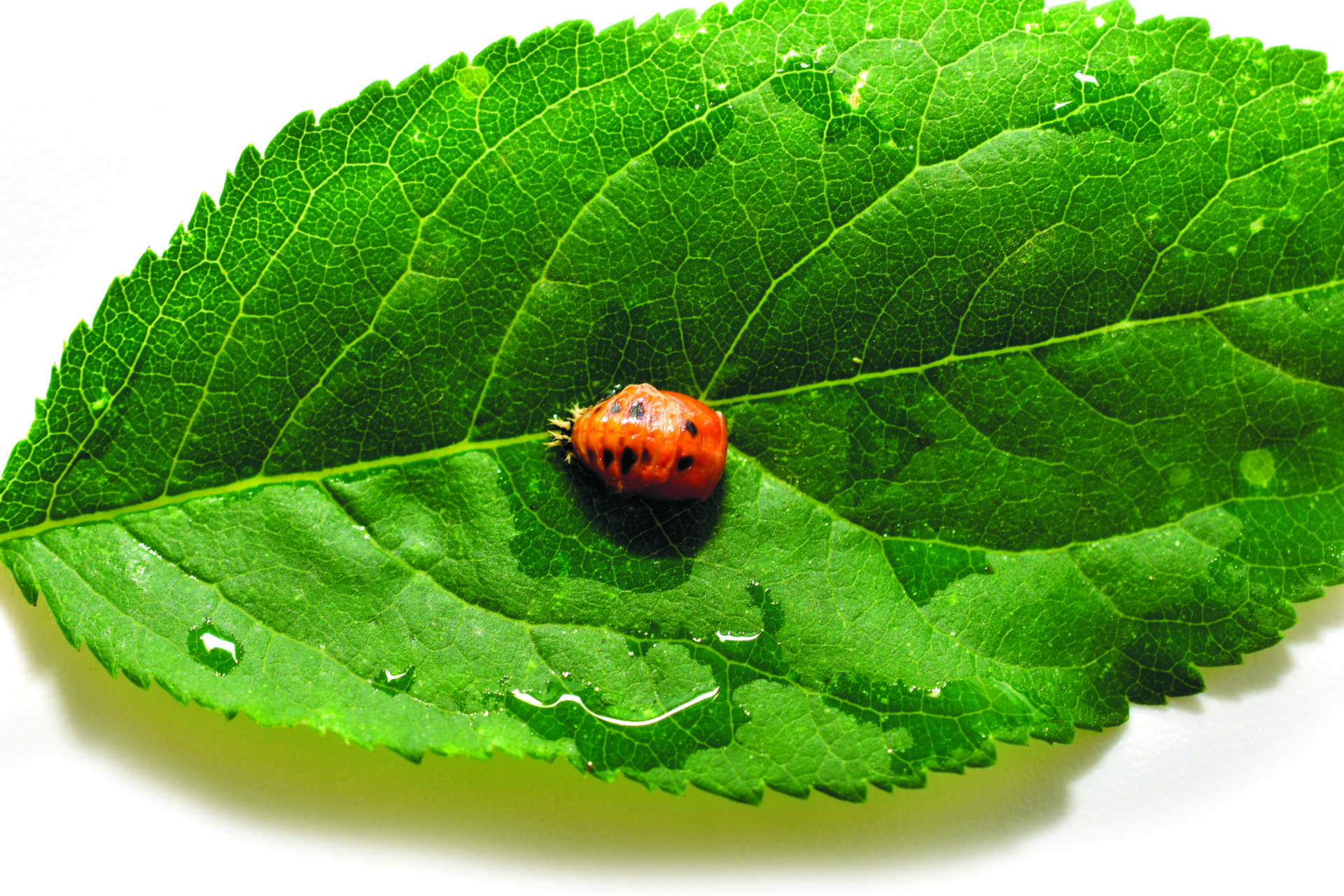
My neighbour came round with a couple of leaves from her cherry tree. One leaf had what was clearly something in the larval stage, nibbling away. The other leaf had some small hard spherical blobs – we guessed they were pupae. She had noticed what might have been eggs previously on the underside of the leaves. After some research we found that what we were looking at were the first three stages in the life cycle of a ladybird. In what is described as ‘complete metamorphosis’, this goes from eggs to a mobile larval feeding stage with four moults called ‘instars’. It then enters the fixed pupal stage and finally turns into the familiar ladybird.
Ladybirds are beetles and they form part of the largest division in the whole animal kingdom. There are more than a quarter of a million different kinds of beetles. Huge tropical beetles over six inches in length to some so tiny that they can only be seen under a microscope. Not surprisingly, there are many forms of ladybird or perhaps more correctly lady beetles. There is great affection for this little creature; its looks are appealing and it is dubbed the ‘gardener’s friend’ eating huge numbers of pestilential aphids.
Where the name ‘ladybird’ comes from is not certain. ‘ Lady’ refers to the Virgin Mary and the name is thought to have arisen in the European Middle Ages when the farmers faced crop devastation due to pests. They prayed and Our Lady sent her ‘birds’ to the rescue and the crop was saved. There is another theory that the name derives from the red cloak Our Lady sometimes wore in early paintings. Whatever the origin of the name, the little creature has universal appeal.
Most creatures are carnivorous – less usually so are some plants. I was given some wild teasel plants earlier in the year – Dipsacus fullanum. The botanical name Dipsacus comes from the Greek word meaning ‘thirst’ and refers to the way rainwater collects in the cup-like structures formed at the base of the leaf stems. These plants are classified as ‘carnivorous’. Insects frequently become trapped and drown in the liquid which contains specialised bacteria that break down the insects bodies so that nutrients are released to the plant.
A cultivated and especially spiky form of teasel is known as the ‘fuller’s teasel’ which refers to the early use of the plant heads by the cloth makers to raise the knap of woollen cloth in the manufacture of cashmere and velour.

By the time you read this the Sycamore Gap vandals will have been sentenced. There has been plenty of comment in the press from those who were saddened and shocked by the mindless destruction and a few who said they didn’t know what all the fuss was about. They believe that the tree is a foreign invader, little better than a huge weed and that it contributes nothing to the ecosystem. Not so, says botanist and lecturer Ken Thompson from Sheffield University. In the chapter on sycamores in his excellent new book Common or Garden he argues that whilst sycamores do not host such a variety of insects they make up for it in quantity of aphids. This is valuable food for our friends the ladybirds and lacewings, hoverfly larvae and aphid-farming ants.
The bark of the sycamore supports a relatively large number of lichen species – including some rarities. Small mammals and birds eat the seeds and bees love the pollen. The wood is valued for its durability and used for furniture, kitchen utensils and burns almost as well as ash.
The sycamore tolerates high winds and makes an excellent shelter belt tree, much planted in the north of England and Scotland. It can grow into a very handsome tree. The sycamore is not such a newcomer, either. The first record of one was a huge example at Kippenross House, Dunblane. The tree no longer exists but there is convincing proof that it was planted in 1401.
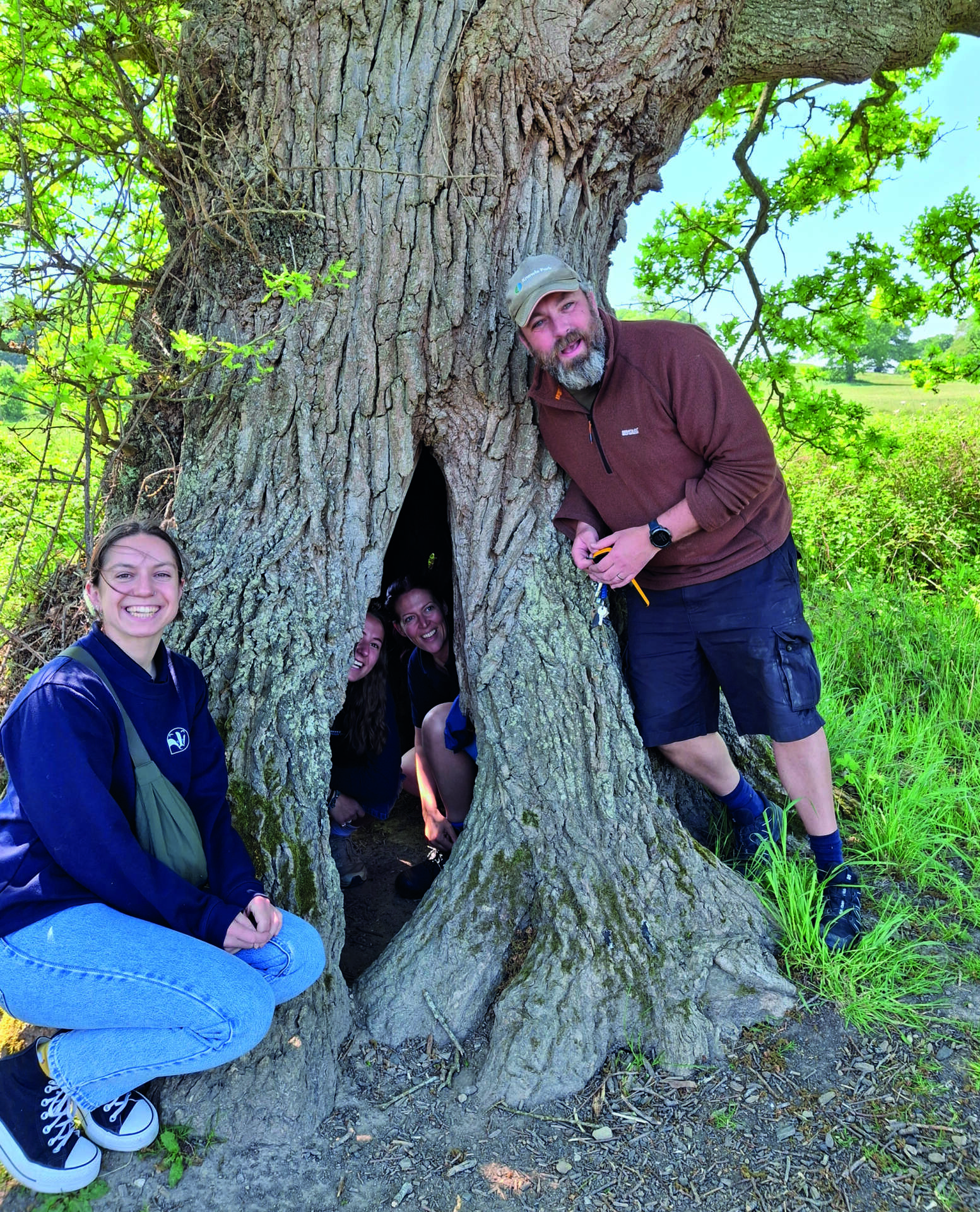
Not only are trees lost through vandalism, but ill-judged ‘improvements’ by councils and loss of habitat due to large developments. The government plans to weaken planning protection further and we will all ultimately be the losers. It is sometimes hard to feel that we can make a difference. One way is to join an organisation such as the Surrey Wildlife Trust – and add our voice to theirs. The SWT cares for more than 9,ooo acres of the countryside of our very special county. I recently met up with 3 new Surrey Wildlife Trust trainees and was so impressed by their knowledge and enthusiasm. The photo is of their recent visit to Knowle Park, where they met Martin Bamford and learnt about the inspiring work going on there. The SWT could not carry out this vital work without the support of volunteers, members and donors.