
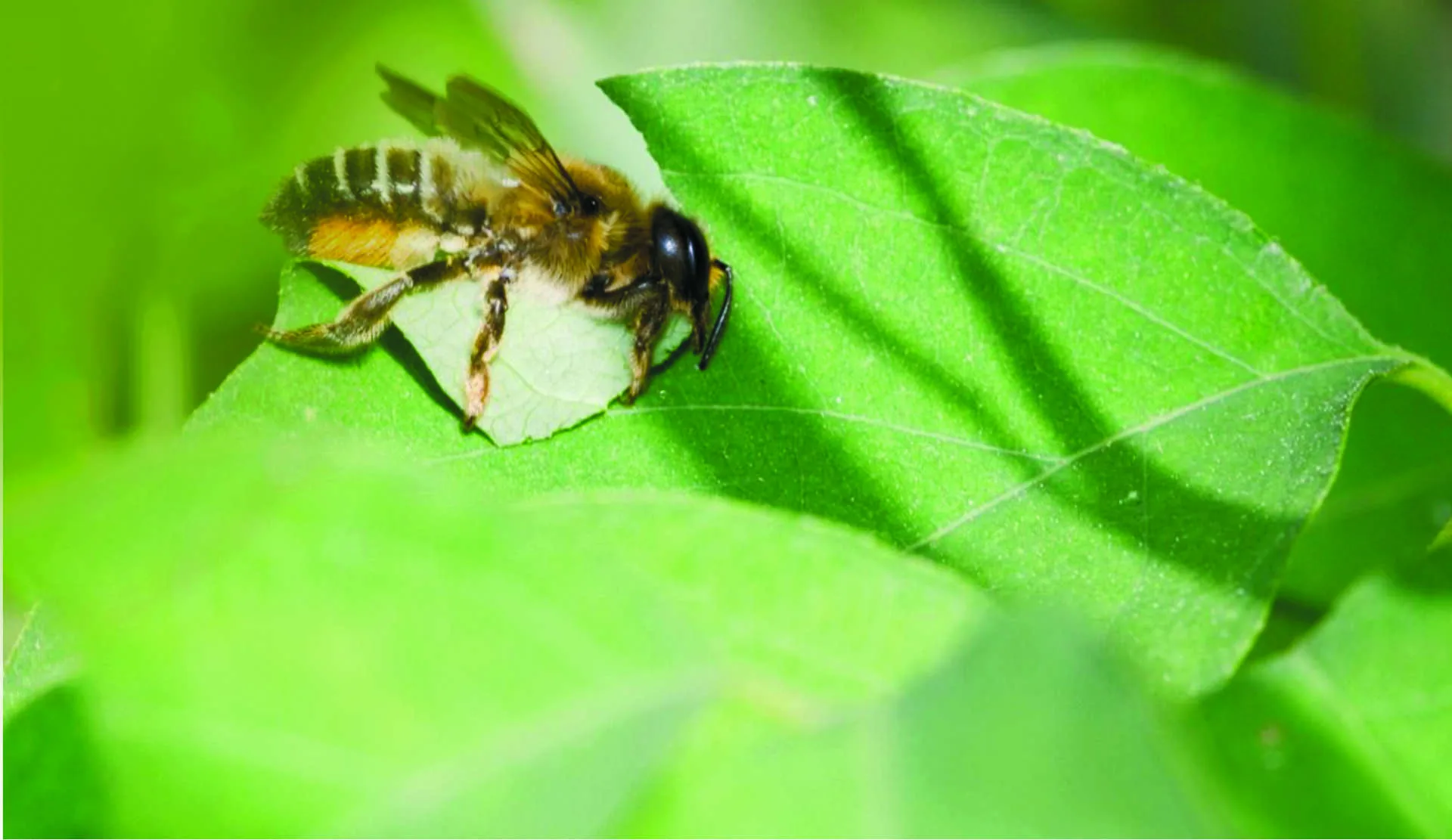
by Miki Marks
The leaves of my little St John’s- wort (hypericum) were obviously proving very attractive to some creature; they had scallop shaped pieces missing all round the edges. I suspected that it might be a leafcutter bee – and so I did some research. This bee is solitary and is most active from late spring to late summer. The female builds its nest in pre-existing cavities either in hollow stems or holes in wood. Their mouthparts are adapted to neatly cut semi-circles of leaf. The bees use sections of the leaf to construct separate chambers or cells in the nest, fixing them together with saliva. These they provision with nectar and pollen and lay one egg in each cell and seal it up. The female then dies – exhausted, I should think, as her job is to build nests, gather food and then lay the eggs. Her life-span is on average 6-8 weeks. The male has an even shorter life span – his role is mating and then Nature, in its economical way, has no further use for him. The eggs hatch in about 15 days and the larvae take 35 days to reach pre-pupal stage. Depending on the temperature, the larvae can overwinter – lying dormant until the warmer temperatures herald the spring. They then pupate and emerge as adults to start the whole cycle again. Leafcutter bees are important pollinators and not at all aggressive.

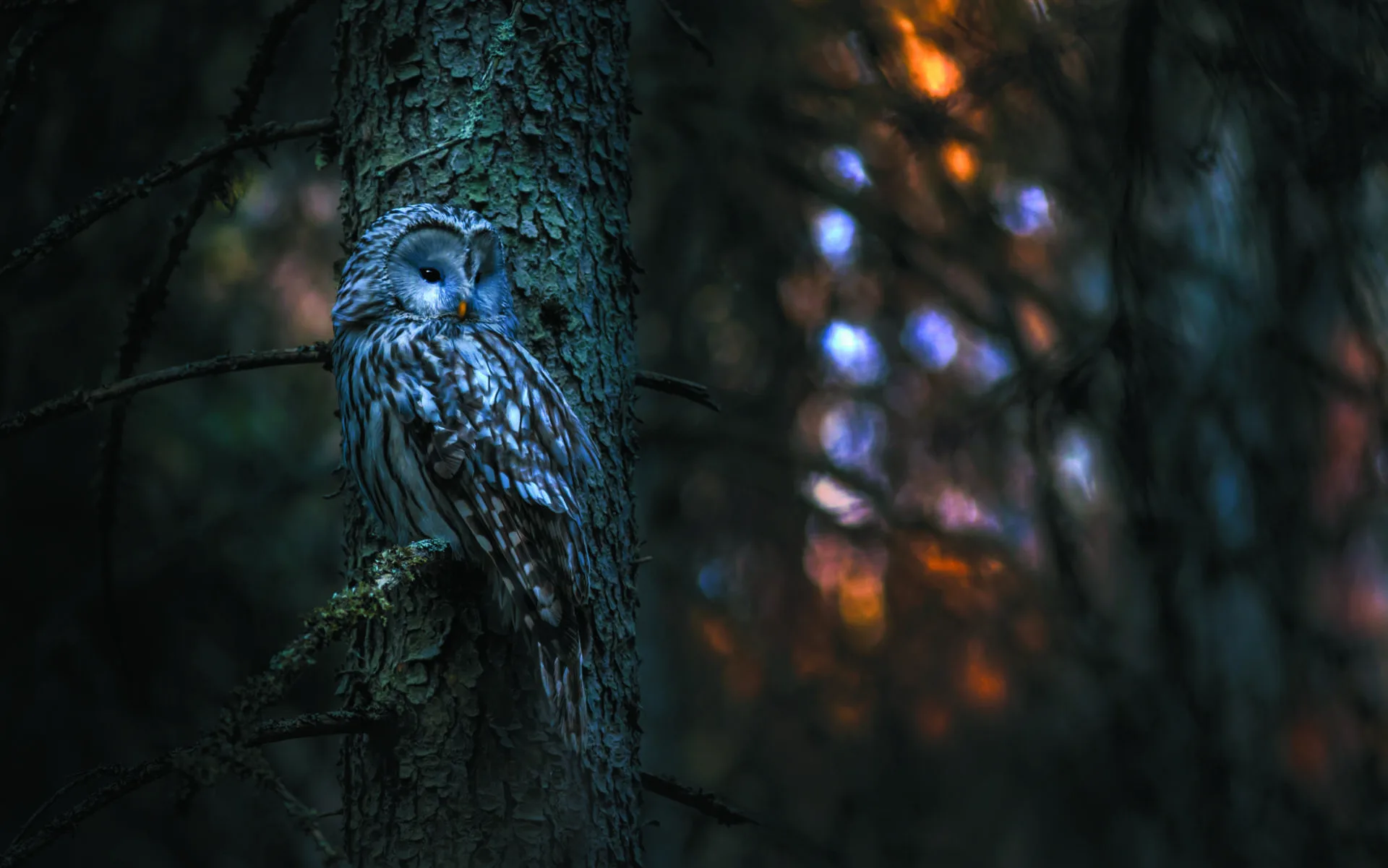
The change in the rhythm of the seasons is noticeable in September. Whereas some creatures rely on temperature to trigger changes – so does the amount of light. This rhythm is called Circadian from the Latin circa diem meaning ‘around the day.’ This cycle of daylight/night influences plants, animals and humans. It is like a clock which regulates the active and inactive periods. In humans, this cycle has been extensively studied. The Circadian Clock, situated in the hypothalamus in the brain affects a vast array of physical and mental functions from DNA repair to weight gain and depression. When darkness falls our body is instructed to secrete melatonin – which promotes sleep. As light increases with the coming day, the melatonin production falls. Exposure to natural light is one of the main drivers of the Circadian Clock and it is essential for well-being to get out into the natural world. Too much artificial light interferes with this natural rhythm. In built-up areas this all night illumination can affect us and many creatures whose Circadian Clock tells them either to rest – or to hunt safely in the dark.
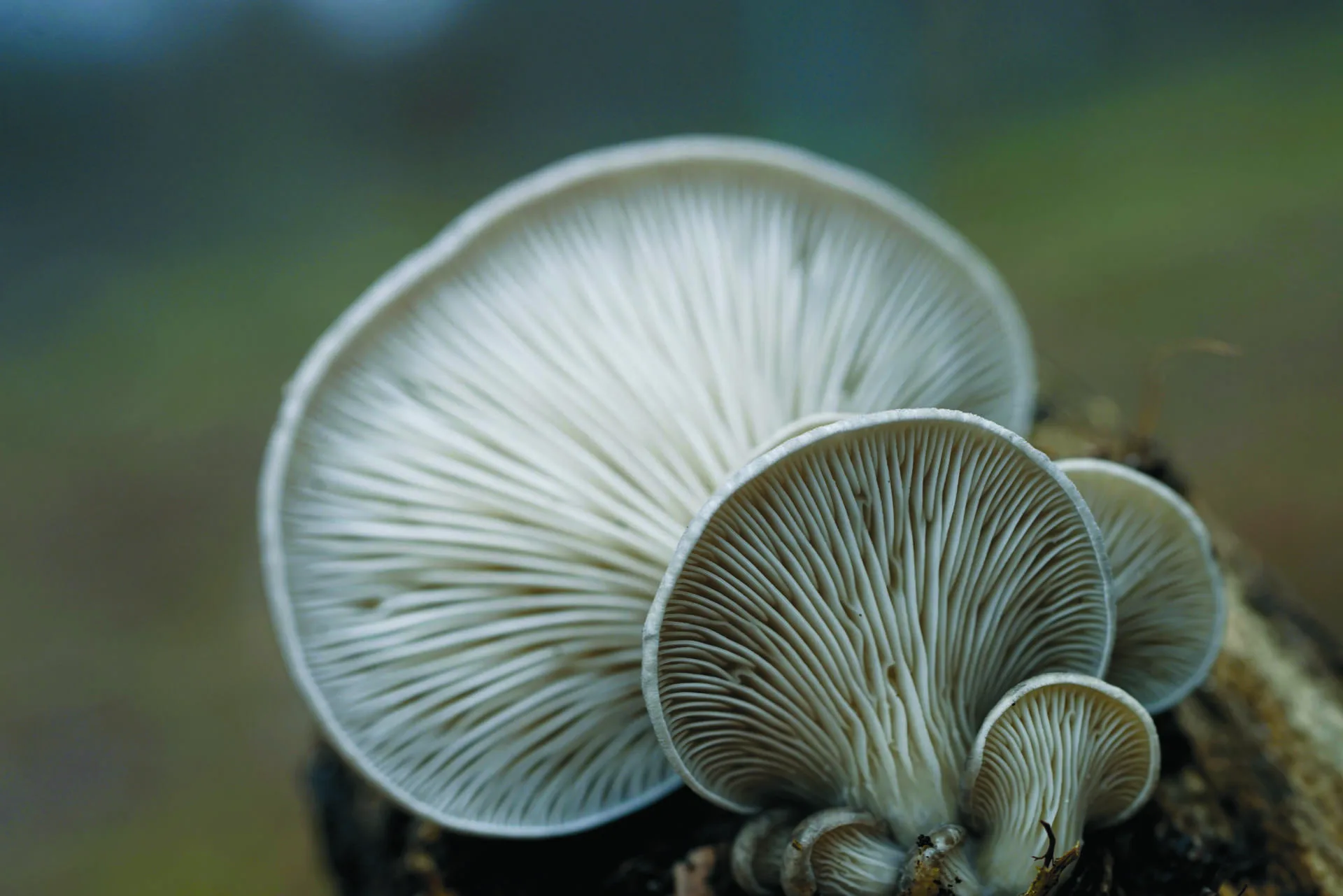
In September many annual plants set seed and die. Perennials and deciduous trees shed leaves and store the sugar in their roots. This means there is less available food for soil microbes, which slow and then settle into inactive rest. Fungal networks begin to send up mushrooms, which are the fruiting bodies and these provide nourishment for a range of species like field mice and beetles. And for lovers of delicious mushroom omelettes.
There are some wonderful trees in the grounds of Knowle Park Nursing Home. Planted in mid Victorian times when the smart people prided themselves in laying out parks and collecting exotic trees. I particularly admire a group of three eucalyptus trees – and they remind me so much of the trees I grew up with in Uruguay. Eucalyptus trees are native to Australia and Tasmania and the seeds were introduced to the UK in the late 18th century. They were first planted under glass at Kew Gardens – allegedly the seeds were collected by Captain Cook. A Eucalyptus was first successfully planted outdoors in Scotland.
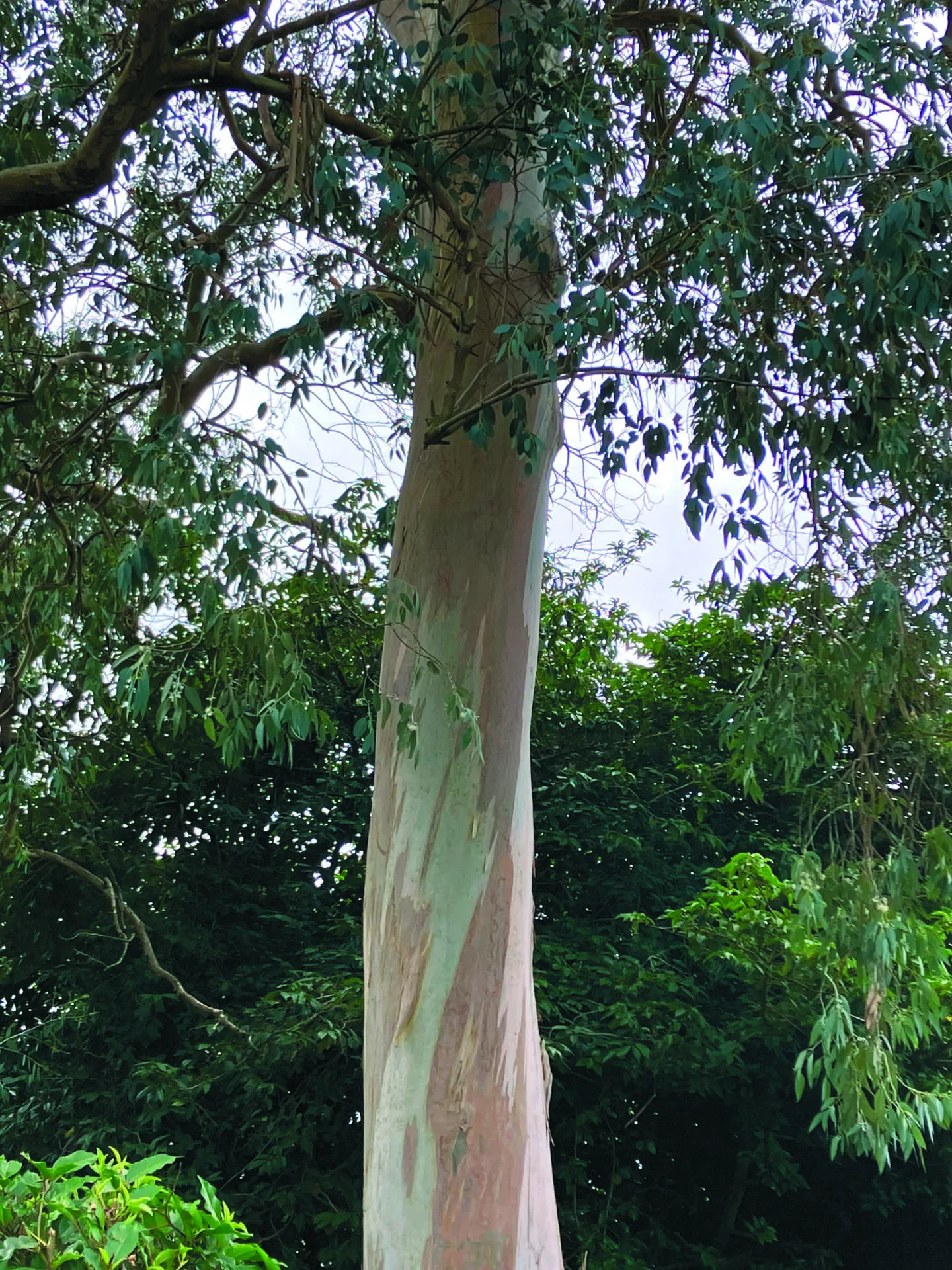
Although the Eucalyptus trees I grew up with had all been introduced to South America in the 19th century – there is evidence that when the Southern hemisphere was one large landmass called Gondwana, millions of years ago, Eucalyptus trees flourished all over the landmass – and fossils have been found in Argentina.
I love the colourful bark of the trees – and the sound the leaves make when the wind blows. Due to climate change studies are being made into what trees will survive the change and which will flourish. Eucalyptus is a top candidate and the forestry commission are assessing the usefulness of the timber. They live for about 250 years and provide shelter and shade. Eucalyptus oil has proven medicinal properties helping in the treatment of respiratory conditions, especially coughs and colds. The oil is easily released and apparently it can be beneficial to hang a bunch of eucalyptus twigs on the taps when you are having a hot shower. It is also a very popular tree with bees, who love the pollen and nectar. In times of change, it is reassuring that creatures can adapt to non native species.