
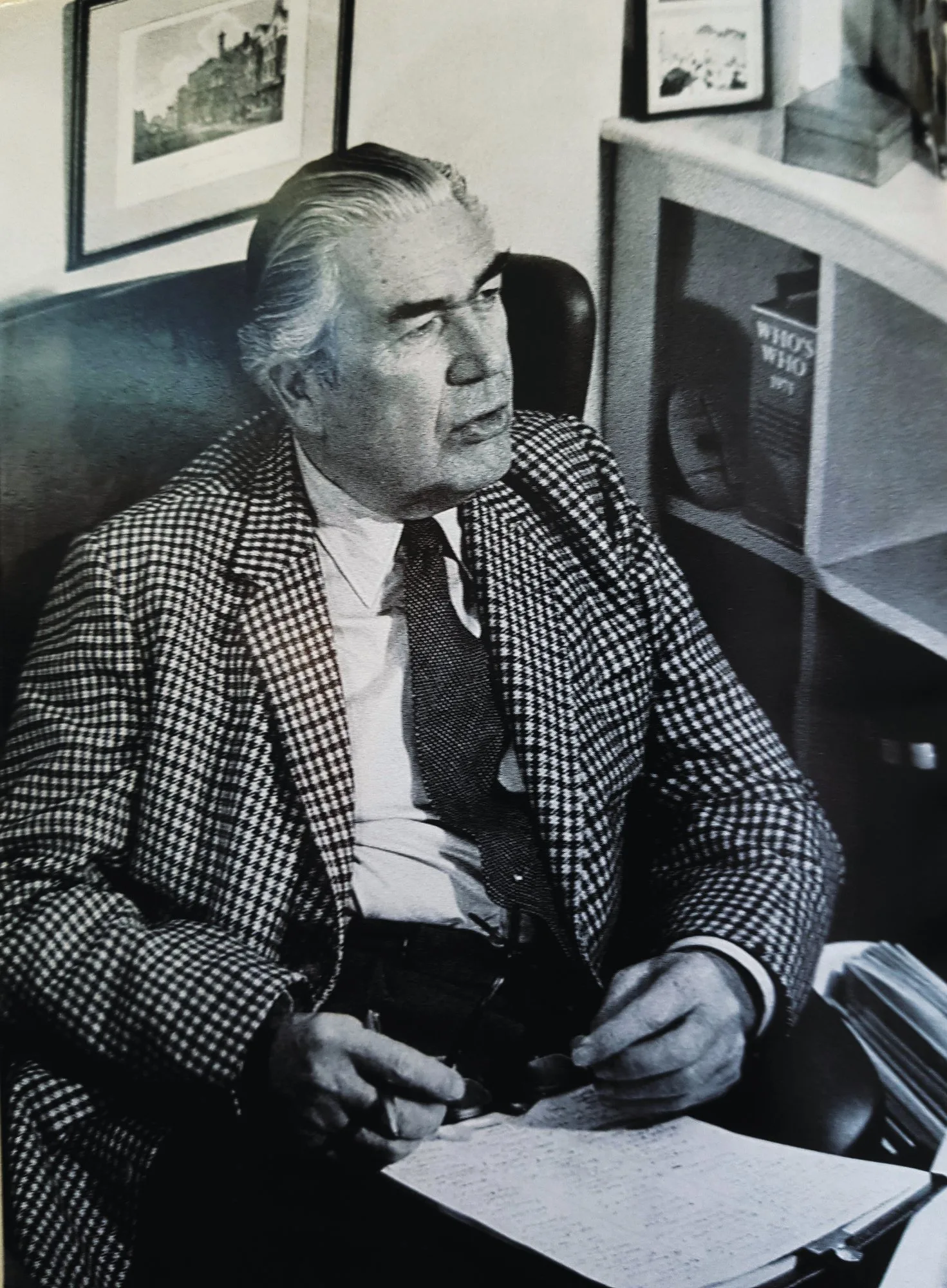
Above: E. W. Swanton (1907-2000) in 1972.
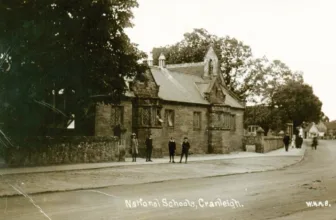
It was in 1921 that a 14-year-old Ernest William Swanton came to Cranleigh, to attend Cranleigh School, and it was a life-changing experience. His affection for Cranleigh School brought him back to Cranleigh constantly throughout his life.
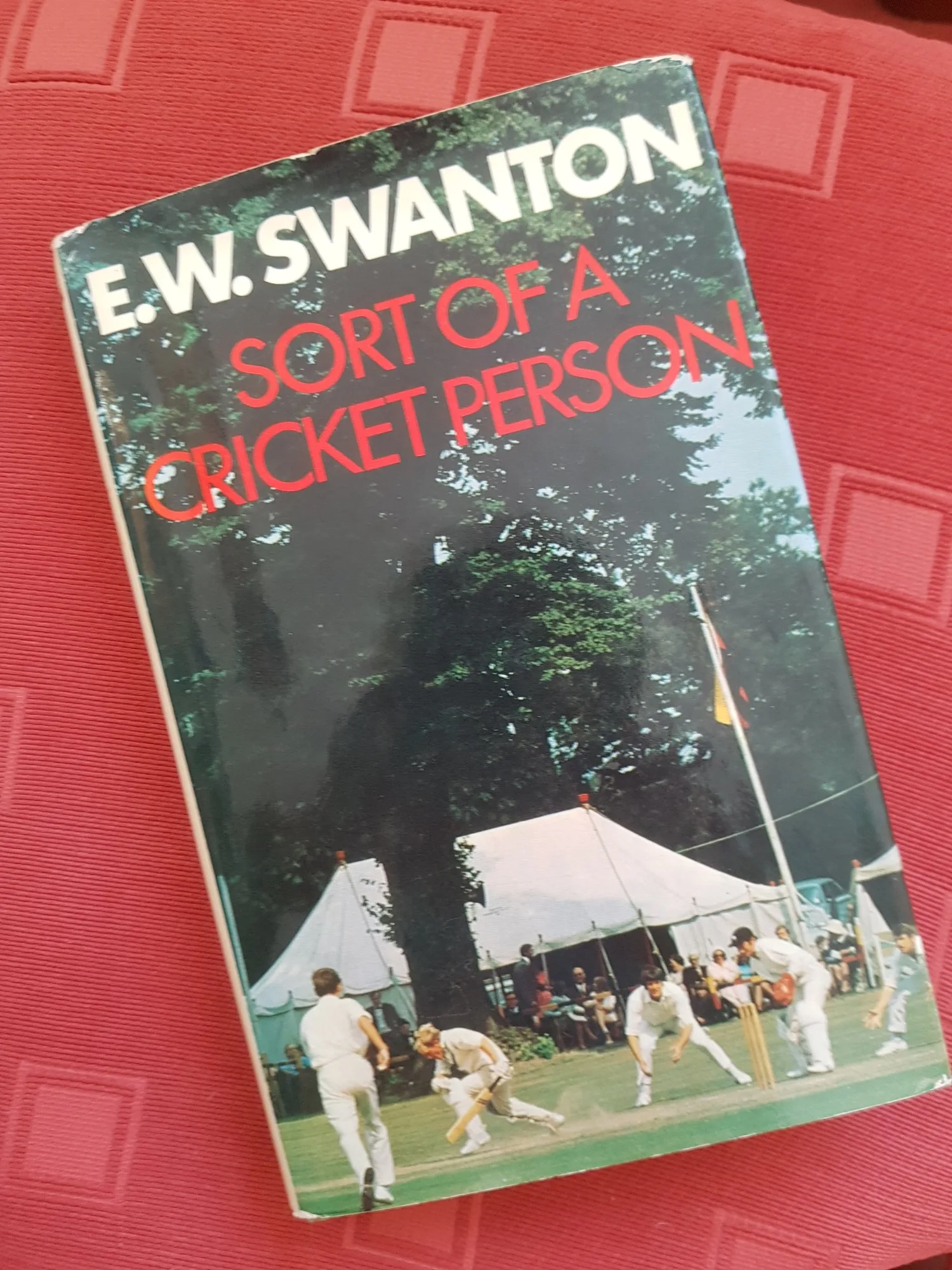
Swanton, a revered cricket commentator and journalist of the 20th century, who was always known from childhood as ‘Jim’, after Jumbo the elephant, describes the school in fond terms in his autobiography, Sort of a Cricket Person, written 50 years later. Significantly his book was written 50 years after he started at Cranleigh and published the following year, in 1972. He gives amusing pen-portraits of various masters and their foibles and the ‘rags’ that boys played on them.
He described Cranleigh School as ‘a good rugger school where I showed no skill whatever as a footballer’. Cranleigh produced seven international players in the years 1923-39, thanks to the remarkable coaching ability of Charles Gower, a Welshman brought up in South Africa. The school XV played not only other schools, but also adult clubs such as Blackheath, Harlequins and London Scottish. Some boys stayed on at school simply in order to play rugby!
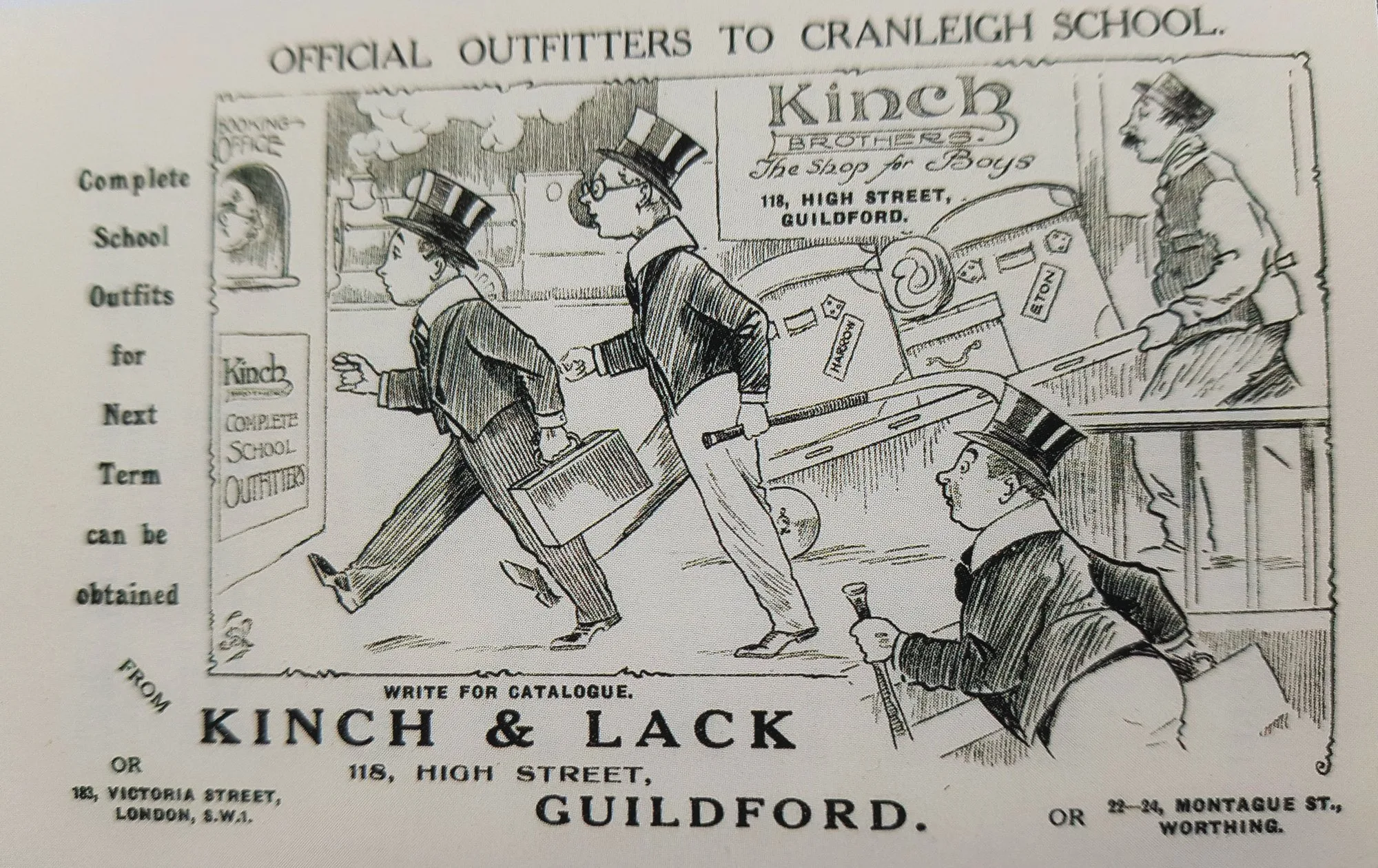
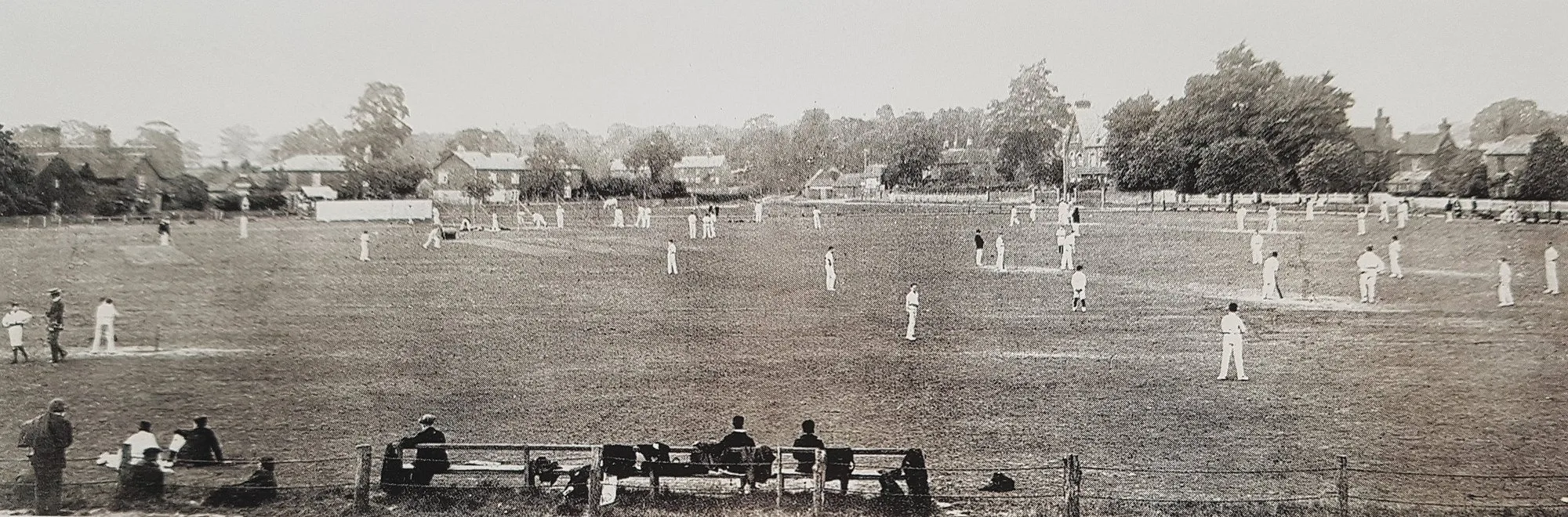
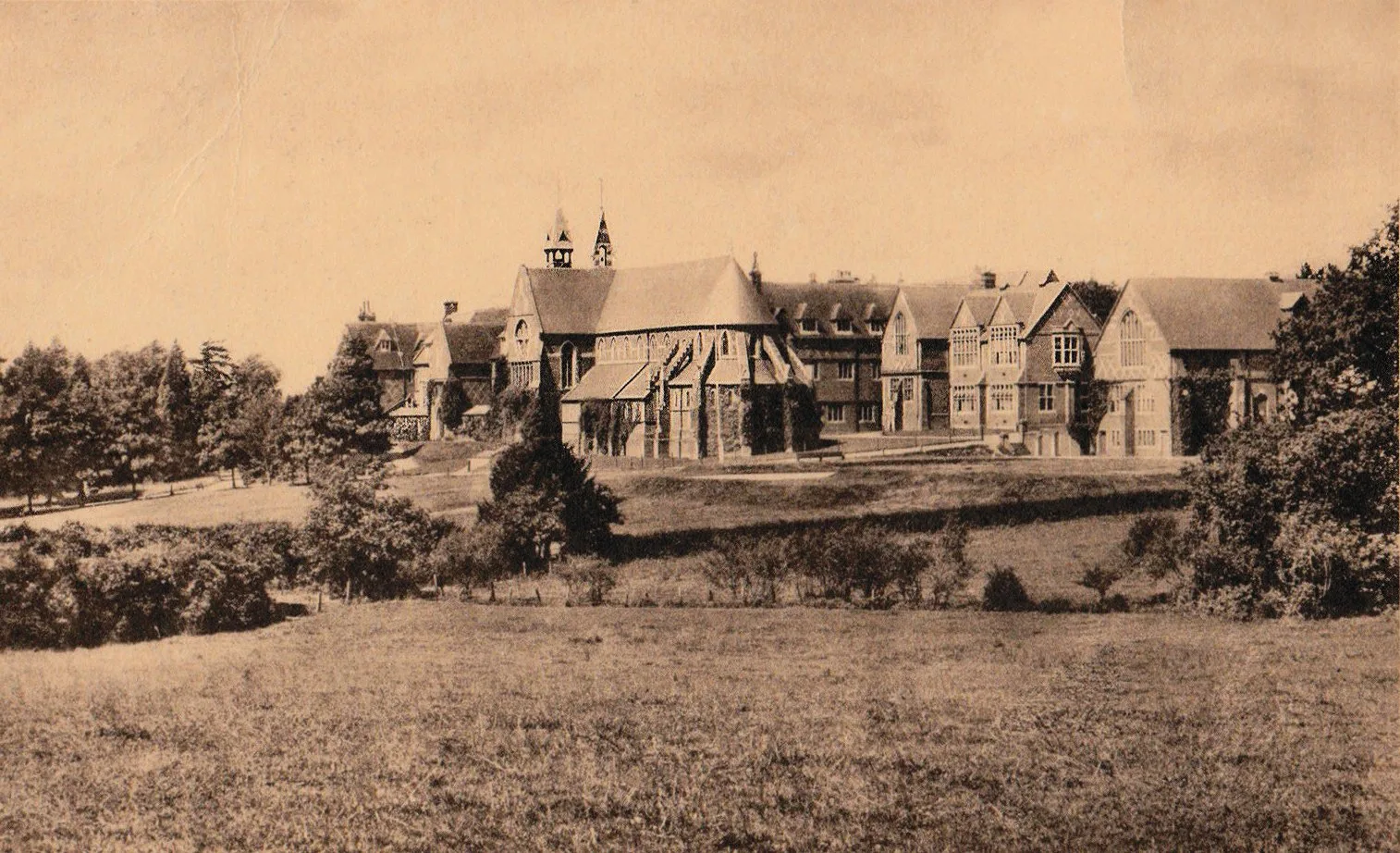
Swanton wrote, ‘Academically I dare say we were a bit substandard, possibly because the endowment on the scholarship side was so slender.’ However Swanton passed School Certificate (the forerunner of GCSE) after two years at the school, with distinctions in English and Latin and thereafter ‘was allowed to freewheel pleasantly’ and ‘to pass a restful year in the Upper Sixth, reading and writing’! This, difficult to imagine now, was because young Swanton was not destined for university, but for journalism, as his father had a friend who was a director of The Amalgamated Press and offered him a junior post.
About the same time as Swanton started at Cranleigh School, his father made him a junior member of Surrey County Cricket Club, ‘and so directed my steps more definitely towards a lifelong connection with cricket’.
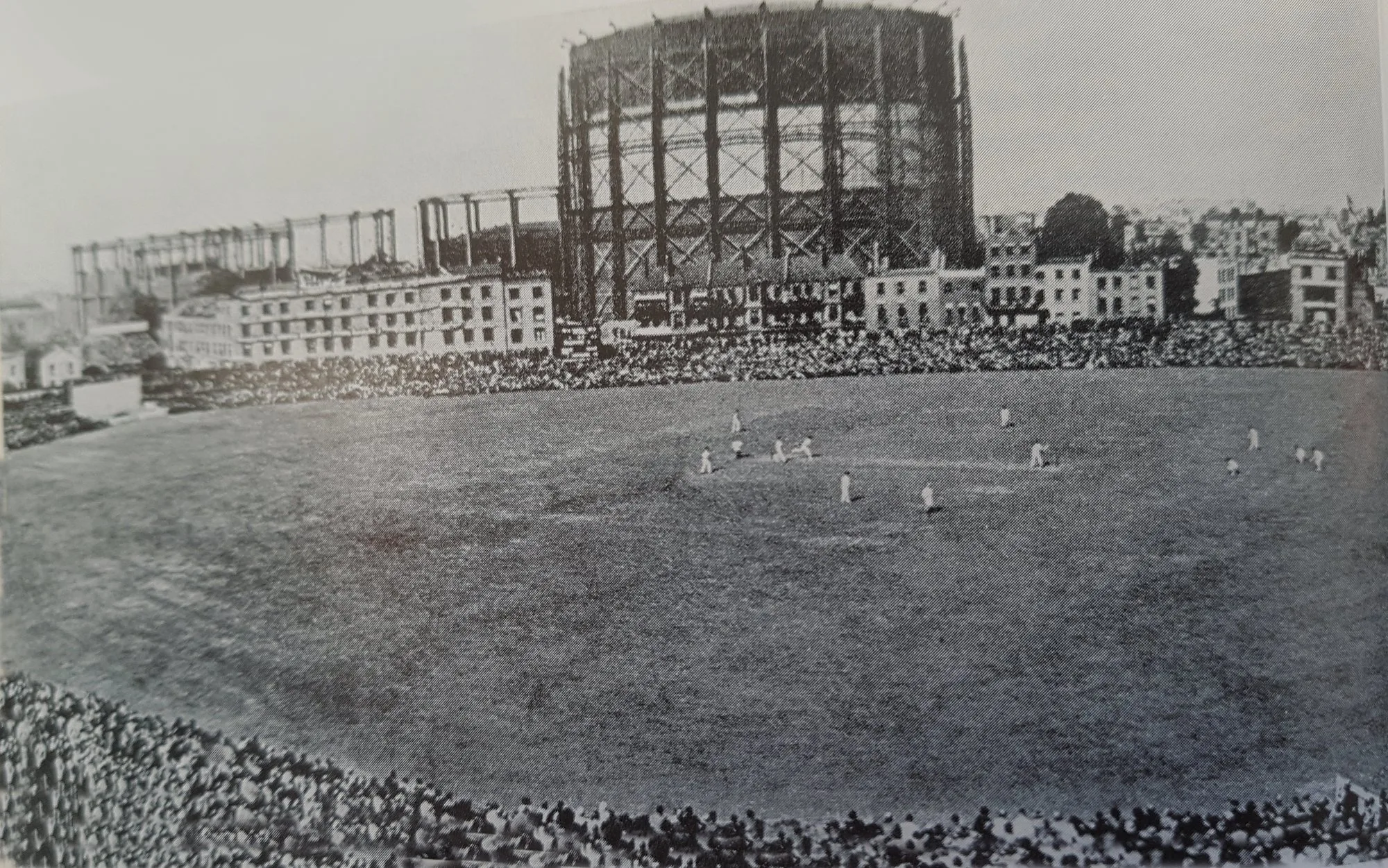
Alas, despite the opportunities this gave young Swanton of practising and being coached at the Oval, he played for the school XI only once, against the Masters. Despite making 33 runs, he was not chosen subsequently.
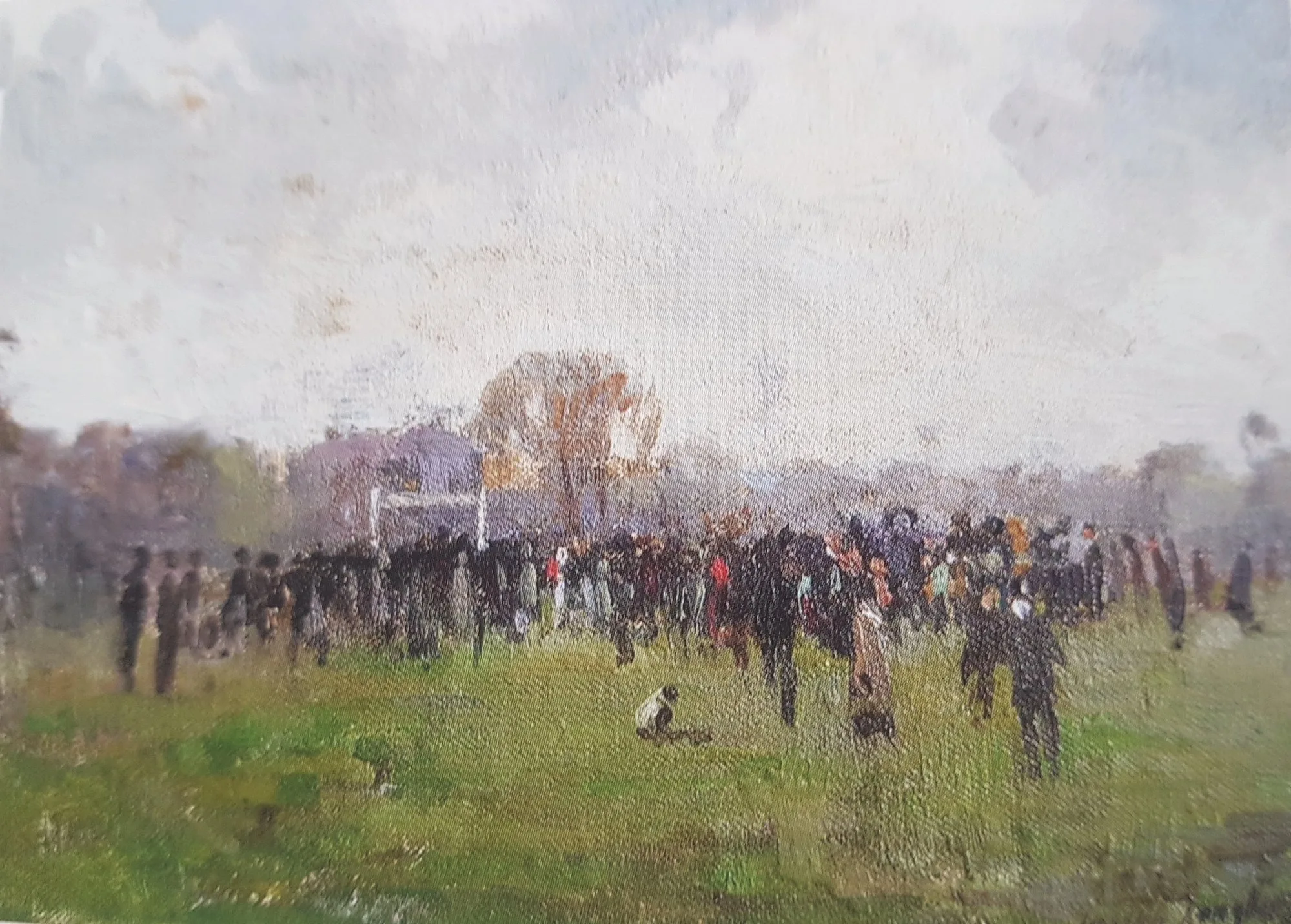
From tea boy and apprentice at the Amalgamated Press, Swanton joined the sports staff at the London Evening Standard, concentrating at first on rugby. (At the same time, he was Match Secretary of the Old Cranleighan Rugby Club, becoming its President 1959-62.) By 1928 he was also reporting on cricket for the Standard and his life’s course was set.
During the 1920s, the recently-founded BBC began increasingly to broadcast national sporting events, including Test cricket in 1927. In 1938 Swanton had the nerve to offer his services to the BBC for an MCC tour of South Africa and so became the first man to commentate live on an overseas Test Match. It was the first of more than 20 overseas cricket tours for him.
He still maintained his Cranleigh links, watching rugby matches and playing cricket occasionally for the Old Cranleighans. He redeemed his cricketing reputation by making several centuries and established his own touring cricket team, the Arabs.
1939 brought the huge disruption of the Second World War. Swanton joined the Bedfordshire Yeomanry and was acting major in Singapore when the city was captured by the Japanese. He spent three and a half years as a prisoner of war, working on the construction of the infamous Burma railway. He lost five stones (32 kg) in weight, but was sustained by his deep Christian faith.
After the Second World War, Swanton became the cricket correspondent of the Daily Telegraph, a post he held until 1975 and cricket commentator for the BBC from 1950. He became the most prominent and authoritative cricket writer and broadcaster during those years. Yet he paid tribute to the Cranleigh schoolmaster who had taught him English and Latin. G.L. Antrobus ‘banged home the basic rules of syntax and impressed in my lazy head the proper construction of an English sentence’. ‘And … I would always strongly recommend to anyone with any ambition to write to stick to his Latin’.
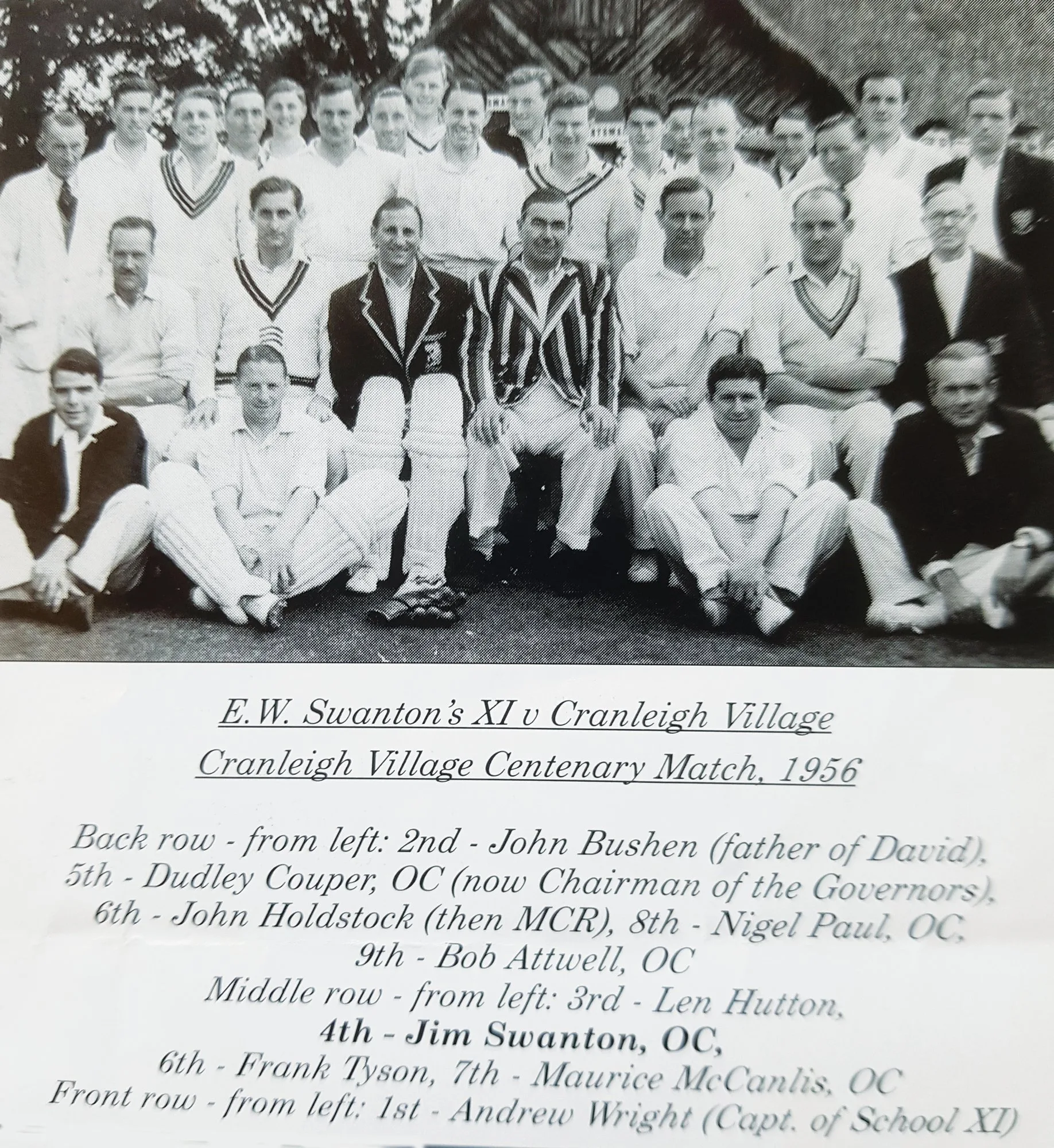
A memorable day in Cranleigh was when the great man brought a cricket team to play Cranleigh Village Cricket Club in celebration of its centenary in 1956. Included in his side were the England captain Len Hutton and other national players. Allegedly, 5,000 people sat or stood around the Common watching it!
(This article was sparked by Angus Henderson, former president of Cranleigh Cricket Club. Sources for it include E. W. Swanton, Sort of a Cricket Person (1972); the Old Cranleighan magazine Contact; M. Williamson, Cranleigh: the 1st 150 Years (2016); J. Horn, Cranleigh Days to Remember (2022) and cuttings from the national press assembled by the late Michael Trent.)
The Cranleigh History Society meets on the second Thursday of each month at 8pm in the Band Room.
This article first appeared in the November 2026 issue of Cranleigh Magazine. Pick up your free copy around the village, or read more at cranleighmagazine.co.uk.