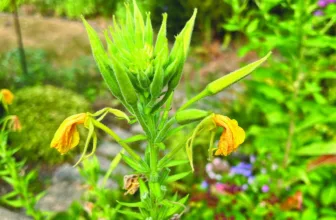

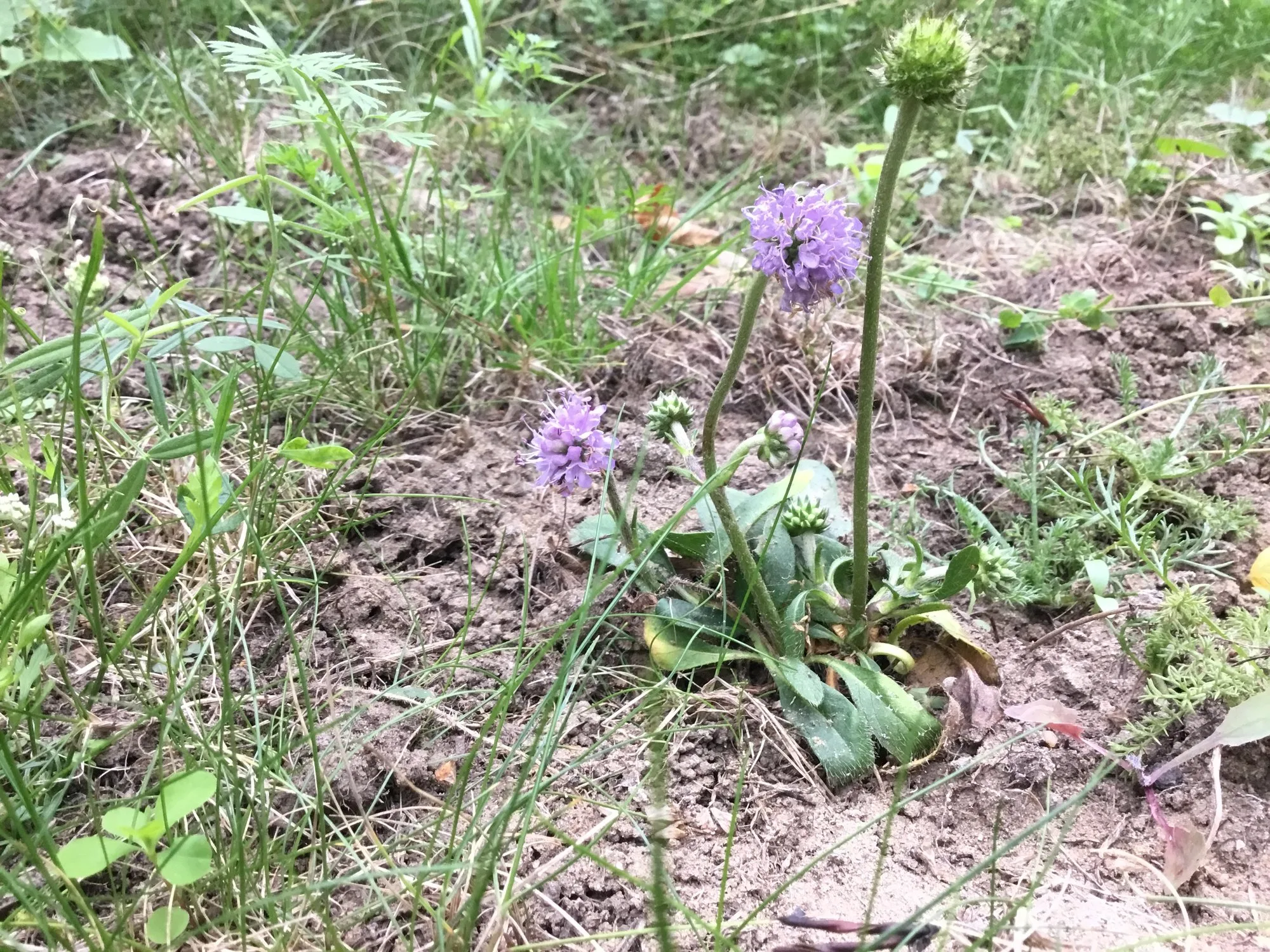
Above: Succisa pratensis, also known as the Devil’s-bit scabious. Photograph copyright Sam Healy.
There has recently been plenty of advice in the media about suitable plants to grow in the new climatic conditions we are probably going to have to get used to. On the list is Succisa pratensis, more commonly known as Devil’s-bit scabious. Although usually classified as a wild flower, it is very happy in my garden. This attractive blue flowering plant got its name from the legend that the Devil was very annoyed that this plant had so many medicinal applications and so, in a fit of fury he bit off the root, leaving it looking like a truncated carrot. Despite his spite, the plant continues to flourish. Gerard, in his Herbal recommends boiling the root as a cure for swollen throats, snake bites, various wounds and the plague. Later a decoction was made to ease scabies, as the common name indicates, derived from the scabs of a contagious and extremely irritating skin infection caused by a little mite. You might not rush to experiment with its medicinal benefits, but the plant is attractive and garden worthy.
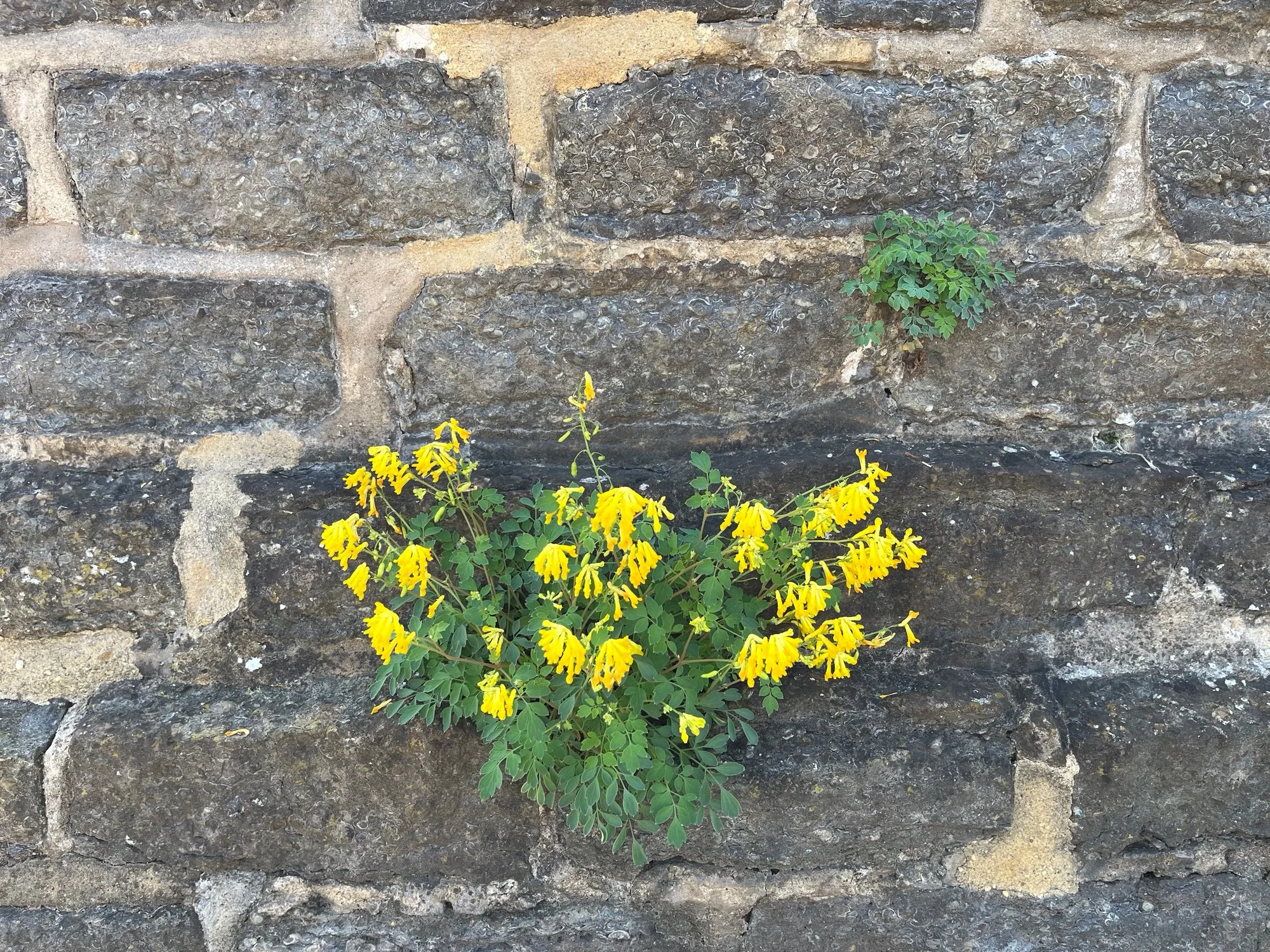
A tough survivor is the pretty little yellow corydalis which I spotted growing out of a crack at the base of the Obelisk in Cranleigh. The base is made of blocks of paludina, a locally occurring sedimentary limestone, and if you take a closer look you can see that it is packed with fossilized shells of fresh water snails. Millions of years ago this area was under water and that is when the paludina was formed. Amazing that the corydalis is flourishing in a small chink in the stones.
For several minutes, late one afternoon, I watched a large moth hovering in a shrub in the garden. I was able to identify it with the help of the very useful moth chart from the RSPB as the Eyed Hawk-moth. It had large false ‘eyes’ on its wings as do some butterflies like the Peacock. This is a deterrent, presumably to fool the predator that the prey is large and in proportion with the size of these ‘eyes’. That started me thinking about moths in general. They don’t get the attention butterflies do. This is partly because most moths tend to be nocturnal. Conservationists have launched a push to create the first “red list” of endangered moths in Britain. While birds, mammals, butterflies or even moss already have lists charting which species are at risk of extinction, there is no official assessment for the 2,500 moths in Britain. And recently scientists at Bristol University have studied microscopic structures found on moth wings which allow some species to absorb sound apparently to avoid detection by bats. The technology could be used to perfect sound absorption being up to 10 times thinner than conventional materials. Potential applications include construction, transport, aerospace and manufacturing.
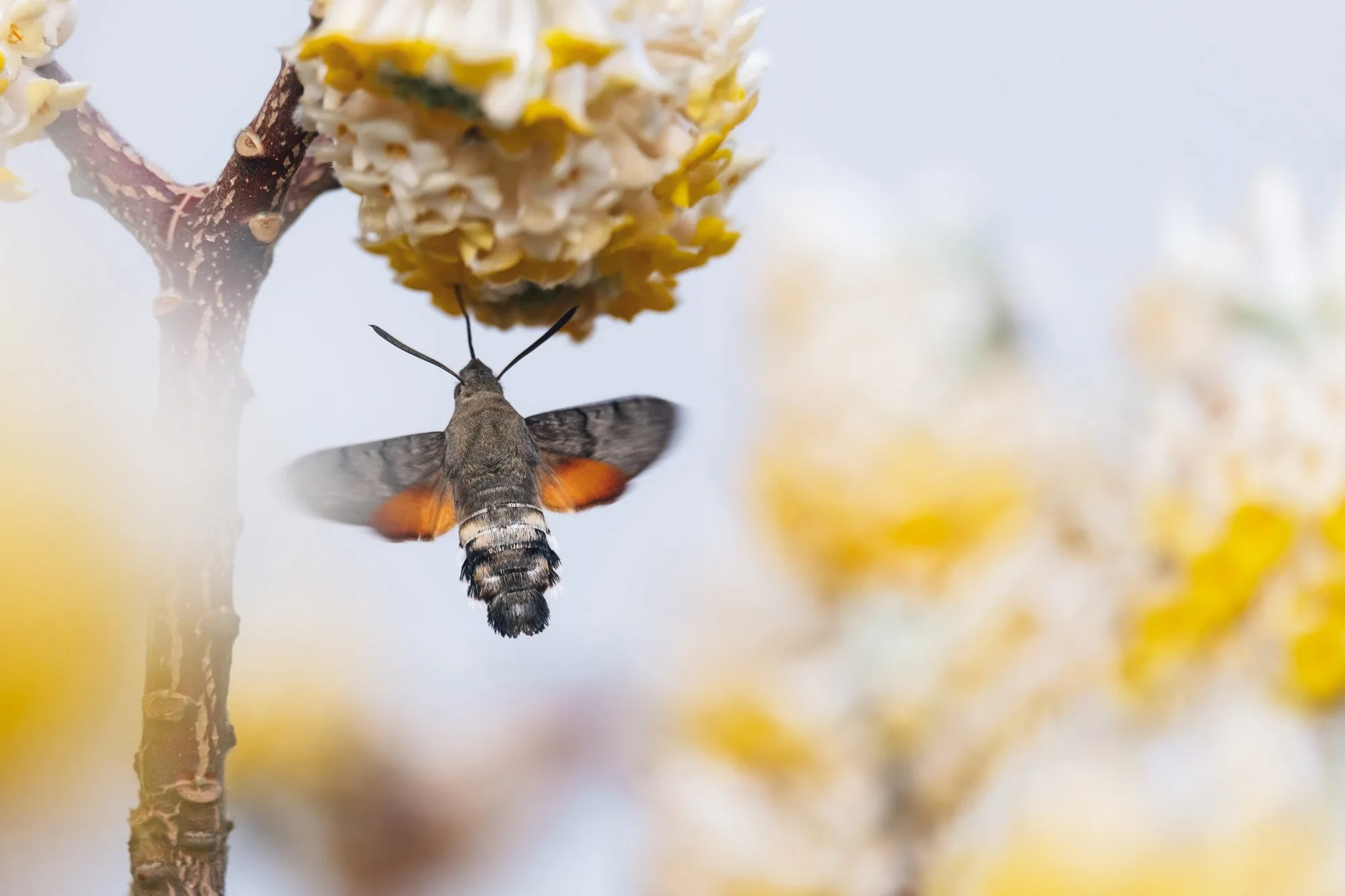
My moth and others like the Humming bird moth and the Elephant Hawk-moth, are diurnal, not nocturnal, which is unusual. In fact half the insects on this planet are nocturnal, and they feed, mate and breed in the dark. As slowly we light up more and more dark places at night, this has a huge impact on insects. They become confused, they can’t feed or breed. My small road only has four hours of darkness when the street lights are turned off. Not only nocturnal insects are at risk, but also the 1/3 of vertebrates and almost 2/3 of invertebrates are nocturnal. Light disturbance has become a serious problem.
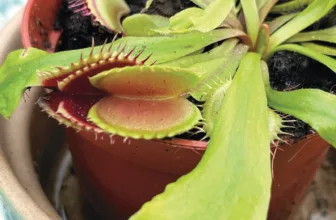
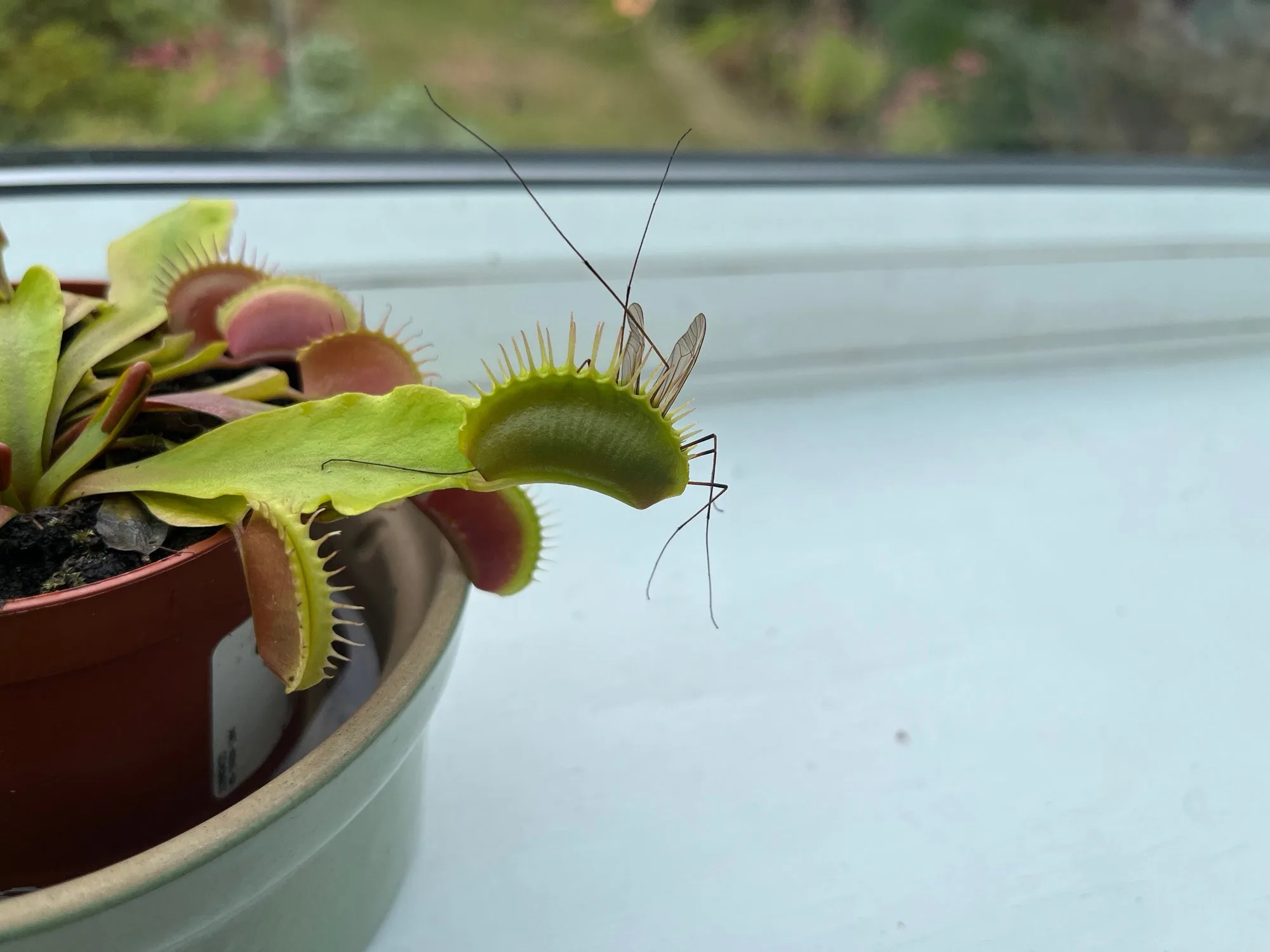
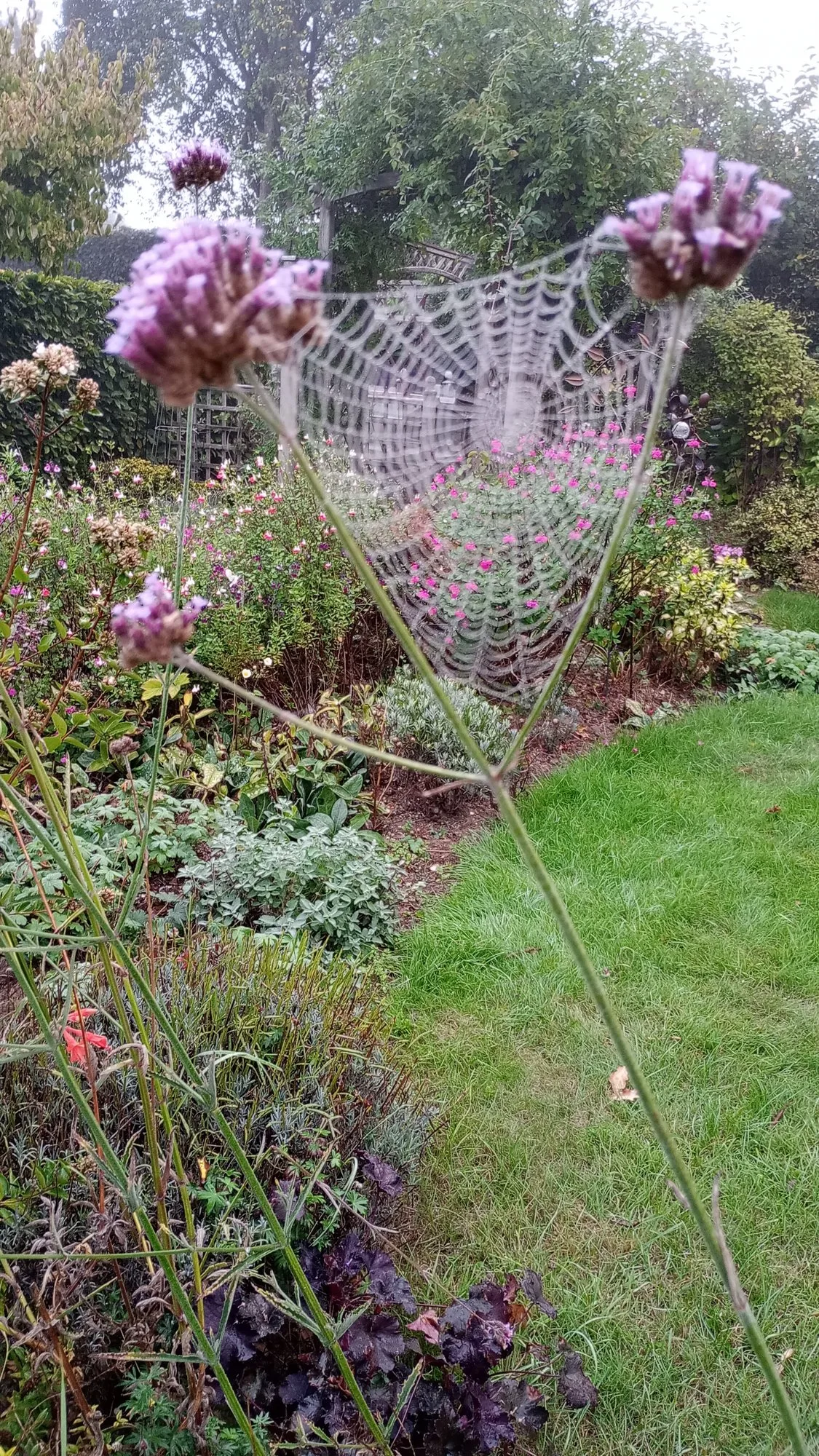
The ingenuity of nature never ceases to astound me. Here are photos of two kinds of traps developed to catch prey. The first is an update on my Venus Fly Trap, which I wrote about last month. It shows a caddis fly caught in a trap: Venus might have bitten off more than it can chew! And secondly a photo sent by my friend Joan of the most stunning cobweb in her garden, the design clearly seen by the mist and light rain on the silken threads.
Autumn at Beryl Harvey is a busy time and volunteers are working hard. An autumn mow was planned but large flocks of gold finches were spotted feeding on the wild flower seeds. A decision was taken to delay the mow so that the birds could eat their fill. This is the advantage of having committed volunteers who can make decisions on the spot.
The next work day on the site is 15th November. If you would like to know more about being a volunteer at the conservation site, contact Julia at: [email protected].
This article first appeared in the November 2026 issue of Cranleigh Magazine. Pick up your free copy around the village, or read more at cranleighmagazine.co.uk.