
When you next stand in front of John Constable’s beloved ‘The Hay Wain’, spare a thought for the wagon at its heart. It was the work of a wheelwright, a craftsman whose skill was once indispensable in every English village. In Cranleigh, that craftsman was James Puttock, and a remarkable ledger book lets us look over his shoulder almost two hundred years on.
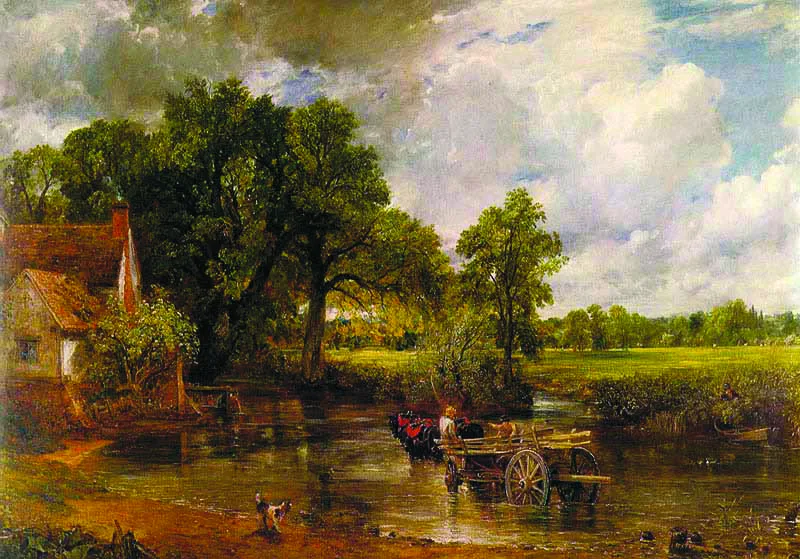
John Constable’s ‘The Hay Wain’ is one of the UK’s most popular paintings. It was painted in 1821, the year that James Puttock started up in business in Cranleigh. And this wagon was the product of a wheelwright’s skill — a complex craft, learnt over many years, that used to be indispensable in every village. Just think of all the surnames that are derived from the wheelwright: Cartwright and Wainwright, Wayne, Wheeler, Wheal and Wright (‘wright’ means ‘maker’ and ‘wain’ means ‘wagon’).
A ledger that survived
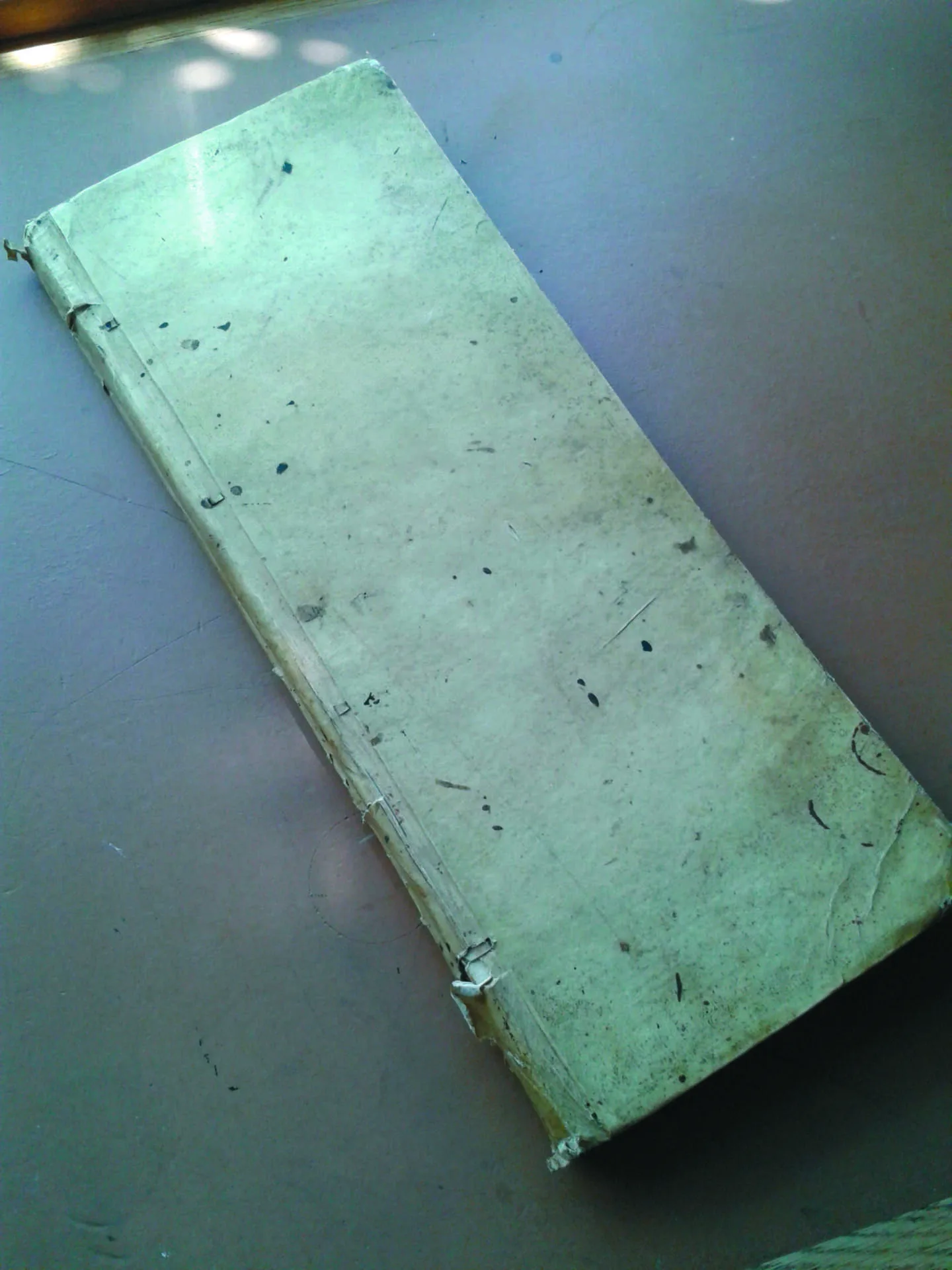
Brian Cheesman, a former chairman of Cranleigh parish council, possesses an early 19th-century ledger book that belonged to James Puttock, wheelwright of Cranleigh. It is covered with vellum or calf’s skin, and records the commissions he had and the payments he received, besides fascinating memoranda.
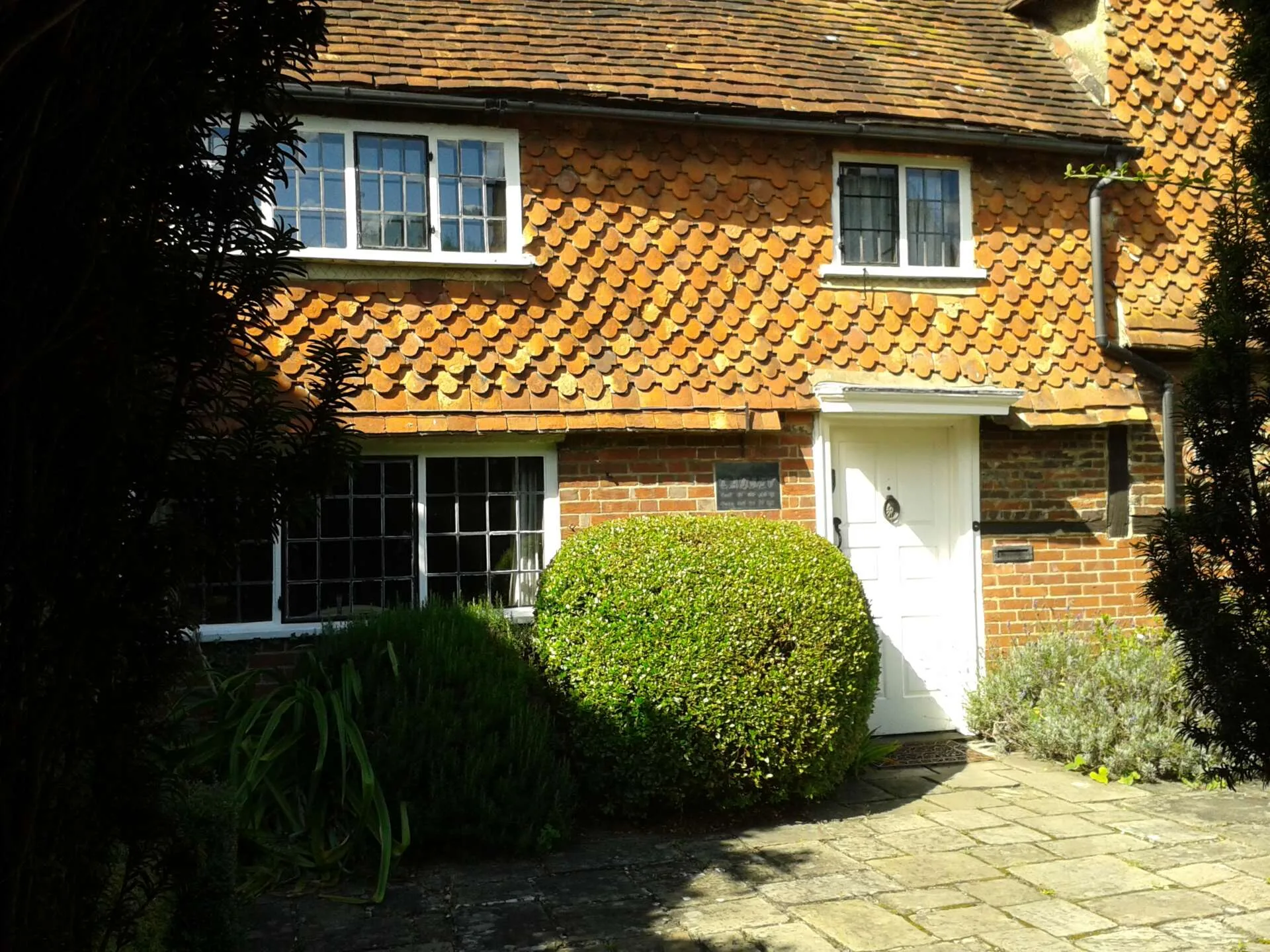
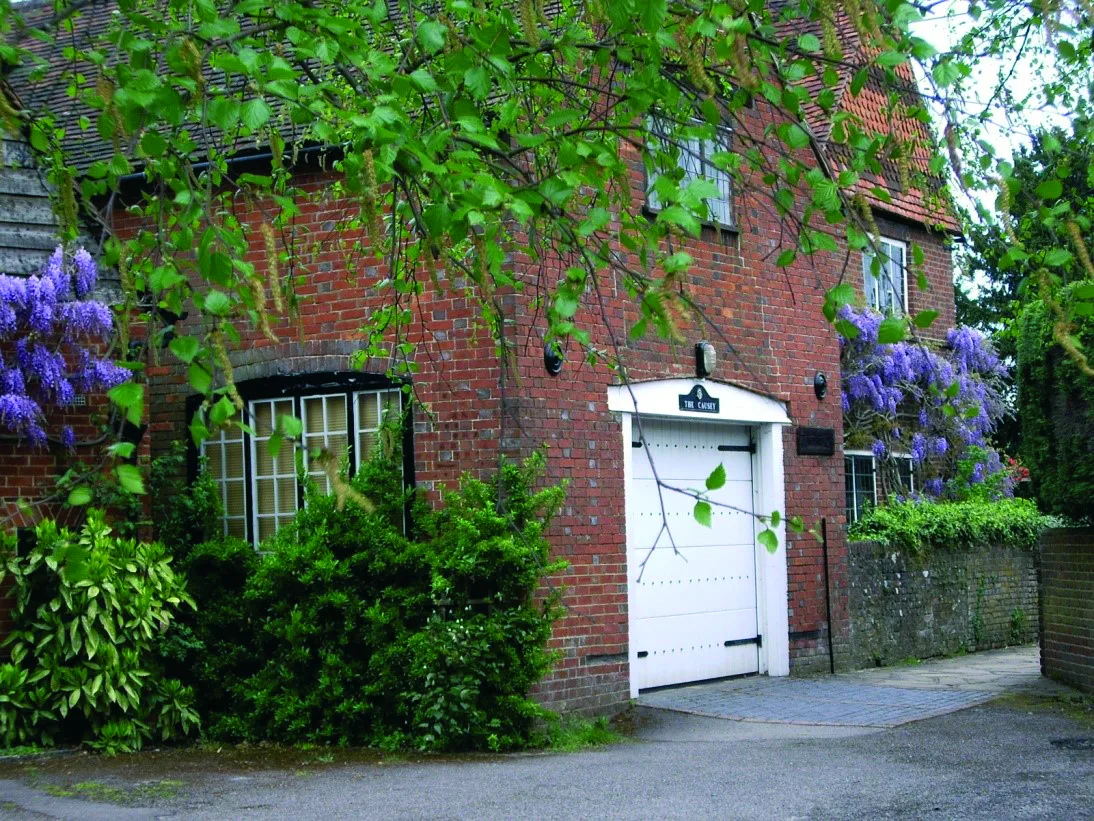
JP seems to have taken over the premises, customers and timber stock of an earlier wheelwright here. His workshop and coach house was in a pathway close to the church, called ‘The Causey’, that is a causeway raised above the Cranleigh mud. He and his family lived next door, in a cottage that has been much beautified since his time, now called (rather confusingly) ‘The Causey’.
The working yard
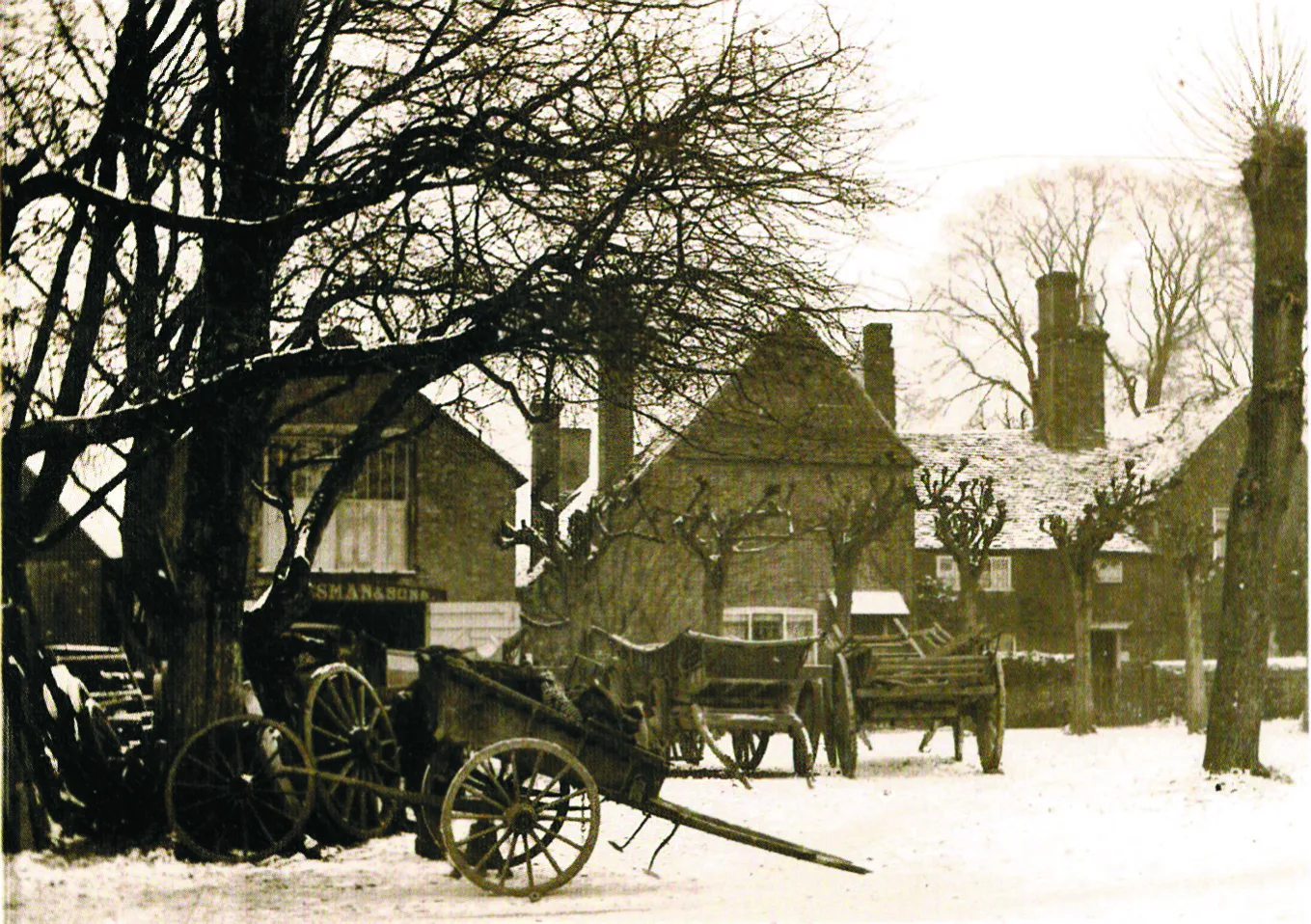
The photo of about 1900 shows the working yard in front of the house and workshop. The double-doors on the first floor of the coach house can be seen, where the cart could be driven up a ramp, so that the wheelwrights could work on the underside. In the yard are two wagons (4 wheels) and a cart (2 wheels), plus a spare wheel or two.
An ancient craft
The earliest wheel found by archaeologists was in Mesopotamia (now Iraq) and dates from about 3500 BC, when some genius had the idea of fitting two discs on the ends of a pole and thus creating an axle. Making this was a challenge as the ends of the axle, as well as the holes in the centre of the wheels, had to be nearly perfectly smooth and round. The first wheels were solid (and heavy) discs of wood: spokes were developed on Egyptian chariots around 2000 BC and made them lighter and swifter. In the Iron Age (after about 600 BC), iron rims were placed around the wheels to protect the wood from damage. In fact, spoked wheels with an iron rim continued without major modification until the 19th century.
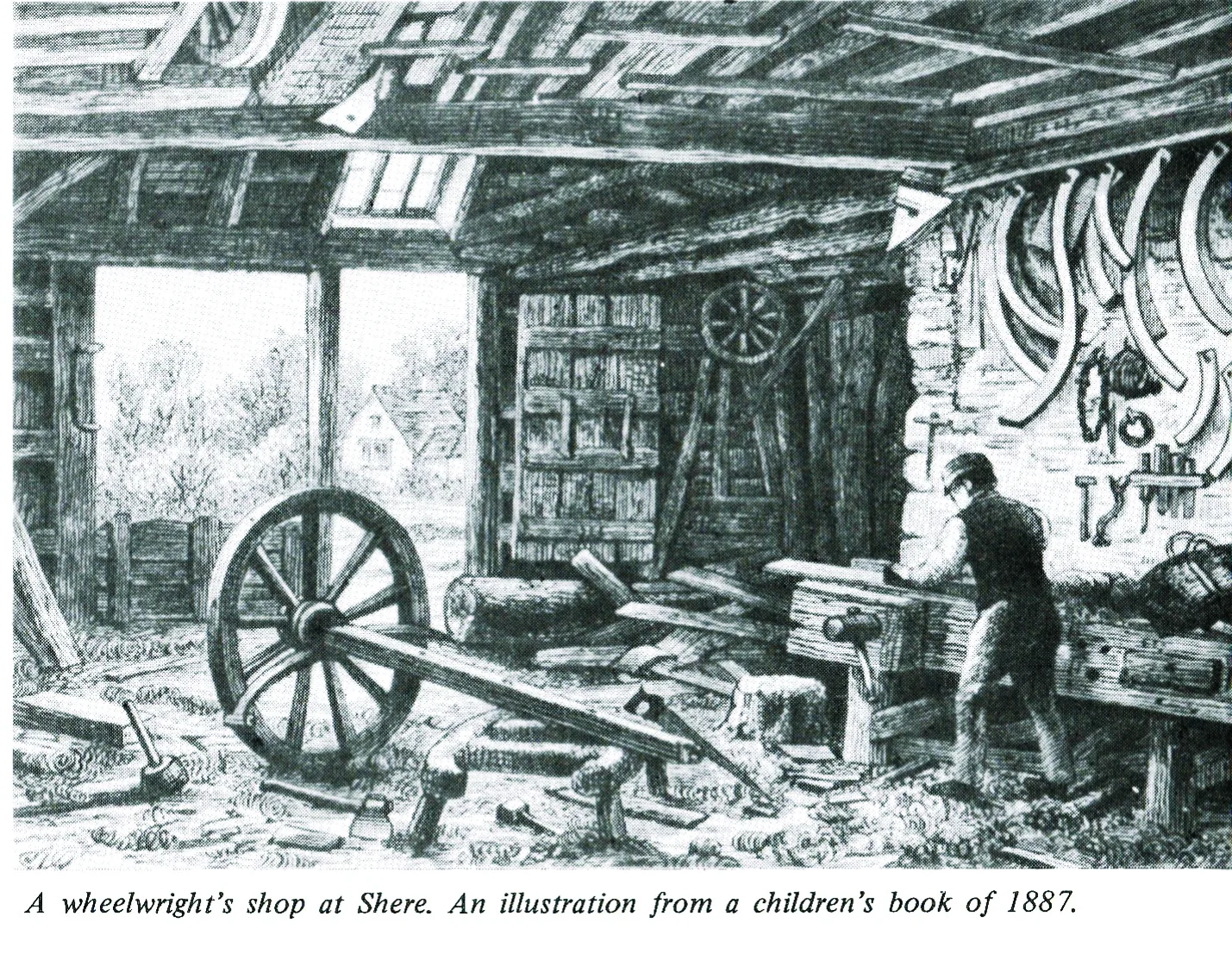
JP’s workshop would have been similar to the picture from Shere, 50 years later. Their wood stock was probably stacked round the periphery of the yard, perhaps in lean-to sheds. Elm was needed for the hubs of wheels; oak for the spokes, bought from the woodcutters by the hundred, roughly cut to length; ash was needed for the outer rim of the wheels, as it was flexible.
Everything from coffins to clocks
The ledger shows JP involved in a wide range of work. Mending a drag rake cost 4d, making 2 round tables 1s 6d, an oven lid cost 8d. He cleaned a clock for 2s 6d and painted a name board for a wagon for 2s. He made a coffin for £2, a pair of crutches for 1s 6d, a clothes chest for the schoolmaster, Thomas Child, for £1 11s 6d; and a milking stool for Miss Harriet Morgan, the heiress at Knowle, for 1s 6d.
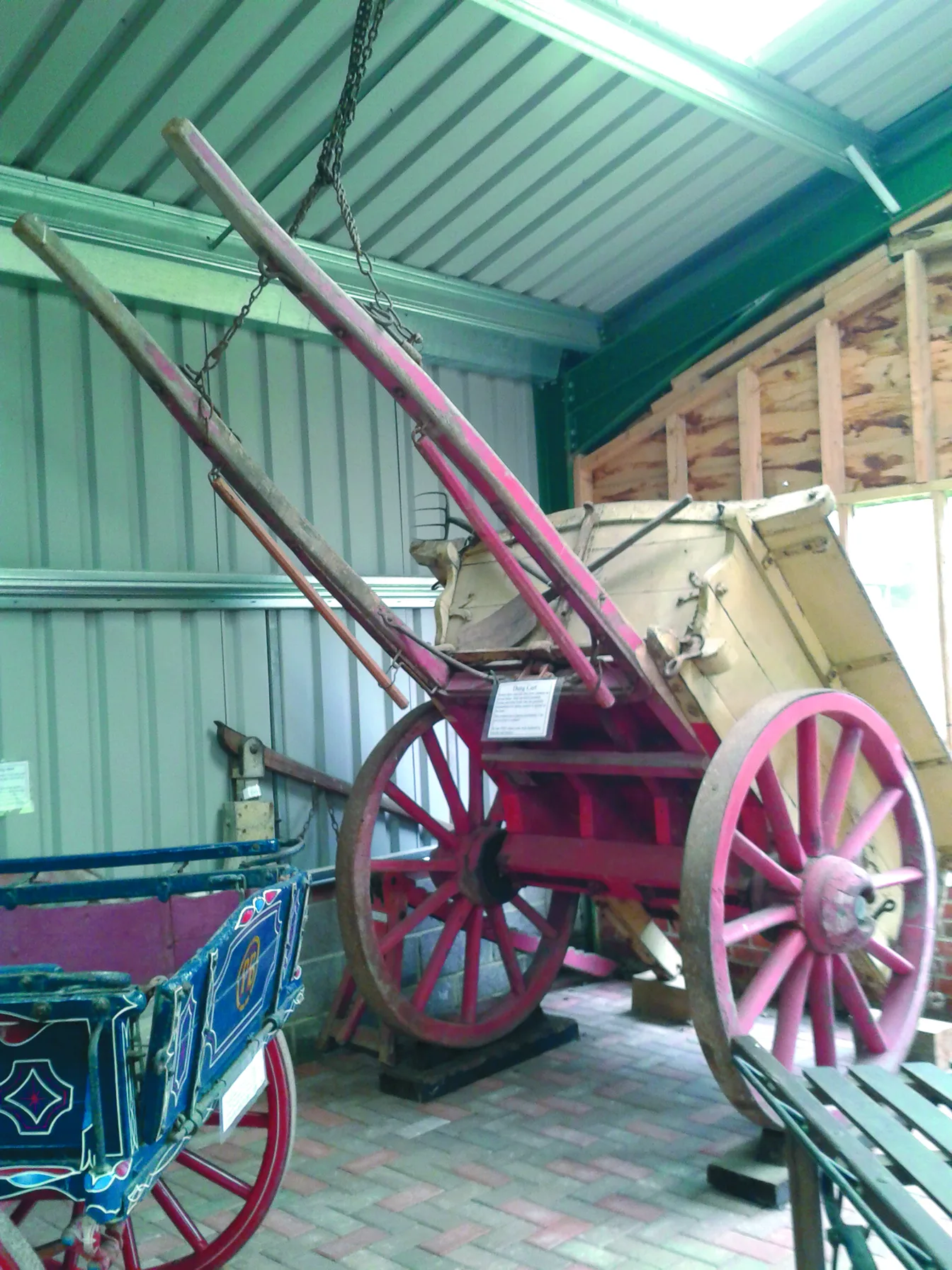
Many of the commissions related to farming, of course. JP made a very large number of plough shares and harrows. Ox harrows and an ox yoke (costing 2s 6d) are evidence that some oxen were still being used by Cranleigh farmers at this time.
Where the real money lay
Anything that involved making wheels was much more expensive. A new 5-inch wheel for a cart cost £2 5s; a pair of 4-inch wheels was £3. But the real money was in wheeled vehicles, made to the customers’ own requirements. Dung carts cost around £4, but one was sold for £17 — evidently a deluxe model. A cart made for Master Killick, the miller at the windmill on the Common, cost a modest £4, but a ‘market cart’, maybe bigger, with iron arms and painted, cost £13.
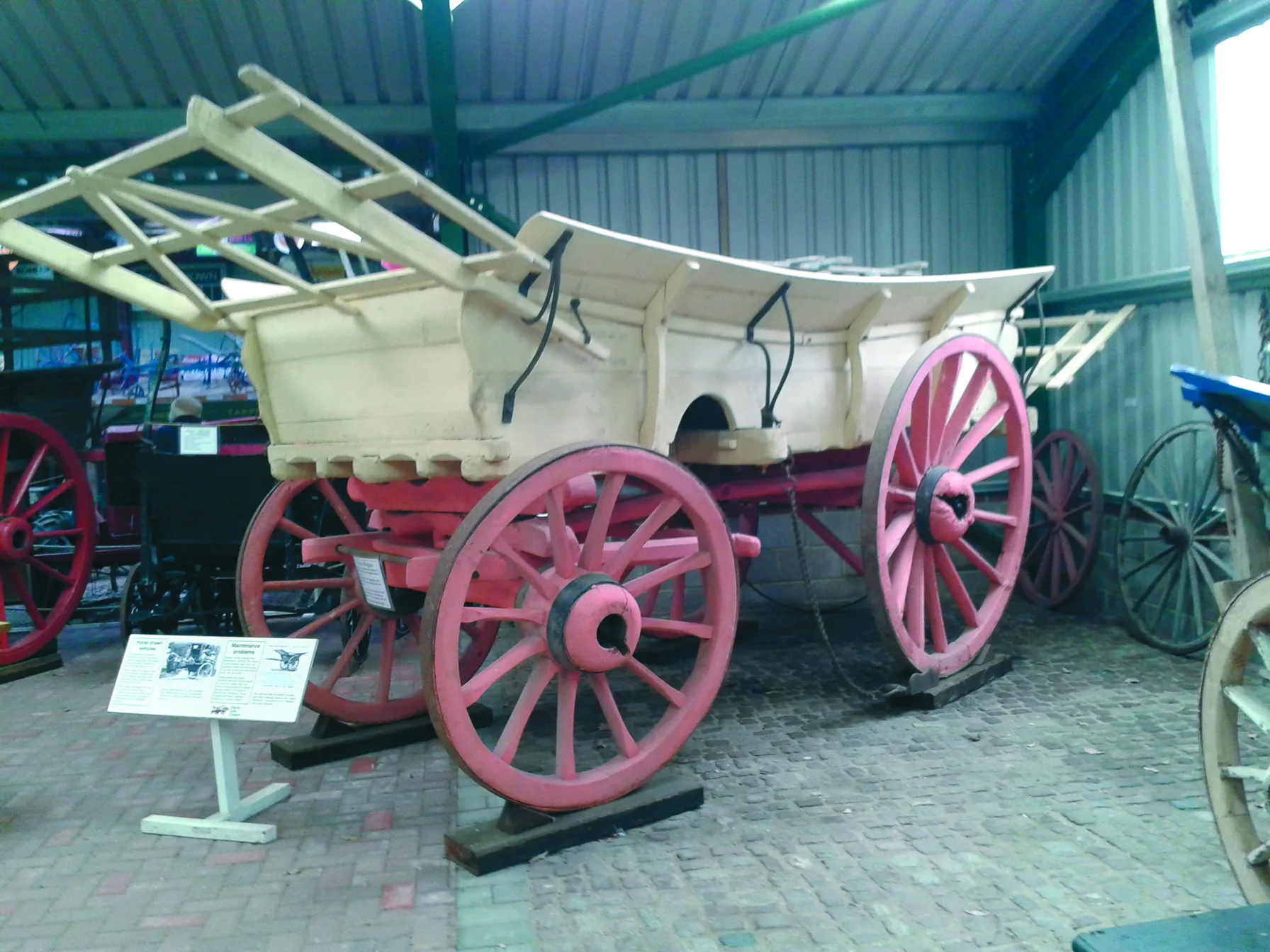
Wagons, with their four wheels and involving a huge amount of skilled work, brought the most money of all. The lowest price was 10 guineas, and the highest £25, which the customer paid in three instalments. He also made a wagon for his next-door neighbour, Master Farmer, the butcher of Belwethers.
A profitable trade
JP seems to have had plenty of work, but he found time to serve two terms of one year each as an ‘overseer of the poor’, a fairly demanding local unpaid position. He died in 1847 at the age of 56 and was succeeded by his son Thomas. But this was only for ten years. At the age of only 40, TP leased the business to Mark Cheesman of Capel and retired. In the 1871 Census, Thomas Puttock, ‘retired wheelwright’, appears as living at ‘The White House’ on the Common, a very prestigious dwelling! In the next Census it says of him, ‘income derived from houses’. So it looks as though JP and TP had cannily invested their profits in property.
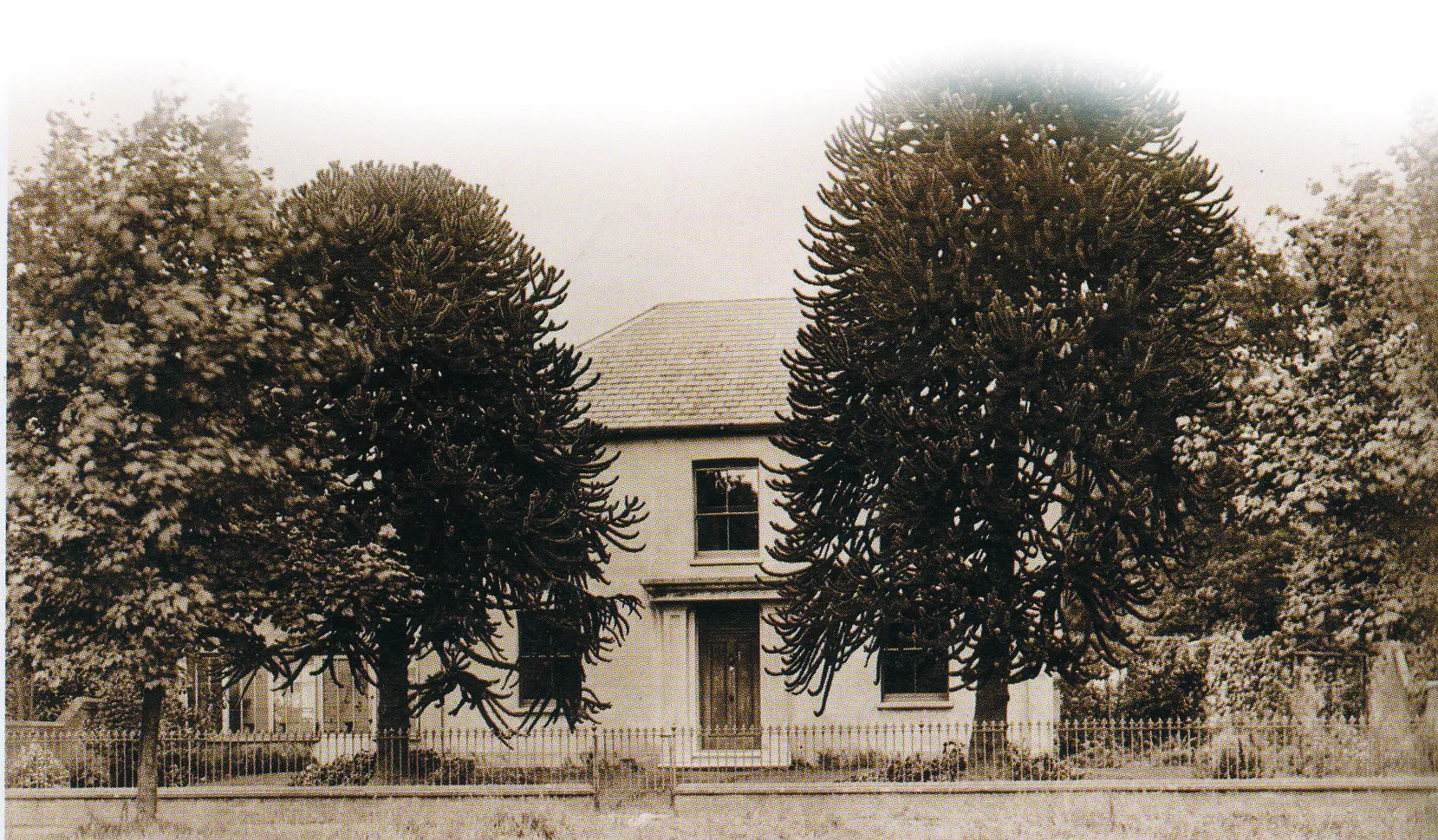
“Being a wheelwright seems to have been a profitable business in the 19th century.”
(With grateful thanks to Brian Cheesman. The main reference book has been Jocelyn Bailey, The Village Wheelwright (Shire Publications, 1975).)
The Cranleigh History Society meets on the second Thursday of each month at 8pm in the Band Room. The next meeting is on Thursday July 9th, when Lucy Reynolds will speak on ‘The Night we Left’.
This article first appeared in the July 2026 issue of Cranleigh Magazine. Pick up your free copy around the village, or read more at cranleighmagazine.co.uk.