
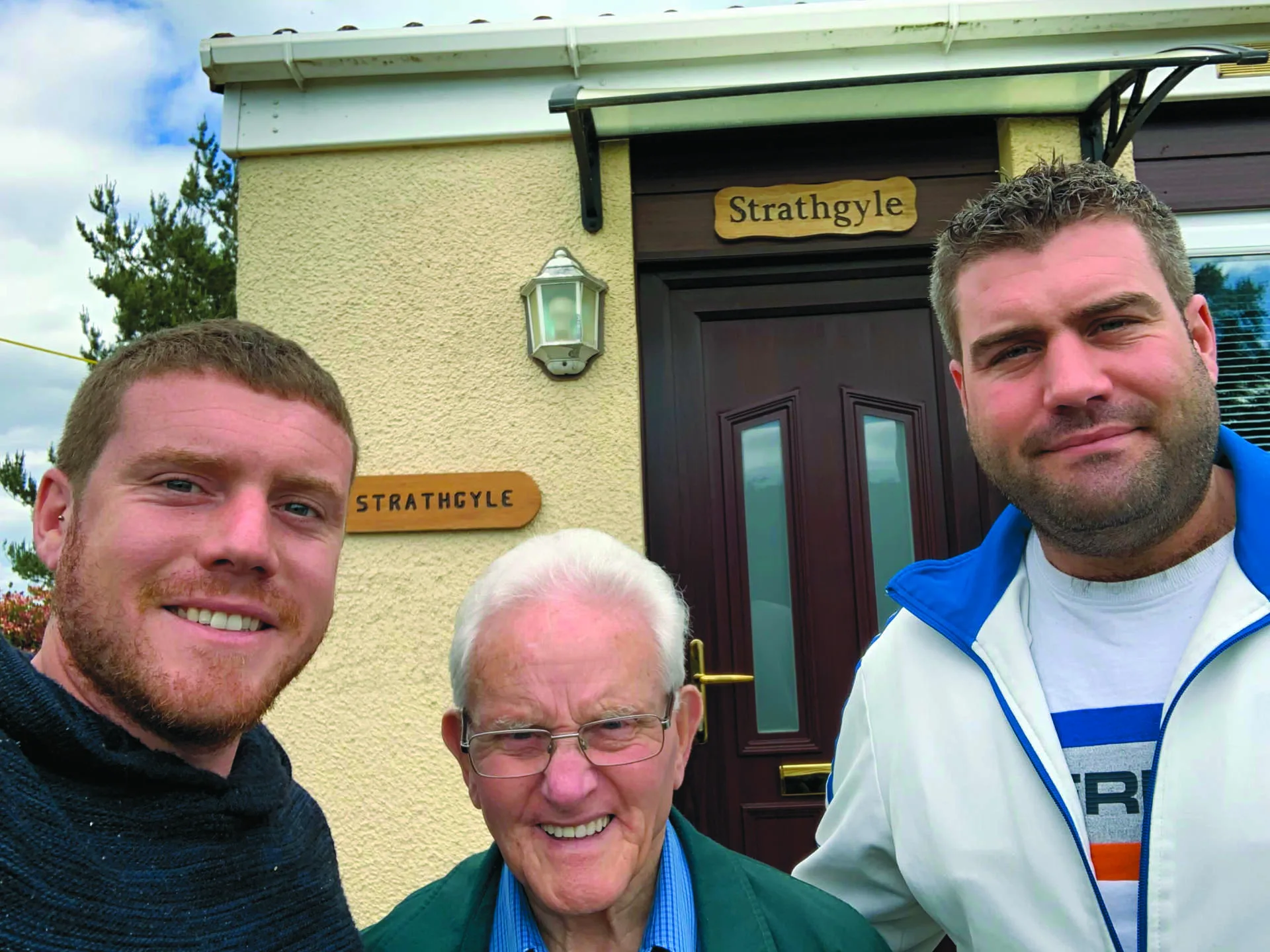
My grandad, chief mechanic on the Vulcan bomber programme and, outside work, a master craftsman.
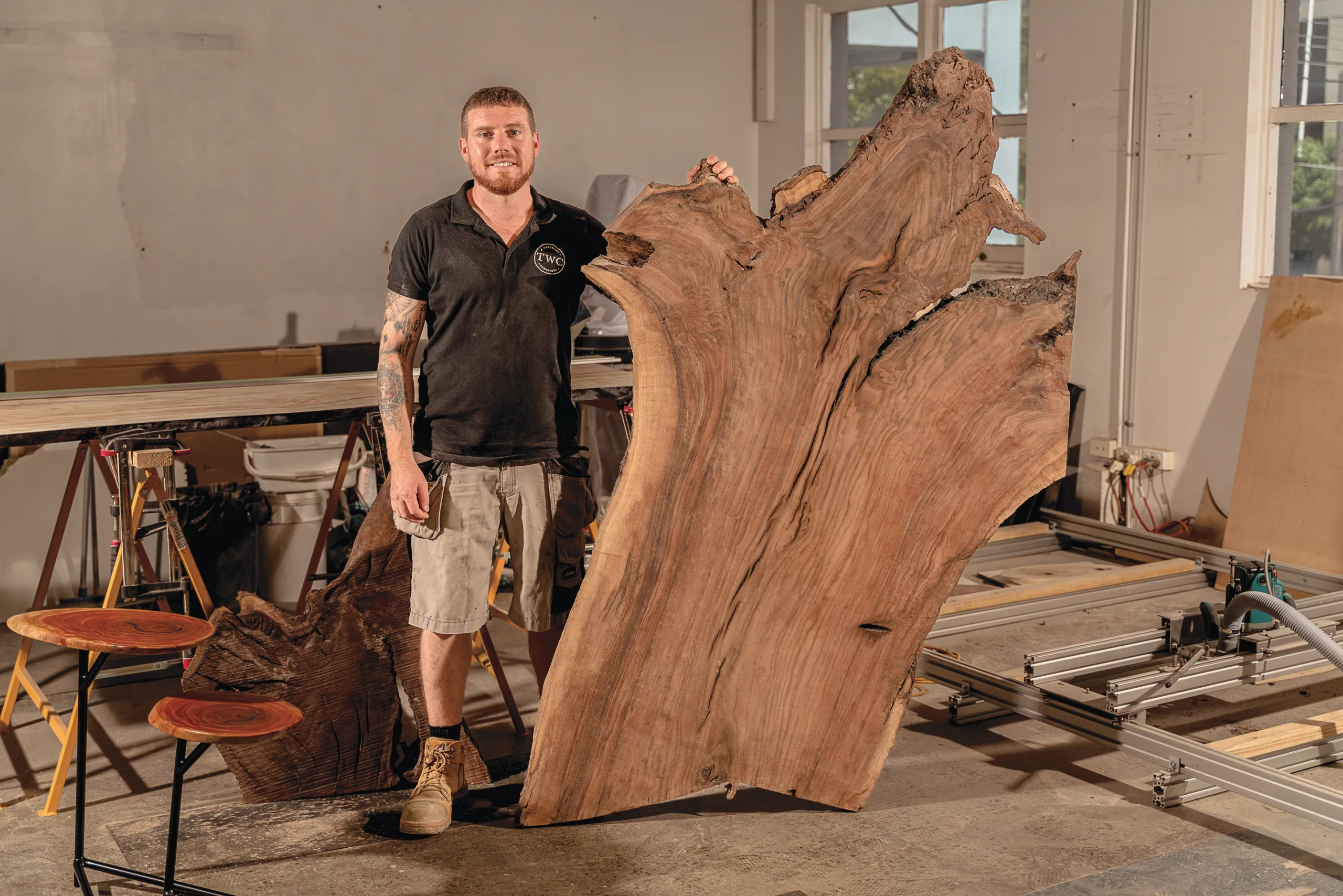
From a workshop at Smithbrook Kilns, Gordon Scoullar turns rough slabs of timber into furniture built to last for generations. But the path to The Wood Cave wound through music studios, the Himalayas, Australian timber yards and the cedar forests of Japan. In his own words, here is the story of a craftsman who learned, above all, to listen to the wood.
A York childhood, with sawdust in the air
I was born and raised in the beautiful city of York, growing up alongside my older brother and sister in what I remember as a happy, grounded childhood. Like most young lads, football occupied plenty of my attention, but there was always another side to me too, a creative side that was quietly taking shape long before I realised it would become my life’s work.
Music was a big part of my youth too. I played guitar, spent years in bands and eventually studied Sound Engineering. At one stage I genuinely thought my future would be in the music industry. I worked with live bands, travelled the festival circuit and immersed myself in the world of recording and performance. Looking back though, woodworking was always there in the background, waiting patiently.
The person who first opened that door for me was my grandfather. His profession was actually as chief mechanic on the Vulcan bomber programme, but outside work he possessed the hands and imagination of a master craftsman. At the end of his garden stood a workshop filled with machinery, timber and possibility: he could build anything. One day it might be a clock, another day a kitchen and another a beautifully detailed dolls house, complete with miniature furniture and hand-crafted windows.
As a child I would spend hours beside him, watching, learning and tinkering. He never sat me down for formal lessons. Instead he taught through example. Piece by piece, he showed me that wood was more than a material, it had character, history and potential. He taught me patience, attention to detail and respect for the craft. At that age however, I had no idea woodworking would eventually become my career. Like many people in their late teens and early twenties, I was still searching for direction.
The road to Australia, by way of the Himalayas
After college I followed music into Sound Engineering before retraining as an electrician. Australia was calling to me and I figured a practical trade would make the move easier. I can’t honestly explain why Australia held such a pull, it just did. Sometimes life presents a path and you feel compelled to follow it. Before heading there however, I set off travelling on my own. I’ve always been hardwired into adventure.
I found myself trekking in the Himalayas, joining an expedition to Everest Base Camp and climbing Kala Patthar. Standing among those mountains changes something inside you. The scale of nature makes you realise how small you are but also how connected you can be to the world around you.
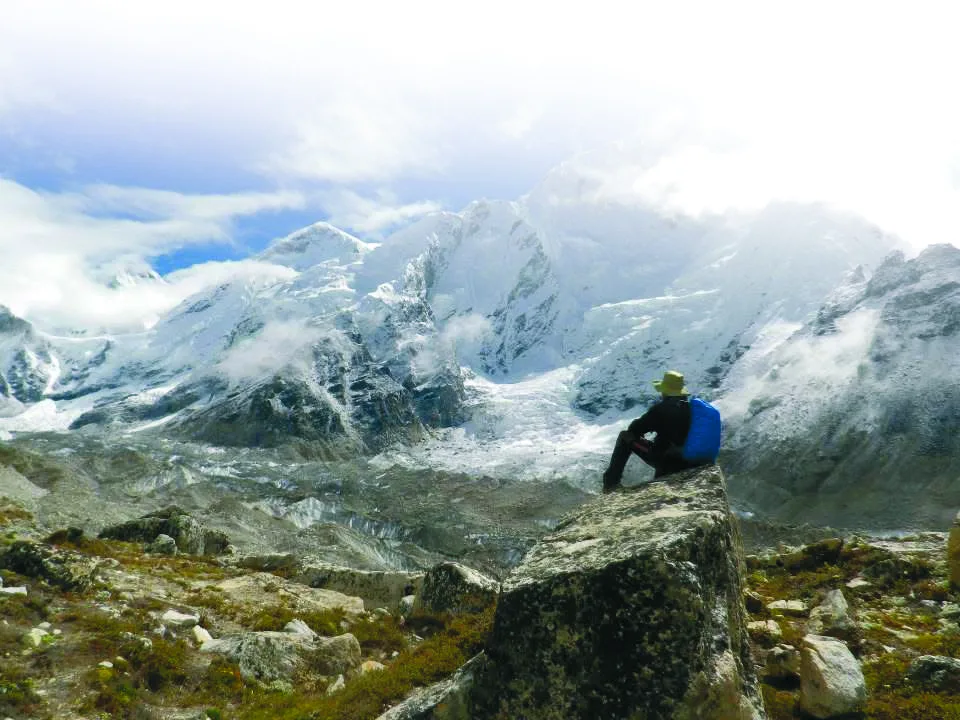
“The scale of nature makes you realise how small you are.”
From Nepal I travelled alone through China for several months. Sleeper trains became my home. Language barriers became daily challenges yet what stays with me most isn’t the difficulty. It was the kindness of strangers. Again and again, complete strangers would step out of the crowd and offer help. Sometimes they’d spend days showing me around their town, introducing me to family members, inviting me to dinner and sharing their lives. It taught me that the world is often far friendlier than we are led to believe.
I bought a guitar in Beijing at the start of my travels around China. I took this everywhere I went. On a sleeper train from X’ian to Chengdu I was sharing a cabin with a young family: mum, dad and their daughter who was around 13 years old. The daughter was the only one on the train who spoke broken English and so she became my translator so I could communicate with everyone. She had a Chinese guitar called a ‘zhongruan’ and we ended up swapping songs that we’d written. Before I knew it we had the whole carriage at our dorm door wanting to hear us play and ask me questions. It was through this ‘call and response’ type environment when a local person gave me advice on how to find wild pandas when I arrived in Chengdu. It actually ended up being a mission of 3 local buses and a 2½ hour trek through a rain forest to find them!

A decade Down Under
Eventually I arrived in Australia. What I expected to be a short adventure turned into more than a decade of my life. I settled in Melbourne, worked hard, pursued residency and eventually citizenship. I met my wife in Sydney when both of us were on similar journeys on the visa run, both seeking citizenship and feeling a tad lonely as well. We started a partnership together and helped each other through tough times and enjoyed great times travelling together. I proposed to her under the Sydney harbour bridge having organised a surprise evening and meal. We got married on a Thai island called Koh Lanta where we invited our friends and family from all around the world. We had the best month celebrating with everyone, it was an extra special holiday that will be hard to replicate. Since we’ve been together we’ve been to New Zealand, Fiji, USA, Japan and Thailand.
Anyone who has navigated the visa system knows how consuming that process can become. Years disappear before you realise it, yet once I finally secured my future there, an old passion began to stir. The spark came from an unlikely source: a guitar! A house mate wanted to build a guitar and I remembered my grandfather had built many over the years. We contacted him for advice and began the project ourselves. As the instrument slowly took shape, something clicked inside me. The complete satisfaction of creating something with my own hands came flooding back and woodworking had returned.
Soon afterwards my wife and I welcomed our first child. Wanting to make something special for him, I decided to build a clock and that simple project changed everything. I visited a timber yard to buy enough wood for the clock and found myself standing in front of Australia’s extraordinary hardwoods. The colours were astonishing: deep reds, purples and rich earth tones unlike anything I’d seen before. I went in intending to buy a small amount of timber and came home with an entire pickup truck full of it. Like a child in a sweet shop, I just couldn’t resist the extensive choice.
I began building tables and selling them. Those sales led to commissions and gradually a business emerged. What I discovered was that bespoke work suited me perfectly. Rather than filling showrooms with furniture and competing with large retailers, I preferred creating individual pieces for individual people. Each and every commission had a story, every piece of timber had its own personality. No two projects were ever the same. Then came another turning point when Covid arrived.
A pilgrimage through Japan
Living on the other side of the world suddenly felt very different. Family members had barely met our son. We realised how much we wanted our children to grow up knowing grandparents, cousins and the wider family network. So we decided to return to Britain but being us, we didn’t simply fly home. While our shipping container slowly made its way across the oceans, we travelled through Japan.
For a woodworker, Japan is something close to a pilgrimage. I enrolled in a traditional woodworking course and learned how to build a torii gate, one of Japan’s most iconic structures. Working with Japanese pull saws, chisels and hand tools opened my eyes to an entirely different philosophy of craftsmanship. The experience went far beyond learning techniques. Japan taught me about attention, about care and intention. Everywhere I looked, people took pride in what they did. Streets were immaculate, shopkeepers swept not just their premises but the pavements beyond. Tradespeople approached their work with a level of dedication that was deeply inspiring. There was also a profound connection with nature that resonated with me.

In Japanese culture there is an appreciation for stillness and observation that feels increasingly rare in the modern world. The forests, temples and mountain paths encourage you to slow down and pay attention. There is a long tradition of listening to nature: the rustle of leaves, the movement of water and the whisper of wind through the trees. As a woodworker, I found that deeply meaningful. After all, every piece of timber begins its life in a forest. Every grain pattern is a record of seasons, storms and years of growth.
Standing quietly among the cedar forests, listening to the wind move through the canopy, I began to understand craftsmanship in a different way. Good design isn’t about imposing yourself upon a material. It’s about listening to it, understanding and working with it, rather than against it. That philosophy continues to influence every piece I create. Even the deer seemed to embody that harmony. In places such as Nara, deer wander freely among people. Bow to them and they bow back. It sounds unbelievable until you witness it yourself.
Japan refined my eye for detail and strengthened my belief that craftsmanship is as much about mindset as skill. By the time we arrived in Britain, I knew exactly what I wanted to do.
The Wood Cave comes to Surrey
The Wood Cave had already begun in Australia, but now it would grow in Surrey. The name ‘The Wood Cave’ emerged during one of my many brainstorming sessions with my wife and immediately felt right. It reflected everything I wanted the business to be: a place of creativity, craftsmanship and discovery. My mission is simple: I want to help bring back handmade, locally crafted furniture built to last generations. Too much modern furniture is designed for convenience rather than longevity. I admire the growing movement of craftspeople, blacksmiths and makers who are reviving traditional skills and showing that quality still matters. I don’t want a chain of workshops across the country, I don’t dream of factories. What I want is something smaller and more meaningful. A workshop filled with beautiful timber, projects that challenge me. Customers who value craftsmanship, perhaps one day a small team of like-minded makers who share the same passion.
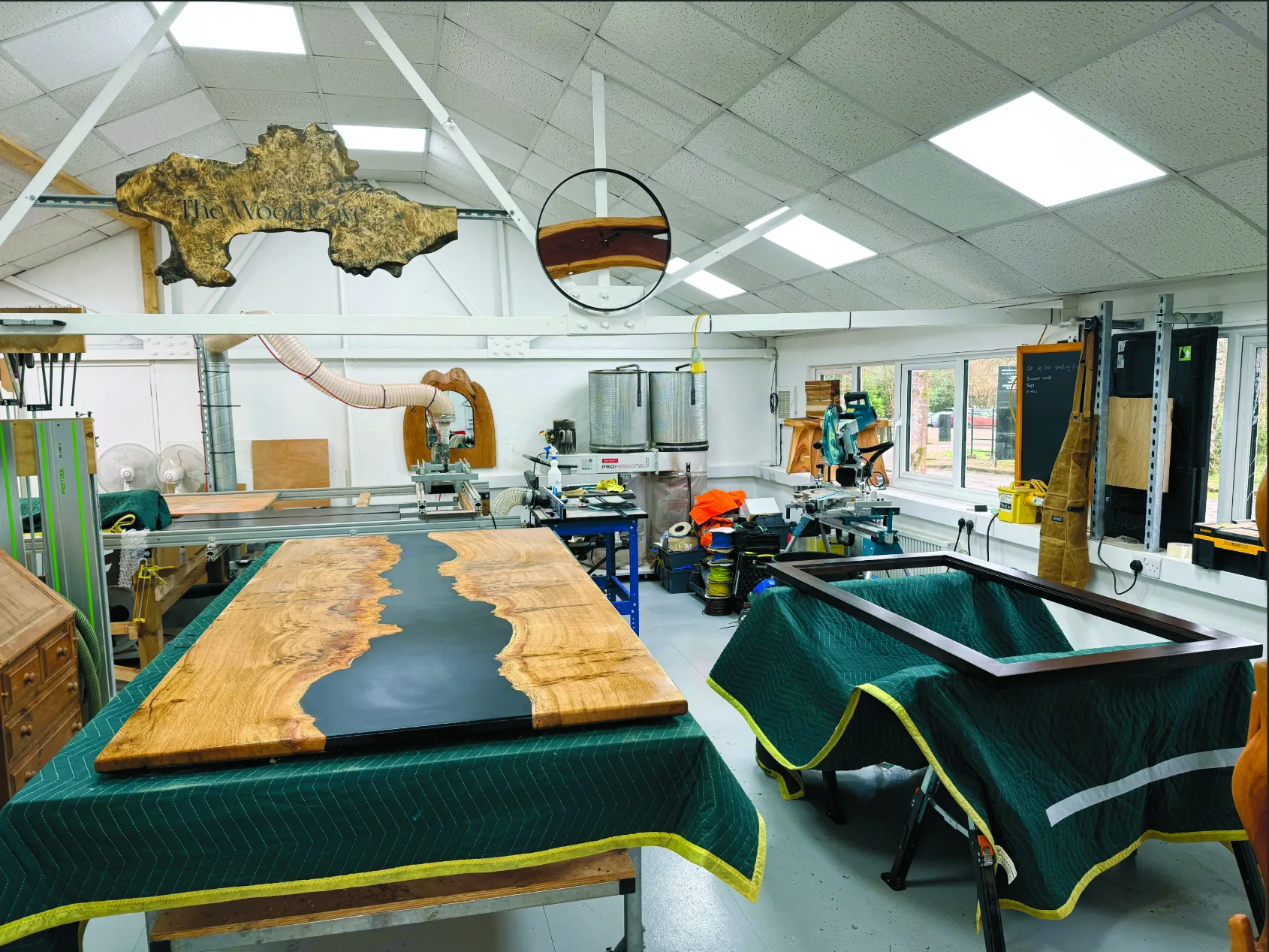
What continues to fascinate me most is transformation: a rough slab of timber arrives cracked, weathered and often overlooked. Slowly it reveals itself, grain emerges, colour deepens and character develops. Eventually it becomes a dining table, a cabinet or a centrepiece that will become part of someone’s life. That process never loses its magic for me.
A 650-year-old yew, and a new chapter
One of the most memorable projects I’ve completed since returning to Britain involved a 650 year old yew tree from the Cowdray Estate. The tree had fallen during a storm and I was given the opportunity to transform sections of it into furniture. Think about that for a moment… The tree was already ancient when Shakespeare was born. Working with timber like that feels less like manufacturing and more like stewardship. You’re preserving history and giving it a new chapter.
“Working with timber like that feels less like manufacturing and more like stewardship.”
Long after I’m gone, I hope those pieces will still be in use. Families will gather around them, children will grow up beside them, memories will be created upon them. That’s what craftsmanship means to me. It’s not simply making furniture, it’s creating something honest, lasting and something that carries the story of the tree, the maker and the people who live with it. And if one day my children run their hands across a table and say, “My dad made that!” then I’ll know I’ve built something worthwhile.
“Long after I’m gone, I hope those pieces will still be in use.”
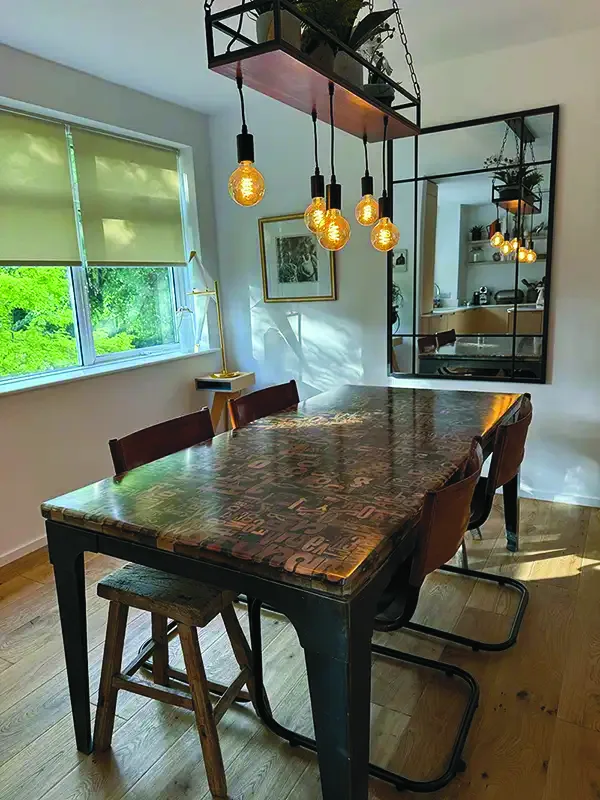
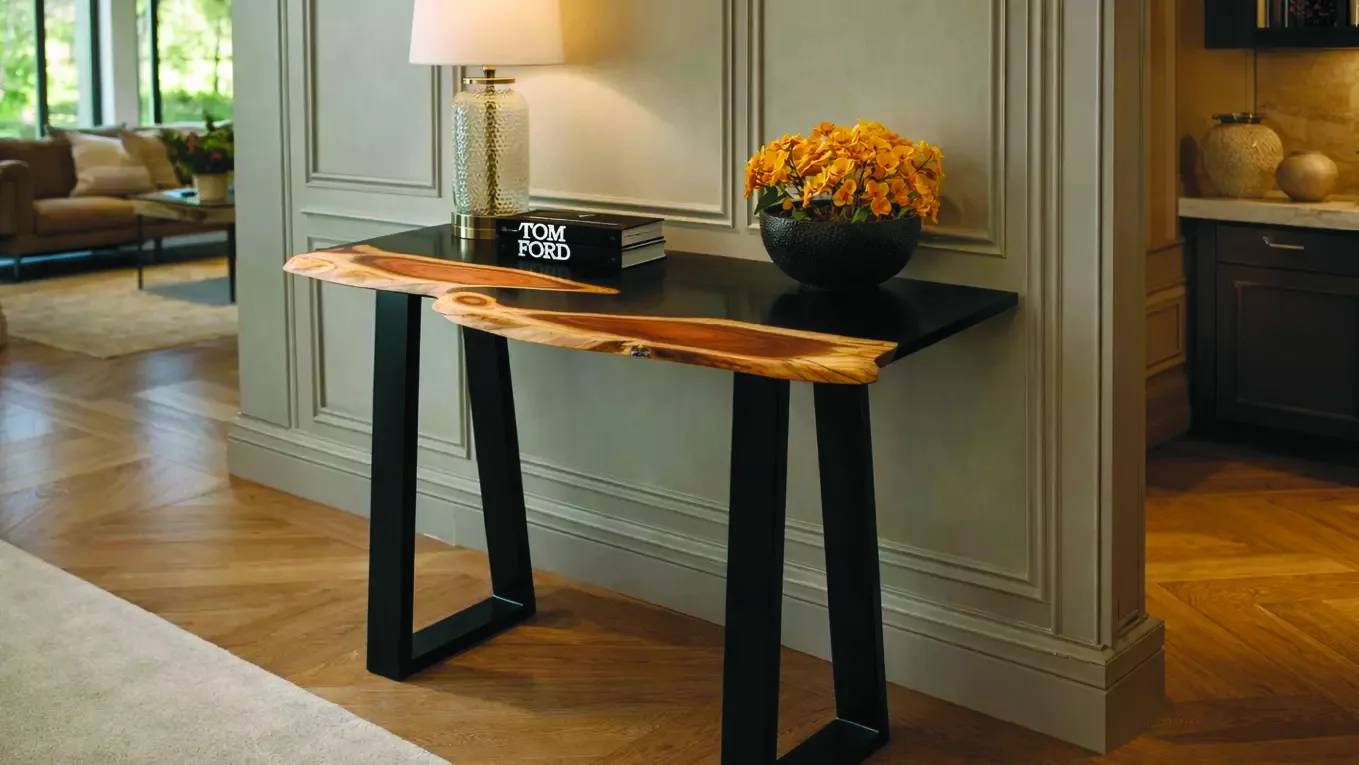
More of Gordon’s work
What readers say
“I have just read your amazing story in the Cranleigh Magazine and I salute you in your endeavours. You seem to have packed so much into your life already and I plan to show your article to my grandchildren to show them how, with courage and determination, they can achieve great things.”
Jennifer Parsons, resident of Cranleigh
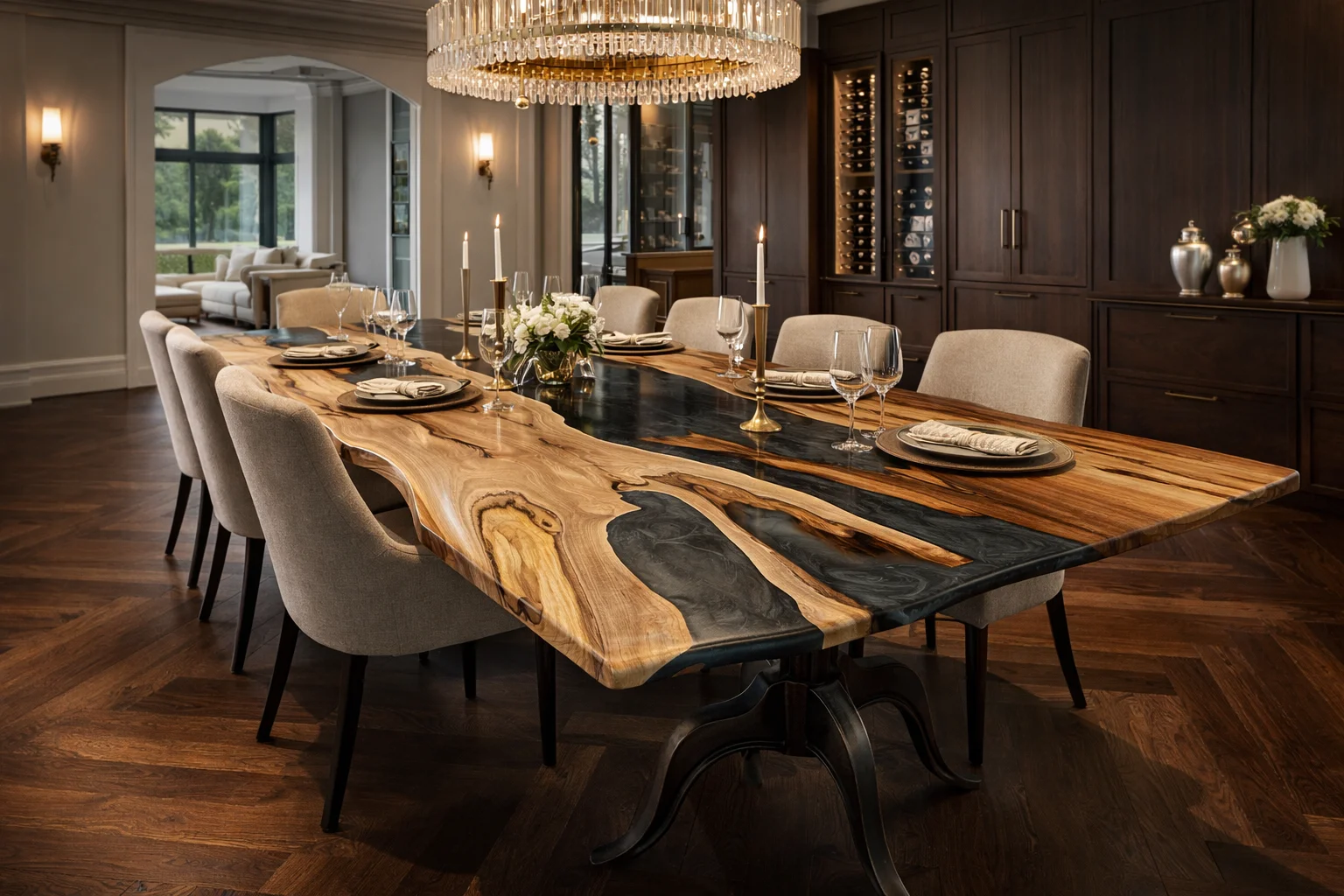
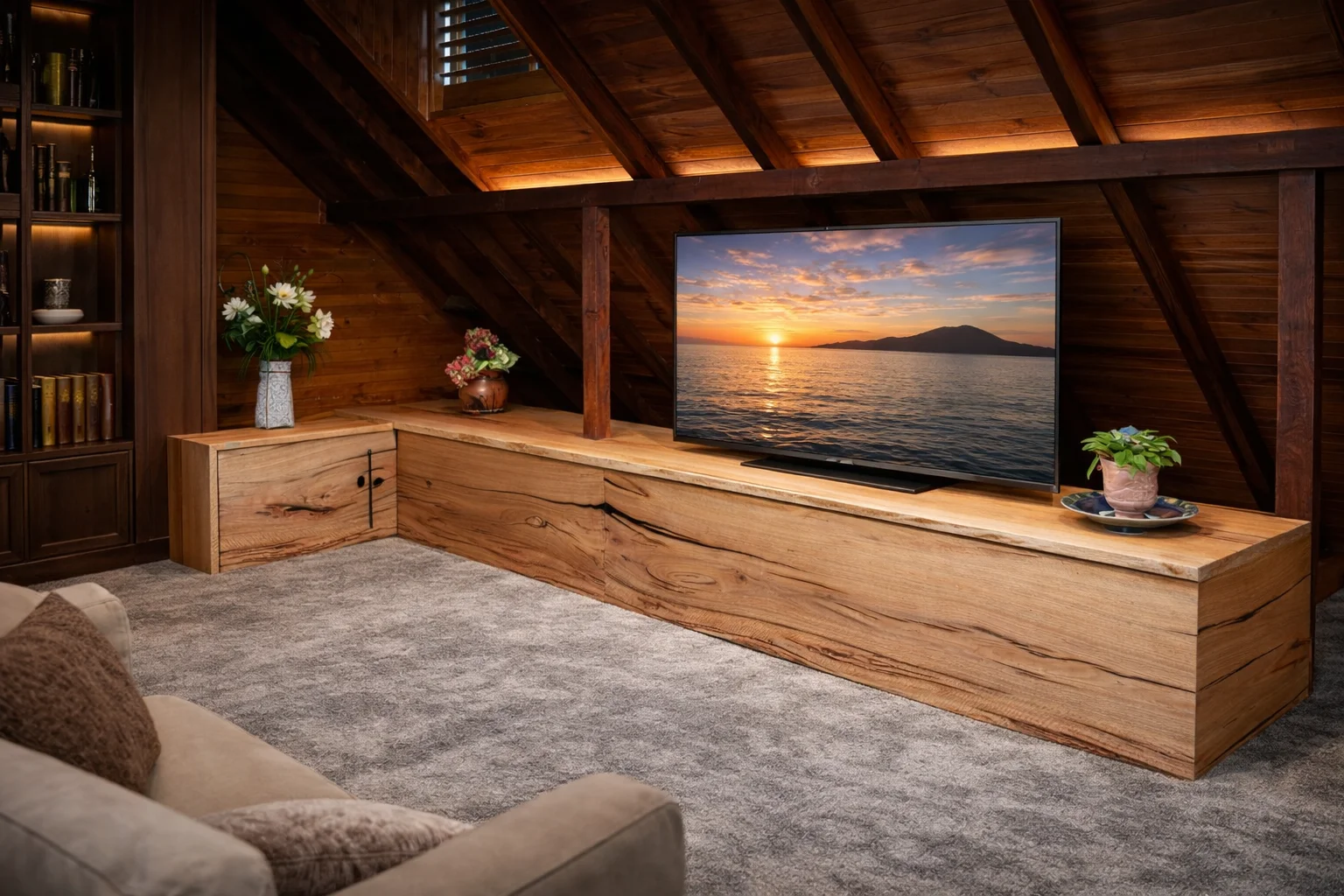

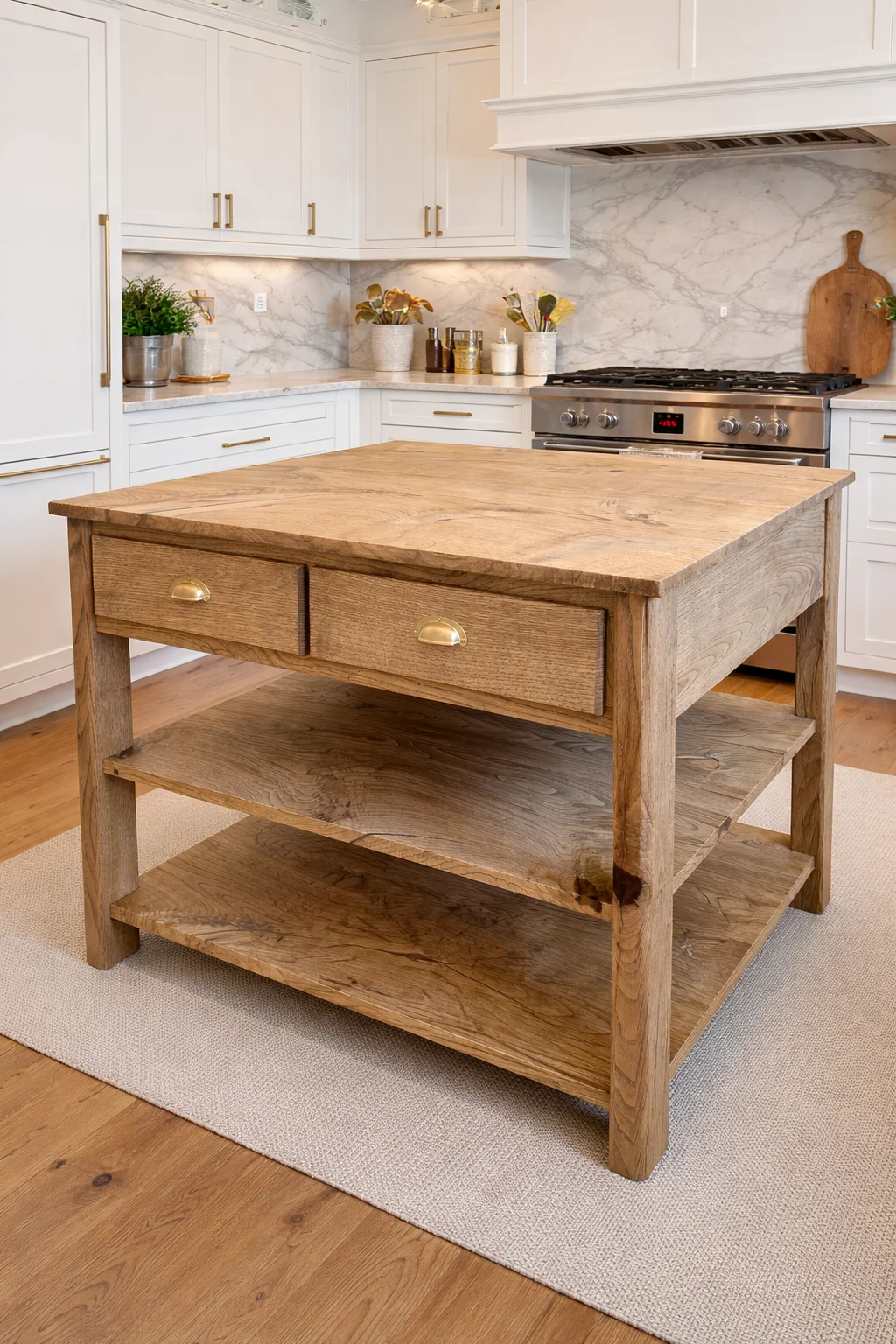
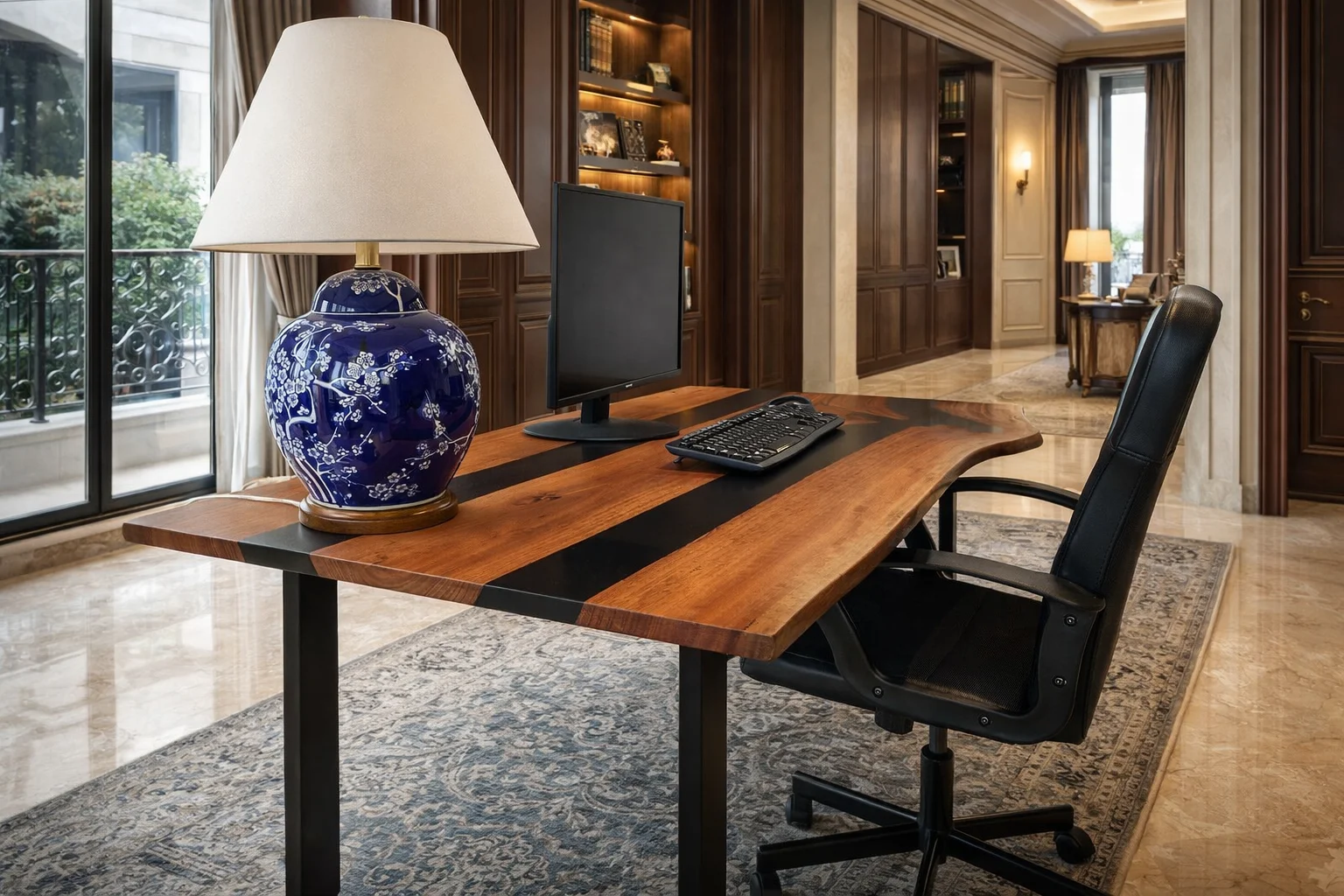
You can find Gordon and The Wood Cave at Unit 11, Smithbrook Kilns, Cranleigh GU6 8JJ, or online at thewoodcave.co.uk.
This article first appeared in the July 2026 issue of Cranleigh Magazine. Pick up your free copy around the village, or read more at cranleighmagazine.co.uk.