
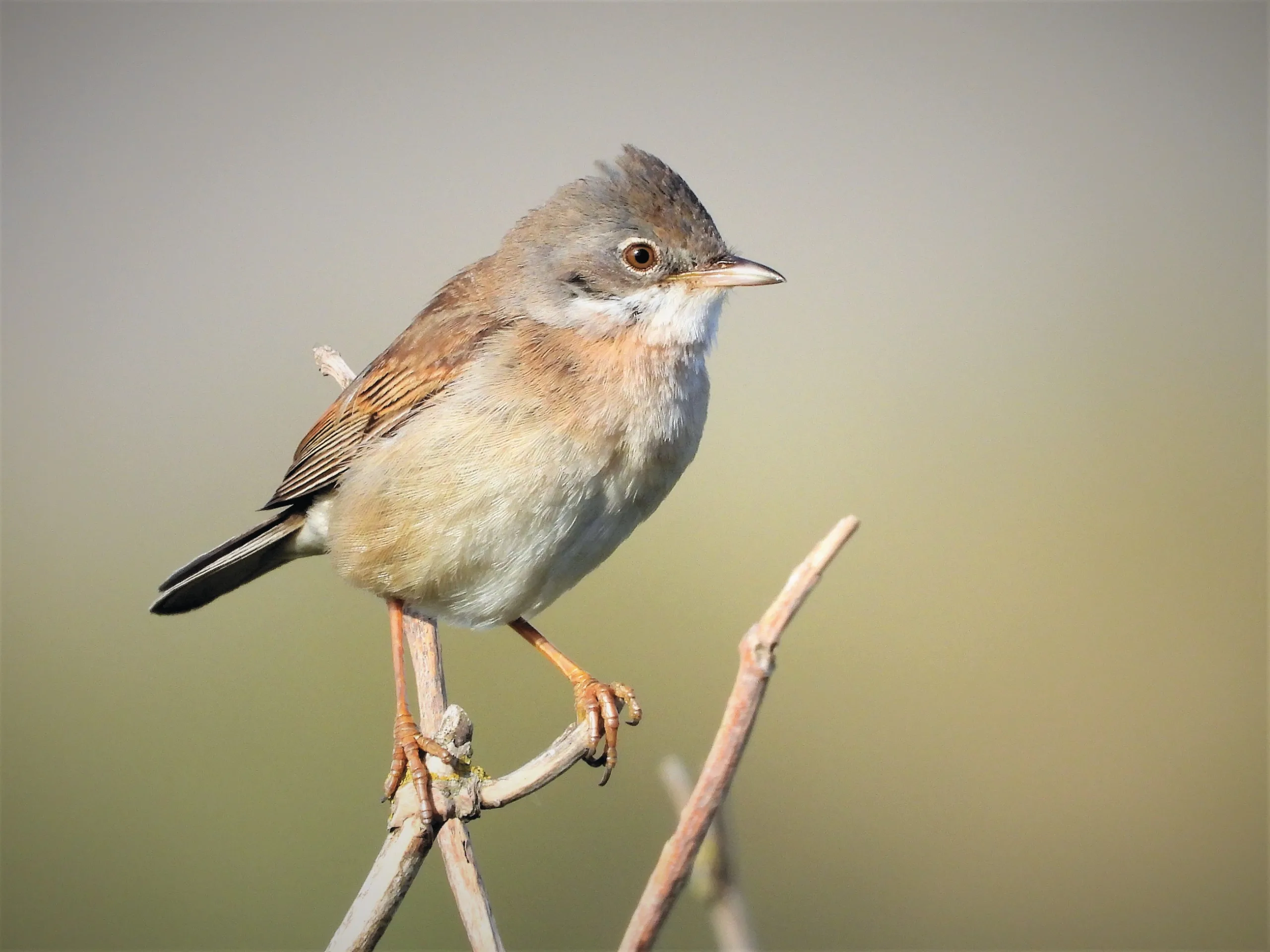
Same time of year. Same place. Even down to the same dense hedgerow. And the very same bush. He’s back again. Hurrah! Same old bird.
For a few decades now I’ve been returning to the same area of the common and he never lets me down.
I’m talking of a little warbler who always grates out the same old scratchy ditty from his hiding place in the greenery before popping up to check it really is me welcoming him back home.
Okay, maybe he does not really recognise me as an individual. But I like to think he might, although he is always highly inquisitive of any intruder or out-of-place looking character around his manor.
Many happy returns to the Common Whitethroat, back for the birding equivalent of a summer long Neighbourhood Watch.
The first part of his name is rather misleading because I would not have him down as a particularly common species.
He or his ilk are most unlikely to be seen in the average garden – I’ve never discovered one in mine – but he is relatively common in the dense vegetation of commons, heathlands and roadside hedges in Britain and the Cranleigh area too.
‘Common’ differentiates him from a smaller and far scarcer ‘brother,’ the Lesser Whitethroat who is not so inclined to show itself so easily.
As for the ‘Whitethroat’ label – well, he has got what it says on the tin. A white throat.
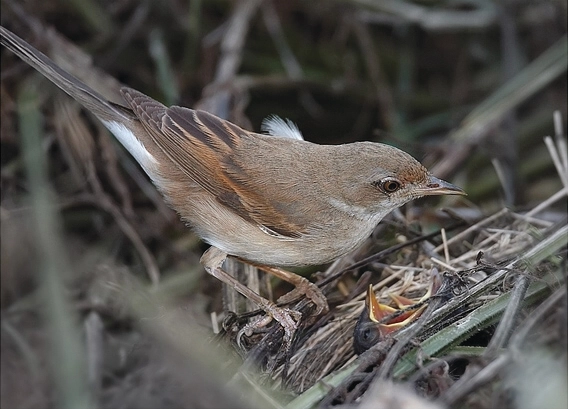
Female Common Whitethroat, photo © Martin Mecnarowski, www.photomecan.eu
Like some other sub-Saharan visitors, the Common Whitethroat is known to return to breed in the same place as the previous years.
The thing is about ‘my’ one, which I was so delighted to be reacquainted with this year on the lucky for me 13th of April, is that over the course of any decade I have probably been interacting with around at least five different birds.
It has been found that they only live an average of two years and the oldest ever recorded in the United Kingdom was just under eight.
So I have probably been greeting the same individual bird for only a couple of years running,followed by a regular line of family lookalikes spanning a few dozen generations, although of course it could be that none of them are from the same blood line.
But to me it is one of the wonders of migration that a bird weighing 12-18 grams can navigate thousands of miles south over land, sea, snowy mountains and inhospitable desert, survive all manner of threats to its life, and return to the very same bramble patch from where its adventure began. I only wish my car’s sat nav was that effective.
The Common Whitethroat’s music would win no prizes in any contest for the richest song among our warblers who visit African countries for the winter. They sing a lot so maybe that is why they sound so hoarse. They can also sound grumpy, giving a deep, cross sounding warning grunt from deep cover. This often gives away their presence.
But there are riches in their colours. Adult males can be distinguished by their orange and brown panelled wings, grey head and pink tinged breast. Females look similar but with a lighter brown head and buffish breast.
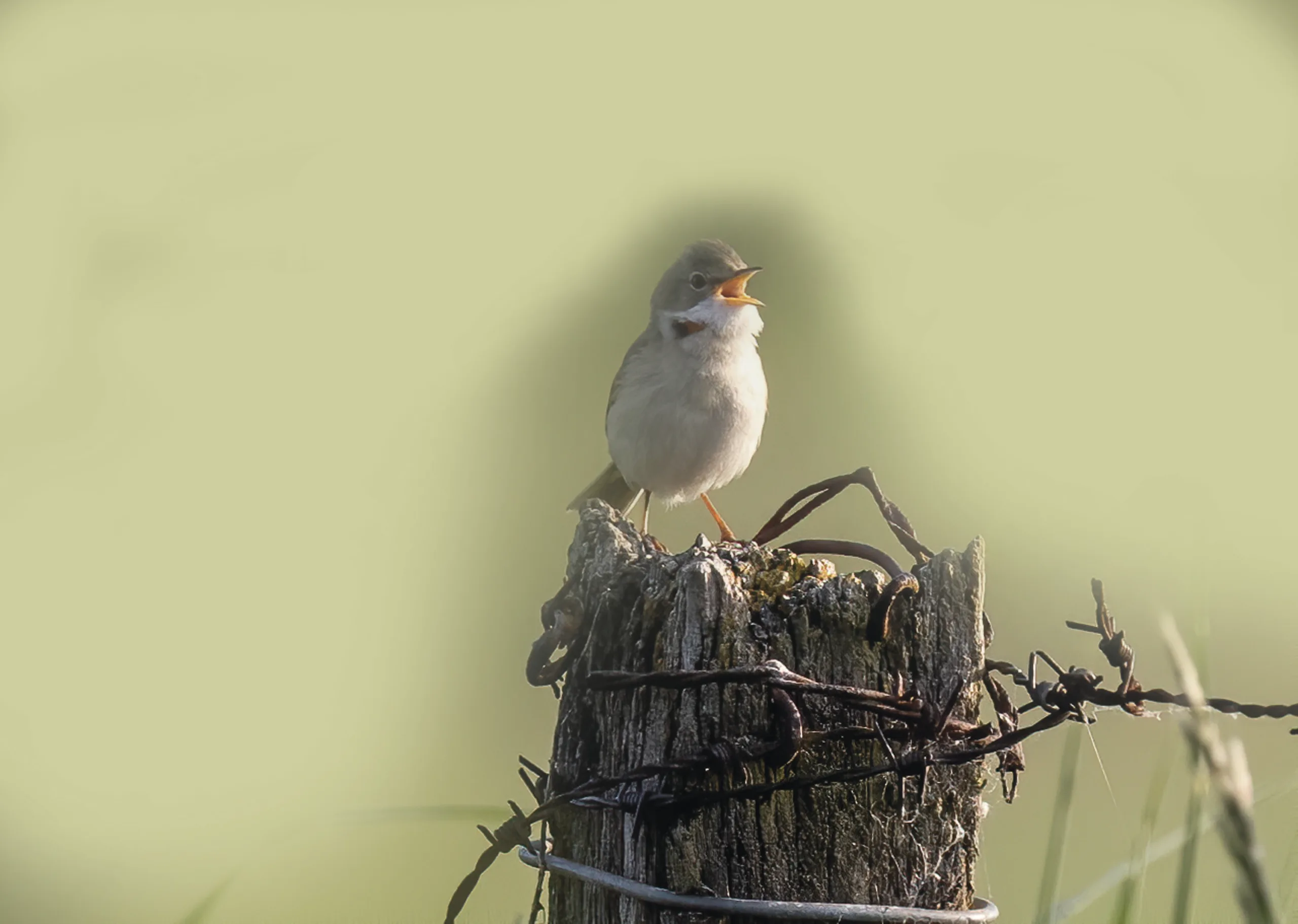
In their fast and low darting flight their long tails are obvious and appear to cause instability, making them bounce along rather like Long-tailed Tits. The males have another aerial trick and have been dubbed ‘singing skyrockets’ as they rise up vertically in impressive singing display flights.
The Common Whitethroat has experienced varying fortunes. Nationally and locally the species ‘crashed’ in 1969 due to a drought in the western Sahel, south of the Sahara Desert.
The next year, one observer who regularly ringed up to 300 annually at Ewhurst in the early 1960s, reported it was ‘virtually absent’ from our area. Nationally there was a 65% drop in the population between 1967 and 2023.
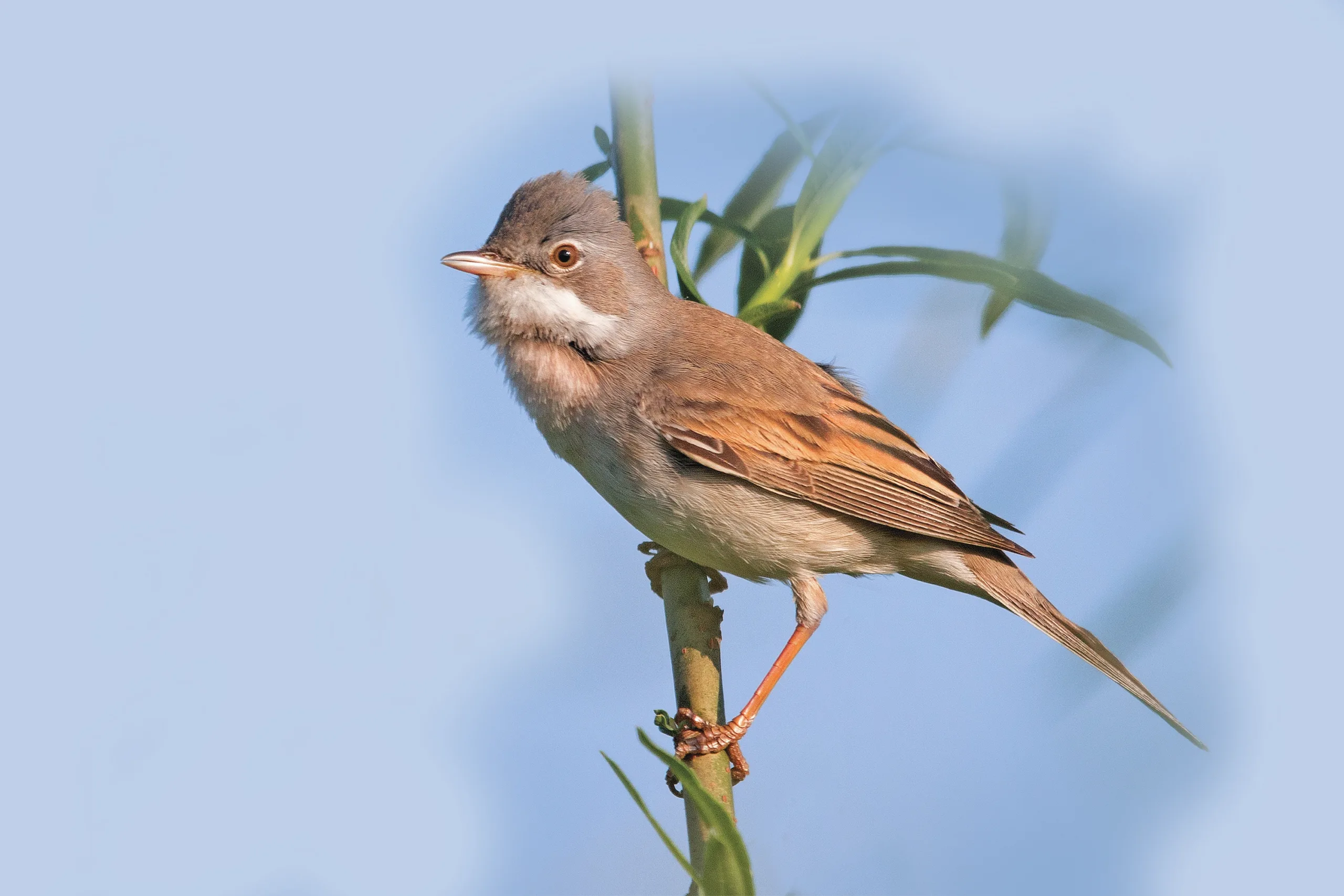
Common Whitethroat, male (Curruca communis), photo © Andreas Trepte, www.avi-fauna.info
Although the species has somewhat recovered and been showing well locally this year, we can take nothing for granted in this fragile world. But hopefully me and my ‘chum’ – or another – will be reunited around the middle of April next year. At the same bush.
This article first appeared in the June 2026 issue of Cranleigh Magazine. Pick up your free copy around the village, or read more at cranleighmagazine.co.uk.
Follow the Crane Spotter on X: @Crane_Spotter