
The big kick off was celebrated with some excited drumming in my garden this year. No, not the World Cup – our birds’ breeding season.
I had heard loud tapping for a couple of days back in early March but could not work out where it came from. The noise frustratingly stopped every time I got nearer.
It was clearly no Great Spotted Woodpecker drilling so I did a stake out and eventually traced it was coming from one of my nest boxes. And it was not from a bird trying to make the entrance hole bigger.
The hammering was happening right inside the box, and at the back. ‘Good luck with that then, chum,’ I remarked, because the wood was one and a half centimetres thick and in perfect condition. Even if the creature inside successfully got through, it then had a thick tree to contend with.
If it was trying to exit then I wondered why it did not just turn around and use the hole provided. I took some steps back and waited and as I suspected, out popped a male Blue Tit.
Nuts he may love but nuts he ain’t. Turns out, like any good would-be father, he was probably checking the house out for its suitability to handle up to a dozen youngsters and thousands of comings and goings during three weeks of frantic dawn to dusk feeding.
All the racket the bird was creating from inside the ‘drum’ had another advantage. A female would easily hear it and be attracted to this clearly tough and healthy partner.
And that is just what happened. I regularly sit to read on a seat just below the box and within a couple of weeks saw both birds visiting with nesting material.
They never flew straight into the hole but always liked to drop within a nearby rose arch to ensure all was clear and to check for no spying predators.
By the time their nestlings had hatched they would fly so close to my head from nearby perches that I could hear their wings and feel the downdraft on my budding bald patch.
The nestlings inside were fairly muted so one day I was surprised to hear chicks calling unusually loudly. But the begging was not coming from the young Blue Tits but a dilapidated old nest box only 20 feet away.
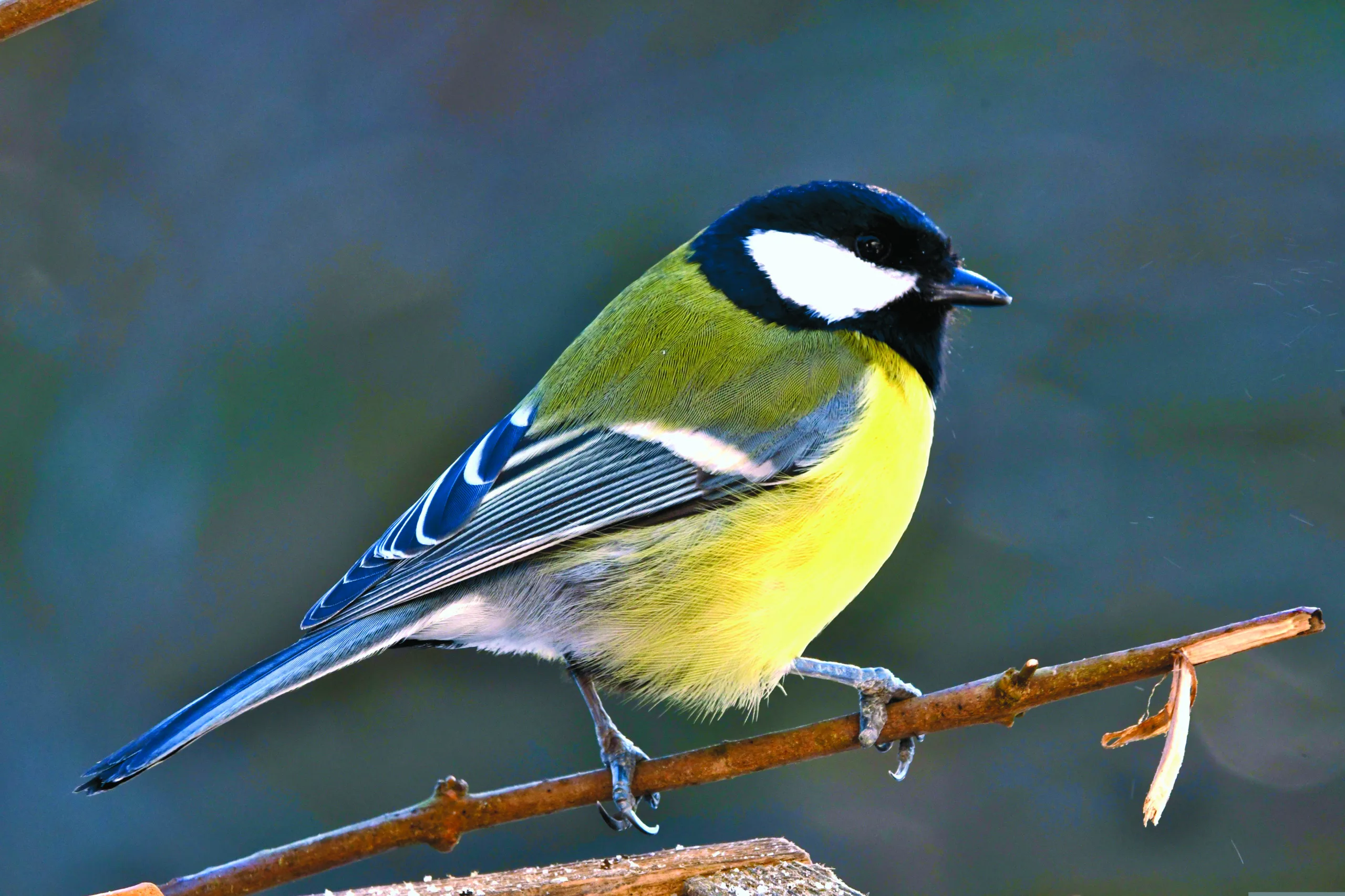
I had not checked this one because I thought it was unusable. But clearly another pair of birds disagreed. While I had been concentrating on the Blue Tits I had missed their larger cousins, Great Tits, having the match of their lives right under my nose.
The male soon cautiously arrived with a green caterpillar in his bill. He landed firstly in a small apple tree, then jumped down to the handle of an old wheelbarrow, checked all was clear and then popped into the nest box, much to the excitement of those inside.
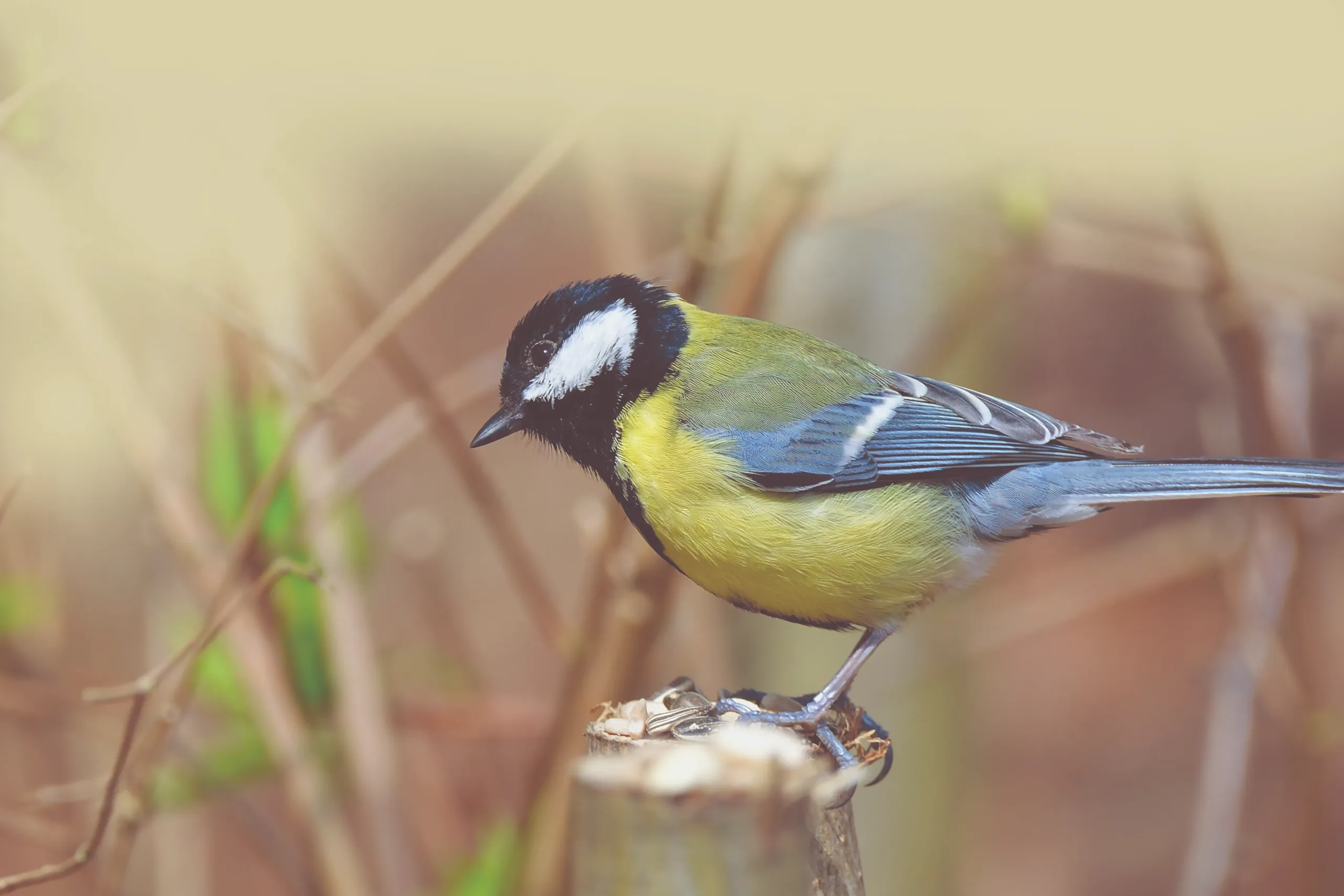
The male soon cautiously arrived with a green caterpillar in his bill. He landed firstly in a small apple tree, then jumped down to the handle of an old wheelbarrow, checked all was clear and then popped into the nest box, much to the excitement of those inside.
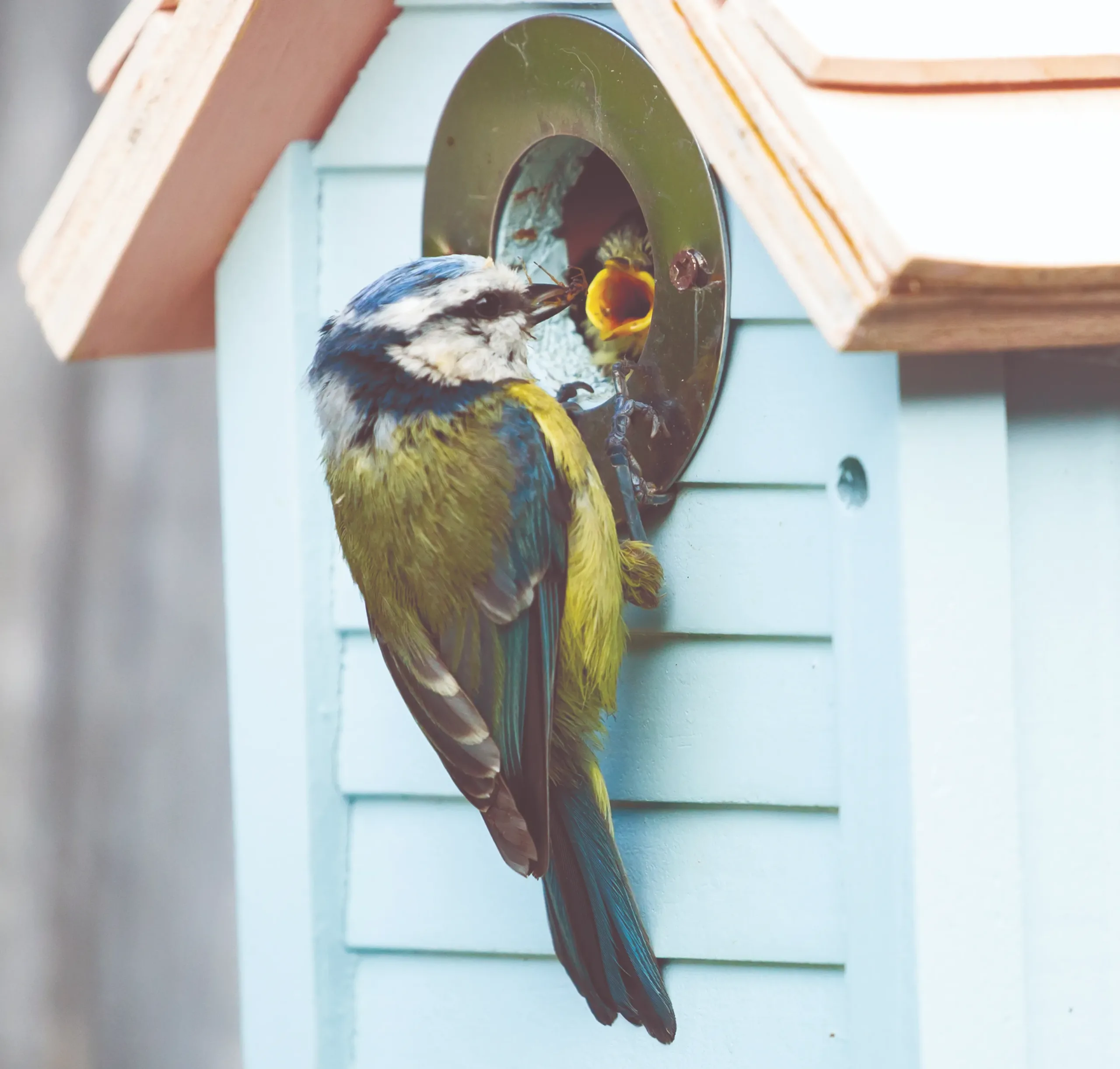
Over the following two and a half weeks it was action all the way for both pairs of birds as their chicks grew bigger and more demanding. Their approach to the nest was always similar but they always smartly varied their direction when they left.
I was kept busy too, marvelling at the parents’ fast return with caterpillars, maggots and assorted flying insects invariably gathered from the local ‘Oak Supermarket’ above their nests. Some days they were out shopping from before 5am and still at it until 9pm.
After one feed I was able to quickly peak inside the Great Tits’ box and count eight chicks and one other, sadly dead. A large percentage of tits do not make it to adulthood but I was surprised this one, the biggest, had not survived because food shortage did not seem to be a problem.
Seven eventually fledged and for a short while received parental guidance to find their own food and peck at peanut morsels from a feeder. Two birds perished in the nest.
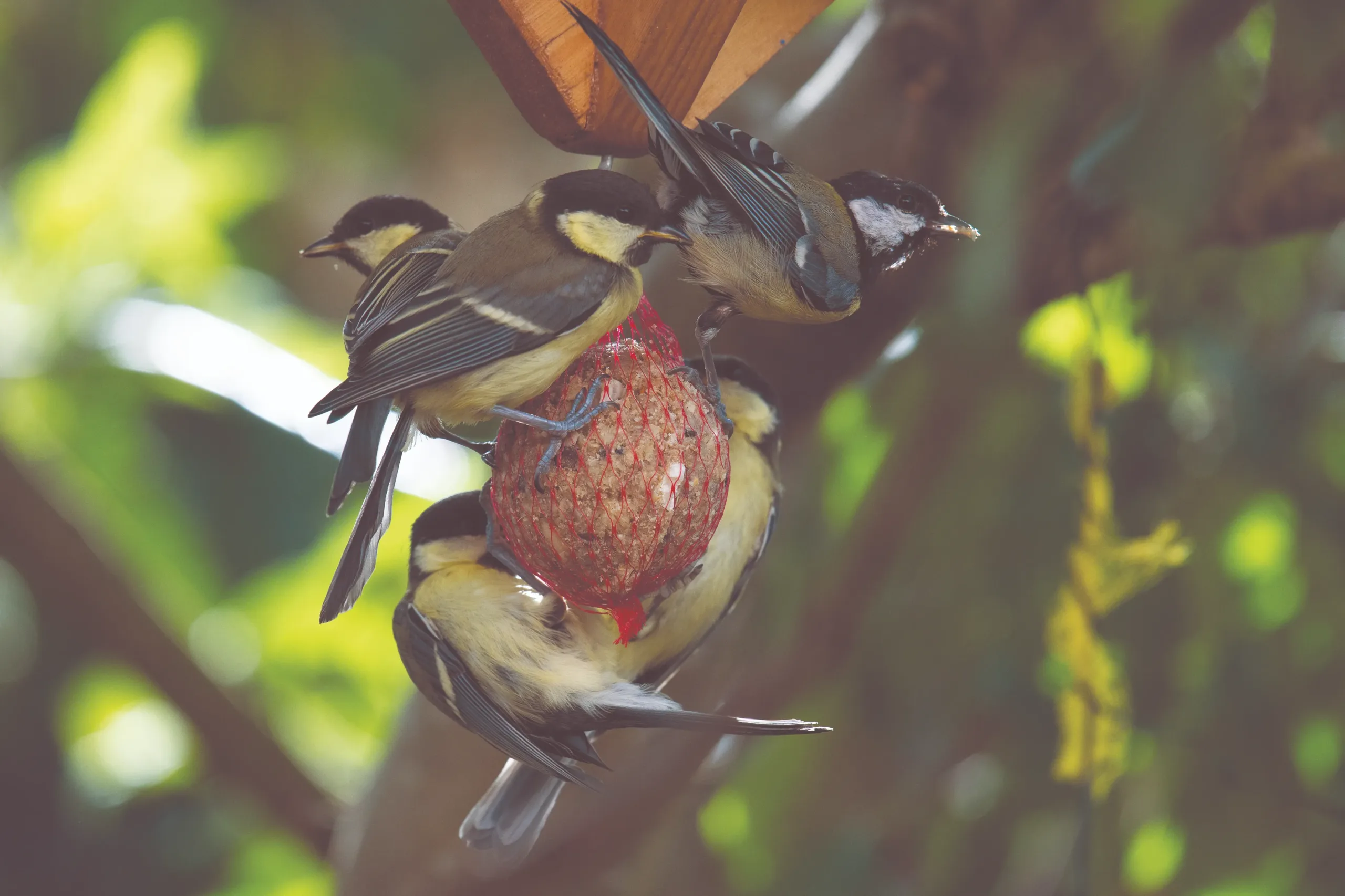
I could not access the Blue Tits’ box but all survivors fledged within a day of their congeners.
Eight juveniles joined the larger species around the garden in a little party before they ventured further afield.
At the final whistle then the score was: GT United 7 – Blues 8. A re-match is unlikely this year but the groundsman aims to ensure the ‘pitch’ is more than ready for next season.
This article first appeared in the July 2026 issue of Cranleigh Magazine. Pick up your free copy around the village, or read more at cranleighmagazine.co.uk.
Follow the Crane Spotter on X: @Crane_Spotter