
Just my luck! Here I am, sitting stationary again in yet another long tailback of M25 traffic.
There are four lanes of traffic but nobody is going anywhere. Still, unlike around Cranleigh these days, at least the road is open and we are not being diverted.
I glance out of the car window and notice a couple of distant dots on a flooded gravel pit and recall a reason to be thankful for a most welcome outcome from the surge in motorway and housing developments since the 1950s.
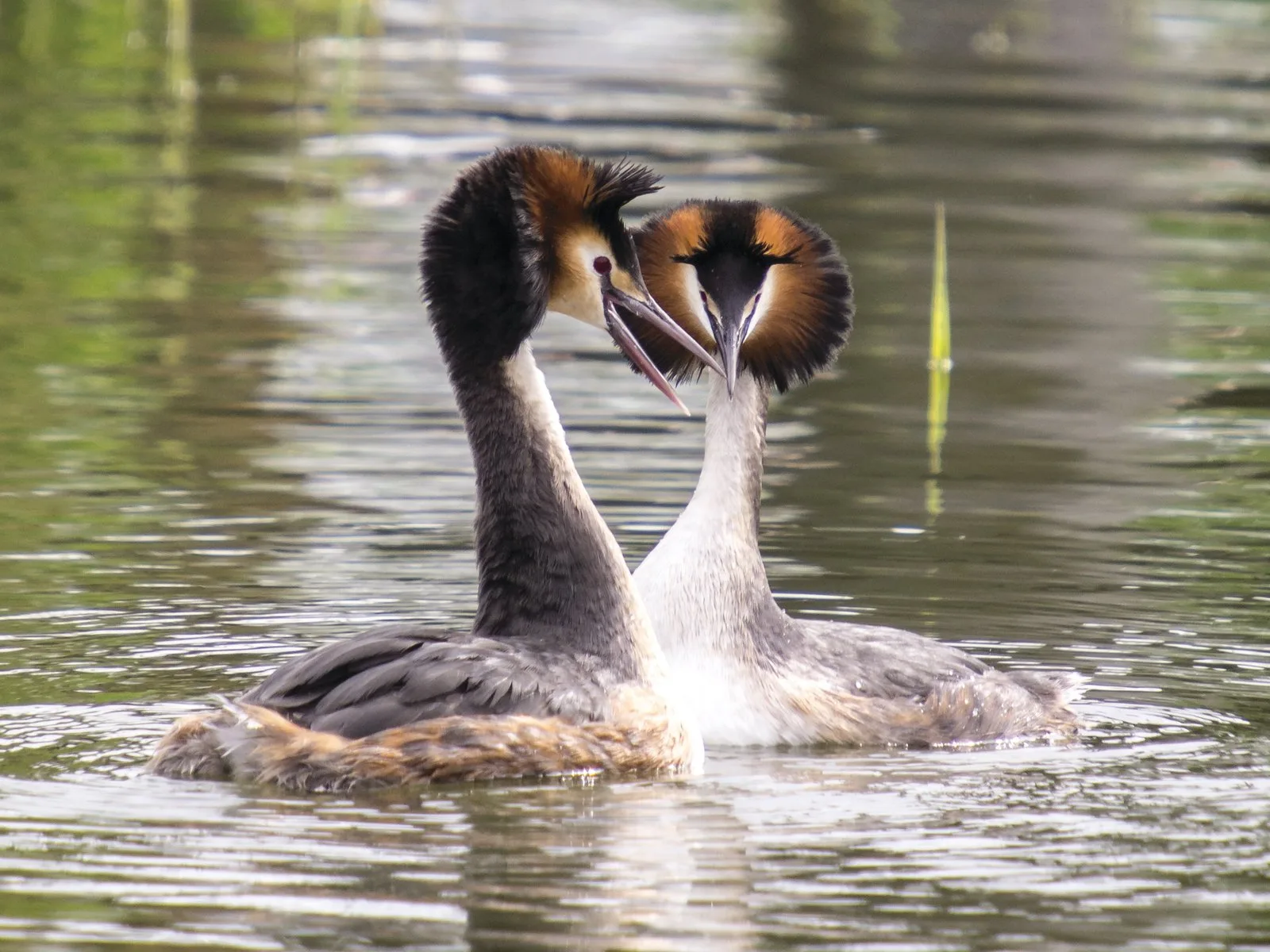
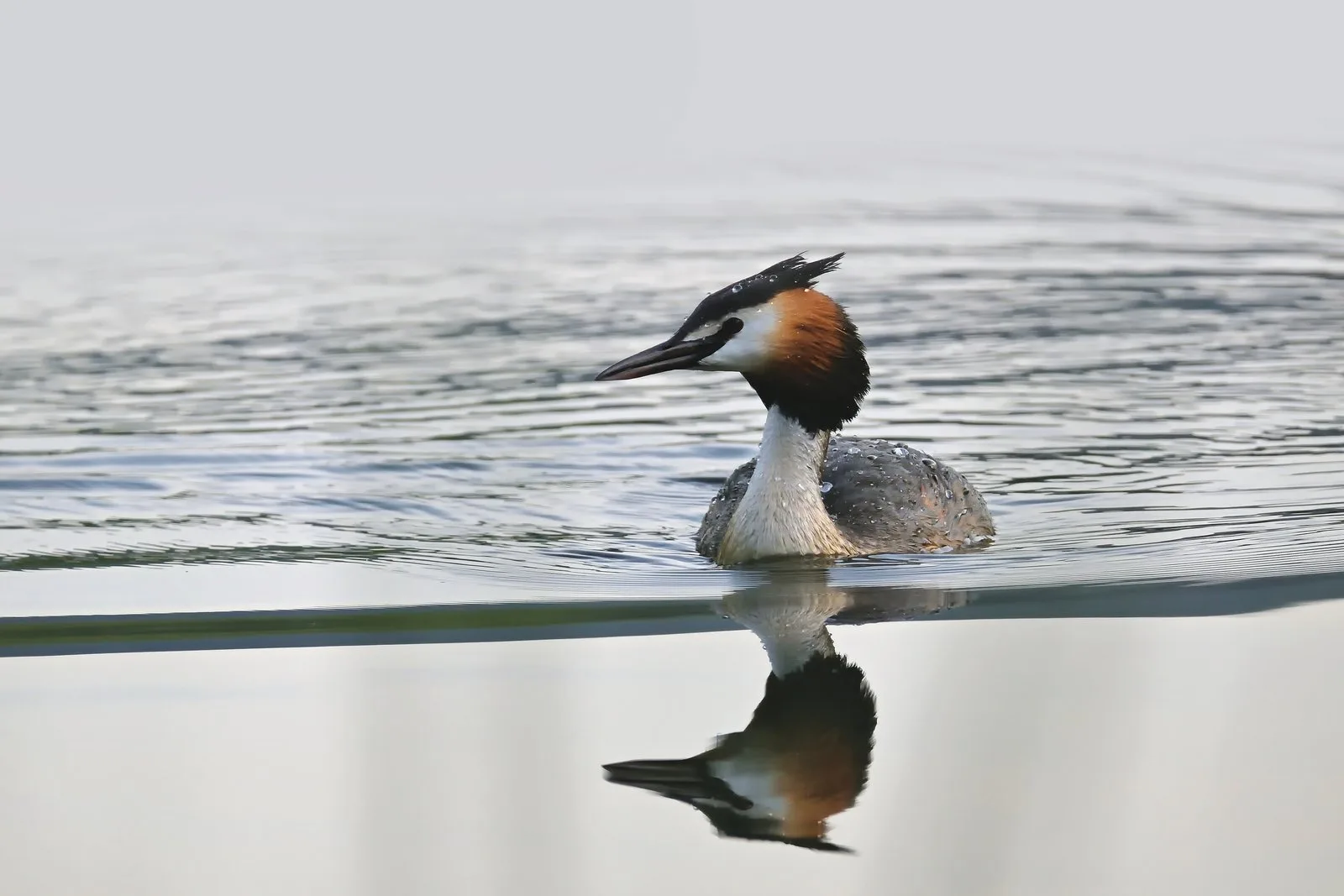
The dots in the distance are two of our most beautiful and elegant water birds: the Great Crested Grebe.
This species has been a major beneficiary of the deep lakes and water parks created by the widespread extraction of gravel required by the construction industry.
At one time, the Great Crested Grebe’s future in this country was bleak and, like me on this particular Friday afternoon, it was going nowhere. 160 years ago there were thought to be around only 40 pairs in the whole of Britain.
GCGs, as birders often call them, paid a hefty price for being so gorgeous in their breeding plumage and their feathers were in huge demand from the fashion industry.
Their startling head and neck plumes, and even dense body feathers, adorned all types of wealthy women’s clothing and hats. But somehow the ladies never ended up looking as stunning as the original owners.
A dead bird fetched a useful income for hunters who shot them with abandon and sold their eggs in markets. These were the days when all manner of birds were killed so they could be stuffed and displayed for the gentry to impress visitors in their large country mansions. They paid huge sums of money to their eager suppliers.
Thankfully, legal protection for water birds and changing attitudes about women’s fashion combined to aid the GCGs’ recovery before it received a population boost from our roadwork expansion.
Great Crested Grebes are fairly common in Britain now but remain a rare treat in the Cranleigh area. When mist downed a juvenile at Knowle Park Lake one January morning last year it stayed little more than an hour before flying off. Spotted by birdwatcher Phil Price, it was the site’s first record and delighted a small band of appreciative observers.
Now I am happy to report another appearance of the species this year. Back in April I had a big surprise when I noticed a pair of Great Crested Grebes in breeding plumage at a Willinghurst Fishery pond, the first I have encountered there for around 20 years.
I kept a careful eye on them from a public footpath over the next few weeks but nothing much seemed to be happening. I witnessed no evidence of their amazing courtship dance where they stand upright opposite each other and shake a bill full of weed at each other’s face.
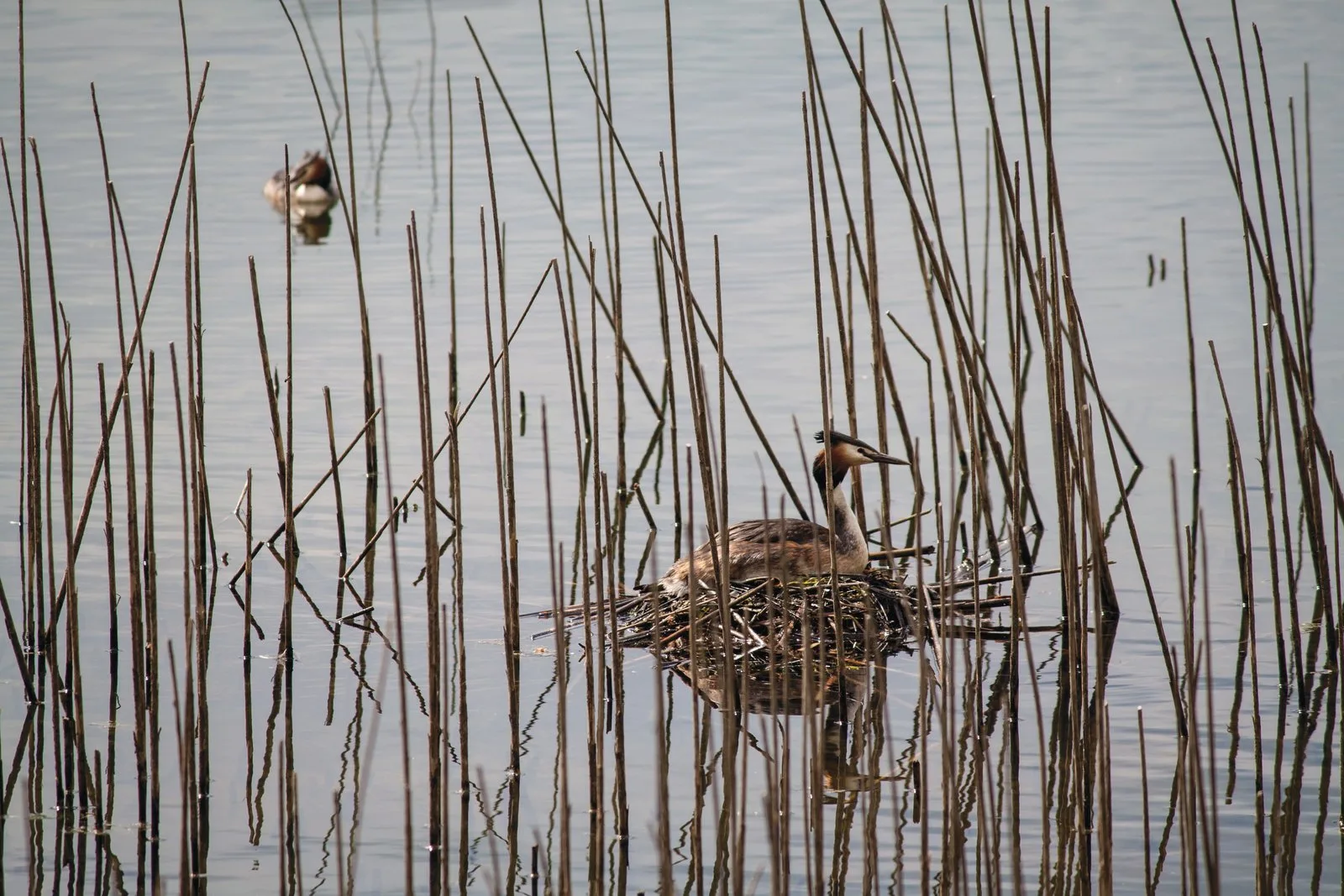
When the pair had reduced to one I feared the worst had happened. But in late June I found the second bird, well hidden under low overhanging branches. And she was sitting on a floating nest.
By the second week of July, with the heatwave in full swing, the male was still busy adding material to the secretive nursery. Sometimes he was over enthusiastic and dragged up ridiculously large sunken branches more than six feet long.
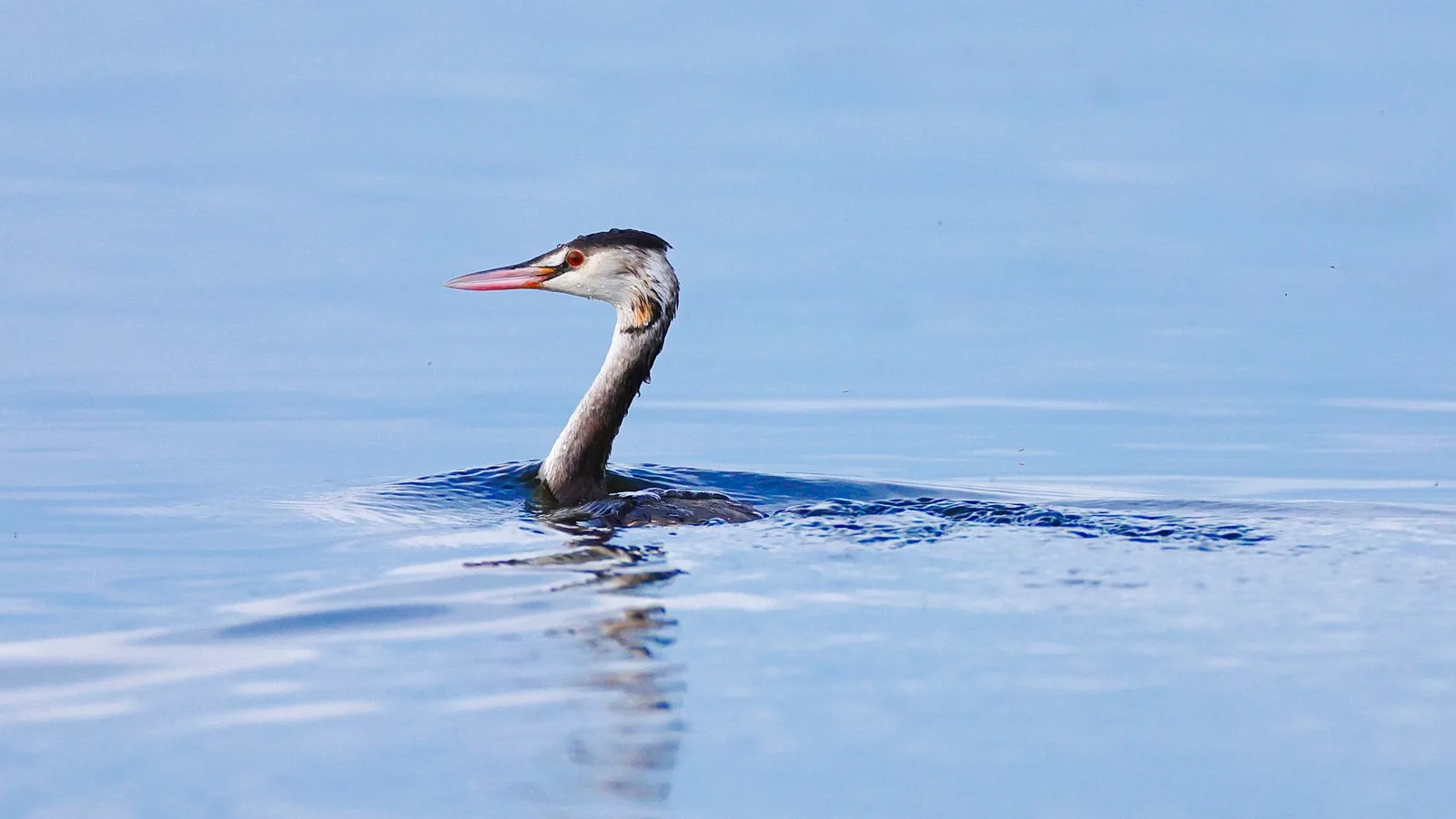
The female made quiet croaky noises, whether in appreciation or criticism I’m unsure. ‘Darling, if you think that big, messy contraption is coming into our house then you’ve got another thing coming. Take it out!’
But just ten days later the nest was empty and both adults were drifting slowly around on the water. Sadly there was no sign of any youngsters. I feared if there had been any then they might have been predated.
Then I saw the male dive and come up with a fish fry. He swam towards the female with his gift but instead of feeding her he hovered his bill over her back. Hey presto! Out popped a teeny beak from her puffed up feathers. She was a mum.
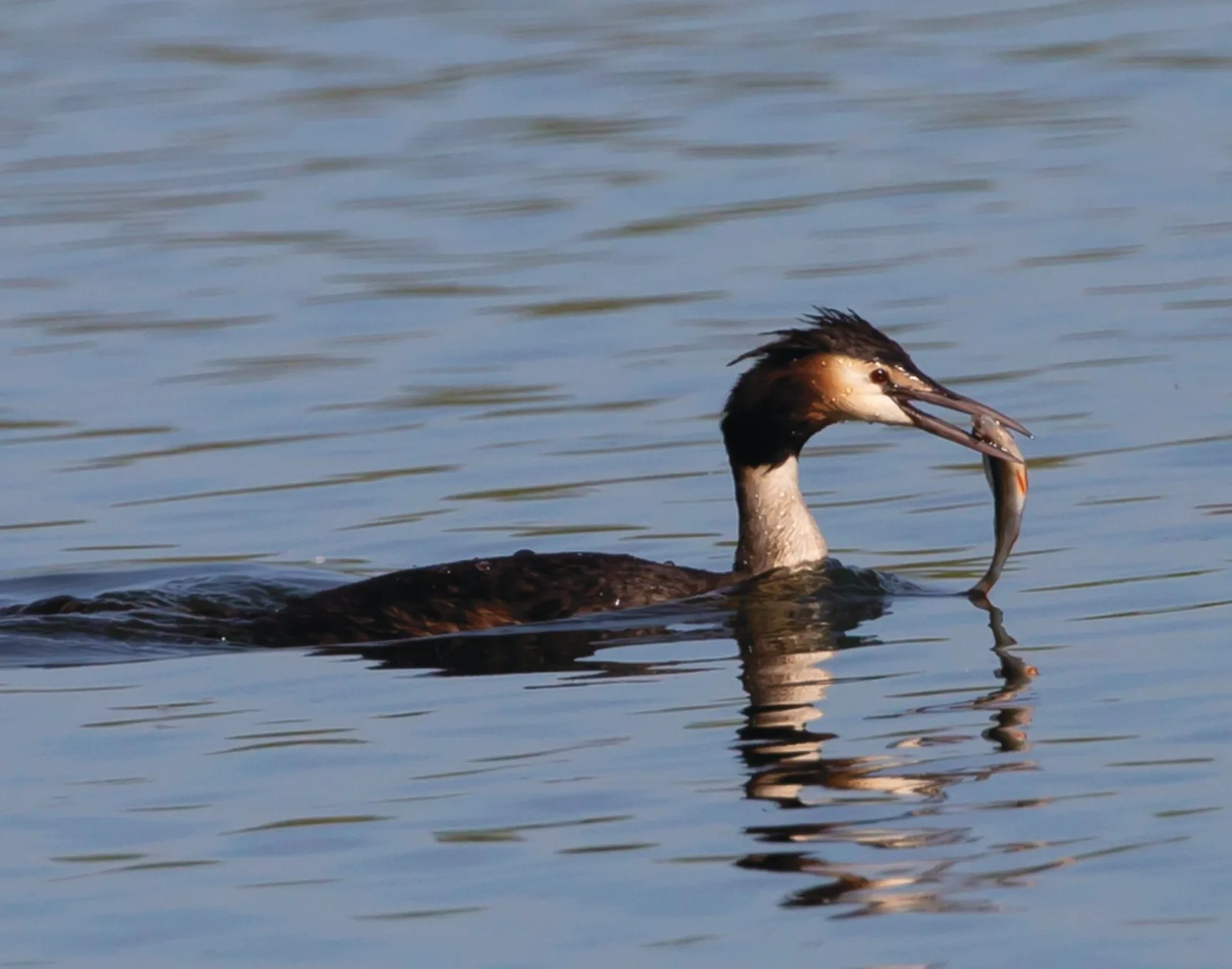
The chick, no more than a few days old and the size of an adult’s head, was having great difficulty coping with the length of even a tiny fish so the male retrieved it and broke it in half.
No sooner had this morsel been happily swallowed than another beak appeared from under the ‘bed’ coverings. It was late in the season but our Great Crested Grebes had hatched twins!
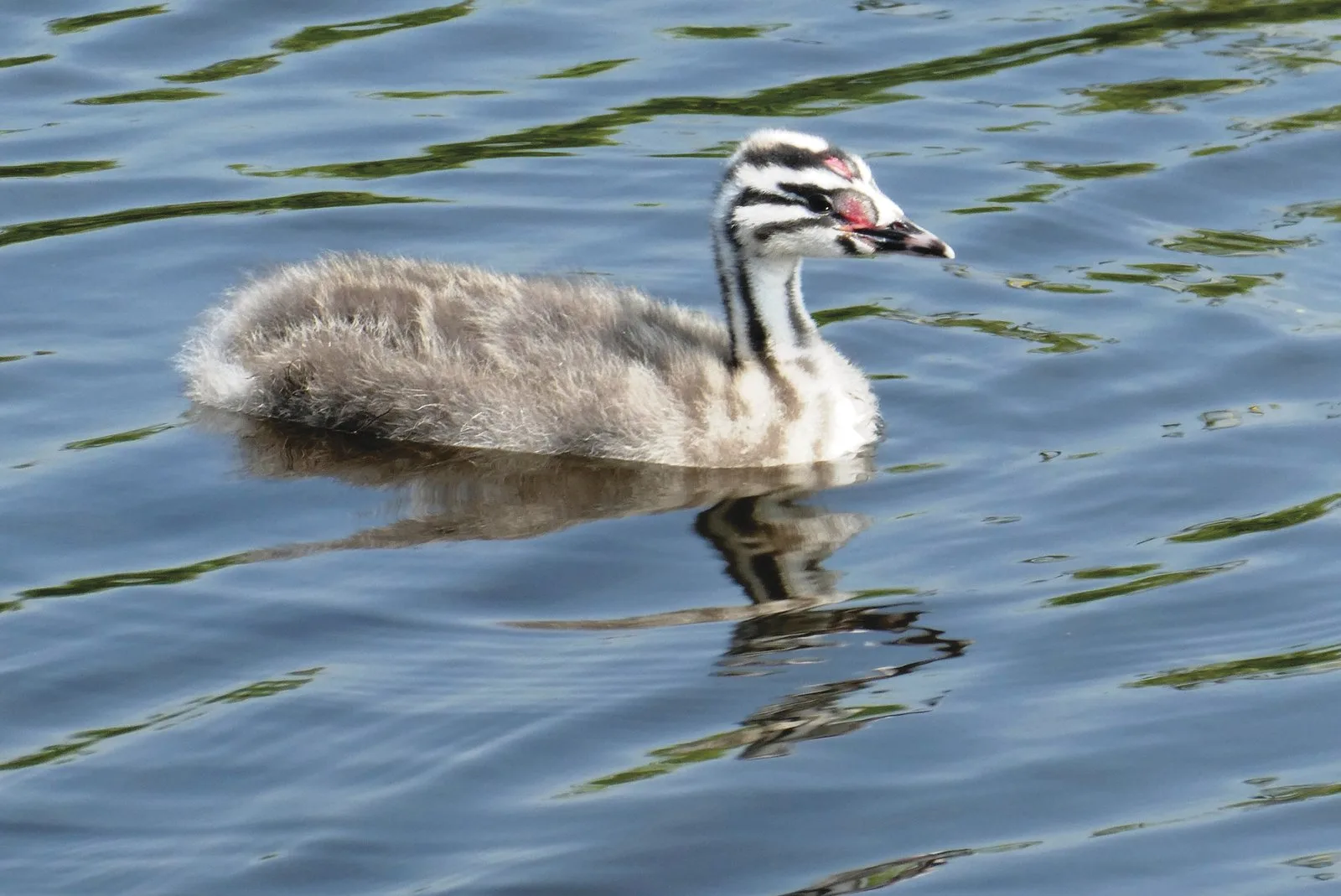
Each of the downy young ones looked like a different species altogether. The little guys were like humbugs. They had black and white stripes, a mainly red bill with two black bands, and a small red patch on the head.
By September the juveniles were about 65% of their parents’ size and had retained their stripey heads. One was coping well by itself while its sibling was having diving lessons with its dad.
If they decide to leave us for the winter they may well be among the hundreds I have seen in loose flocks off the south and east coast. Then again, they could end up further into Europe. Much of their lives and movement outside the breeding season remains a mystery.
Follow the Crane Spotter on X: @Crane_Spotter
This article first appeared in the October 2026 issue of Cranleigh Magazine. Pick up your free copy around the village, or read more at cranleighmagazine.co.uk.