
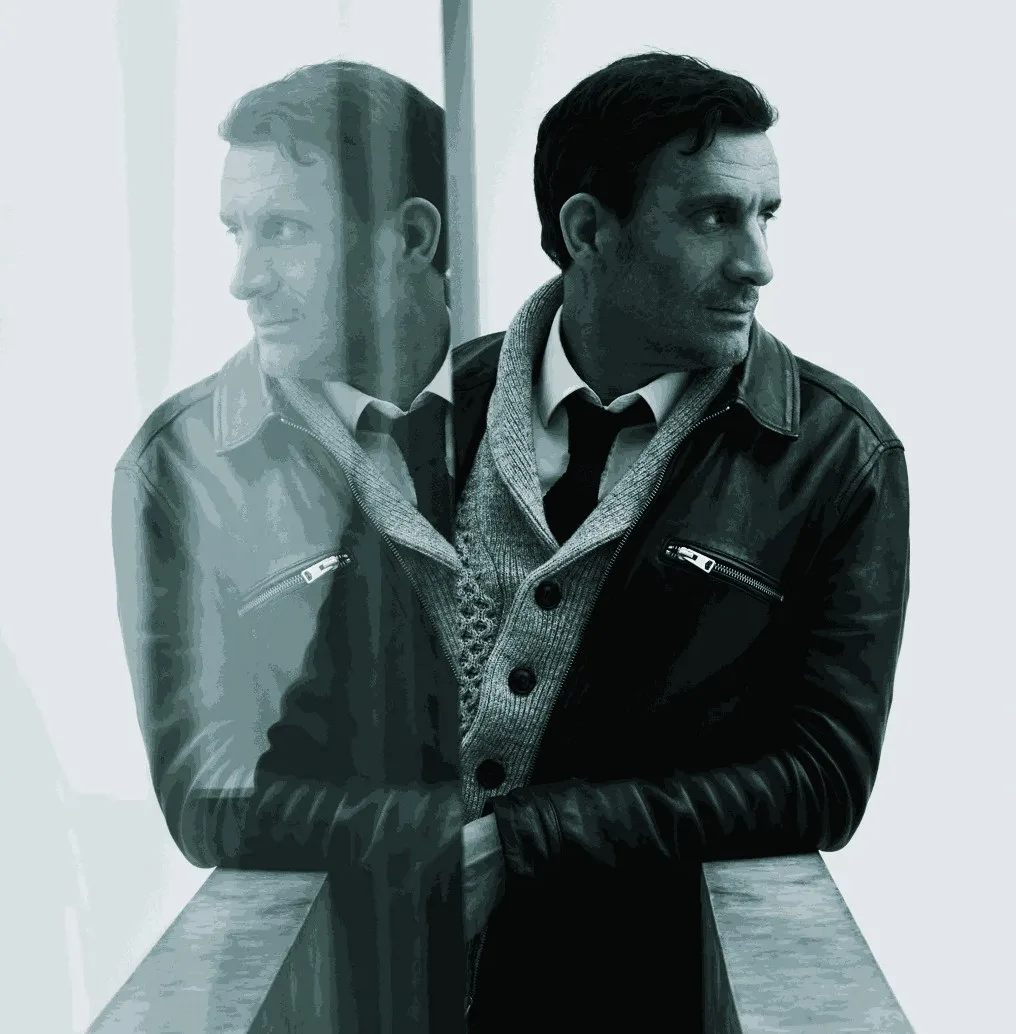
Each month our People Profile introduces someone who helps make Cranleigh what it is. What creates an artist? Is it in their genes, is it life experiences, or is it hours of learning their craft to reach perfection? This month, portrait painter Andrew Gow.
Who’s who?
When people ask where Andrew’s story begins, they are often surprised to learn that he was born on Aldershot Military Base in Surrey, in 1978. His father was posted there and taught at Sandhurst Military Academy as a signals instructor. Andrew remembers that he used to speak to the family in Morse code at the breakfast table.
His family history spans both soldiers and artists. His father, grandfather and brother all had military connections, while earlier generations included distinguished artists and academics. Further back there is another Andrew Gow who was Keeper of the Royal Academy Schools, and another who was a professor of classics at Cambridge. Andrew believes he has inherited both discipline and creativity, although it was art that quietly drew him from an early age.
The magic of paint
Andrew’s childhood was shaped by two cultures. His mother was Belgian and French was his first language. She instilled a strong sense of identity and pride in her heritage, while his father introduced him to painting.
Some of Andrew’s earliest memories are of watching his father work in watercolours, creating landscapes, portraits of houses and studies of light and place. To a young boy it seemed almost magical to watch a blank sheet of paper being transformed into an entire world. That sense of transformation has never left him.
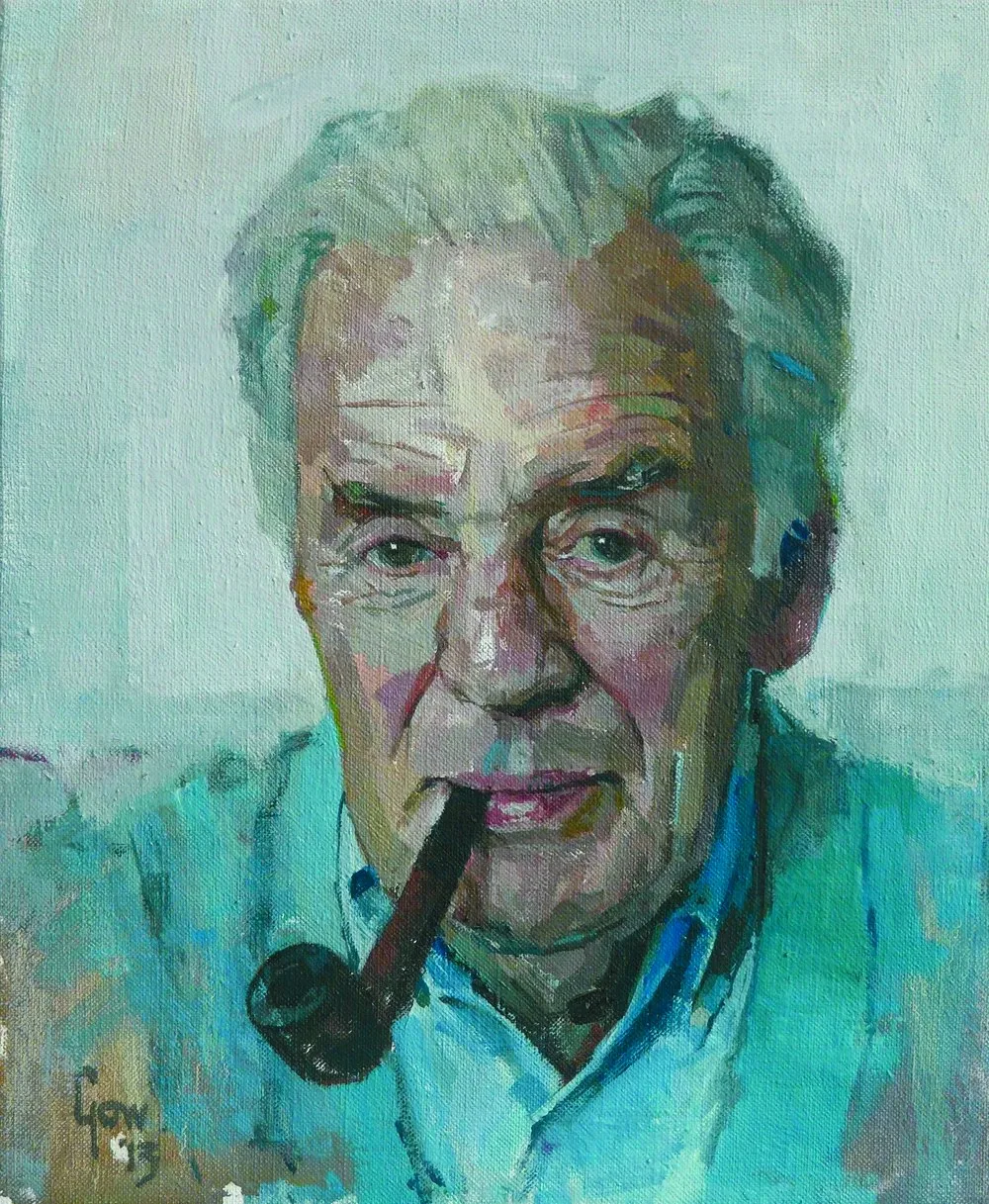
His father encouraged his interest from the beginning, providing sketchbooks, paints and the freedom to experiment. Andrew would draw constantly, not because he imagined becoming a professional artist, but simply because he loved the process.
School, however, proved far more challenging
At the age of eight, Andrew was sent to Horris Hill boarding school near Newbury. He was the fourth or fifth generation in his family to go there. What people imagine as privilege often felt very different in reality. As a sensitive child, deeply attached to his mother, he found leaving home at a young age profoundly unsettling. Will Young was a fellow pupil at the school, and did not enjoy it either.
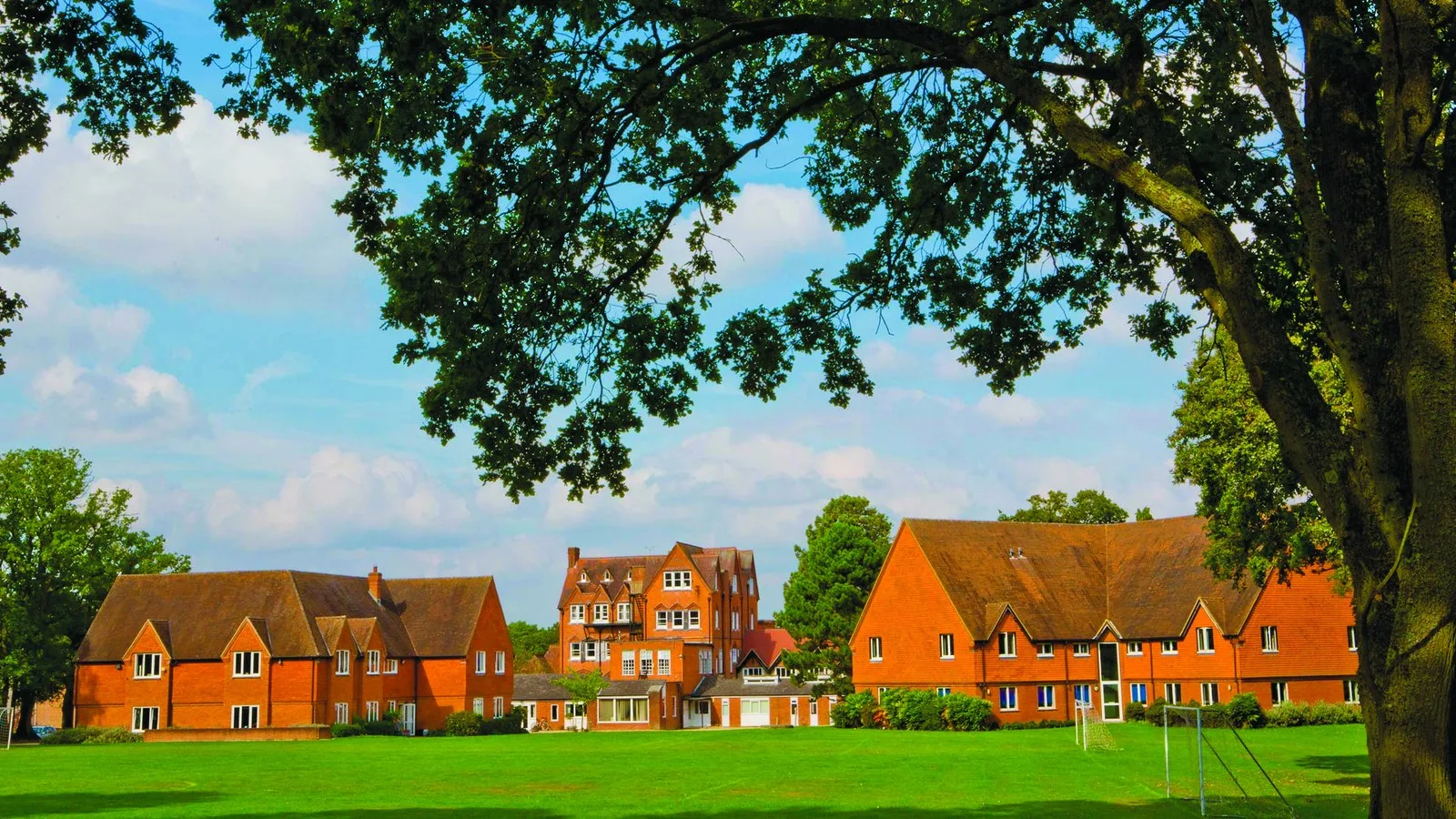
Senior school was considerably more difficult. Boarding life often resembled Lord of the Flies, with older boys dominating the environment and creating an atmosphere of intimidation and emotional pressure.
“School, however, proved far more challenging.”
Throughout those years, art became Andrew’s sanctuary. Across from the main school stood the art department, led by an eccentric Irish teacher who instinctively recognised what he needed. While other pupils immersed themselves in sport or the school’s hierarchy, Andrew escaped into drawing and painting. Although he never considered himself the most naturally talented student, he was always welcomed into the school’s art group, and that sense of belonging proved invaluable. It gave him the confidence to continue.
The art teacher had an expression, “It will be alright in the morning!”, and would have a go at students’ work himself overnight. He was also obsessed with the idea that the art school was haunted, and was once found visibly shaken after he had used a Ouija board alone at night and it had gone wrong.
America, and a change of direction
Everything changed again in 1994 when, at fifteen, his family moved to the United States, living just outside New York City in Connecticut. The move transformed him. His new school had a more encouraging and supportive approach to education. The shy, introverted teenager became increasingly confident, more academically engaged, and discovered a passion for sport. For the first time he felt capable of succeeding in several areas of life.
Andrew eventually went on to study History of Art at Williams College in Massachusetts. At the time he thought it best to study art academically, then pursue a more conventional career afterwards, perhaps in business or finance. Like many young people, he believed creativity and financial stability could not co-exist.
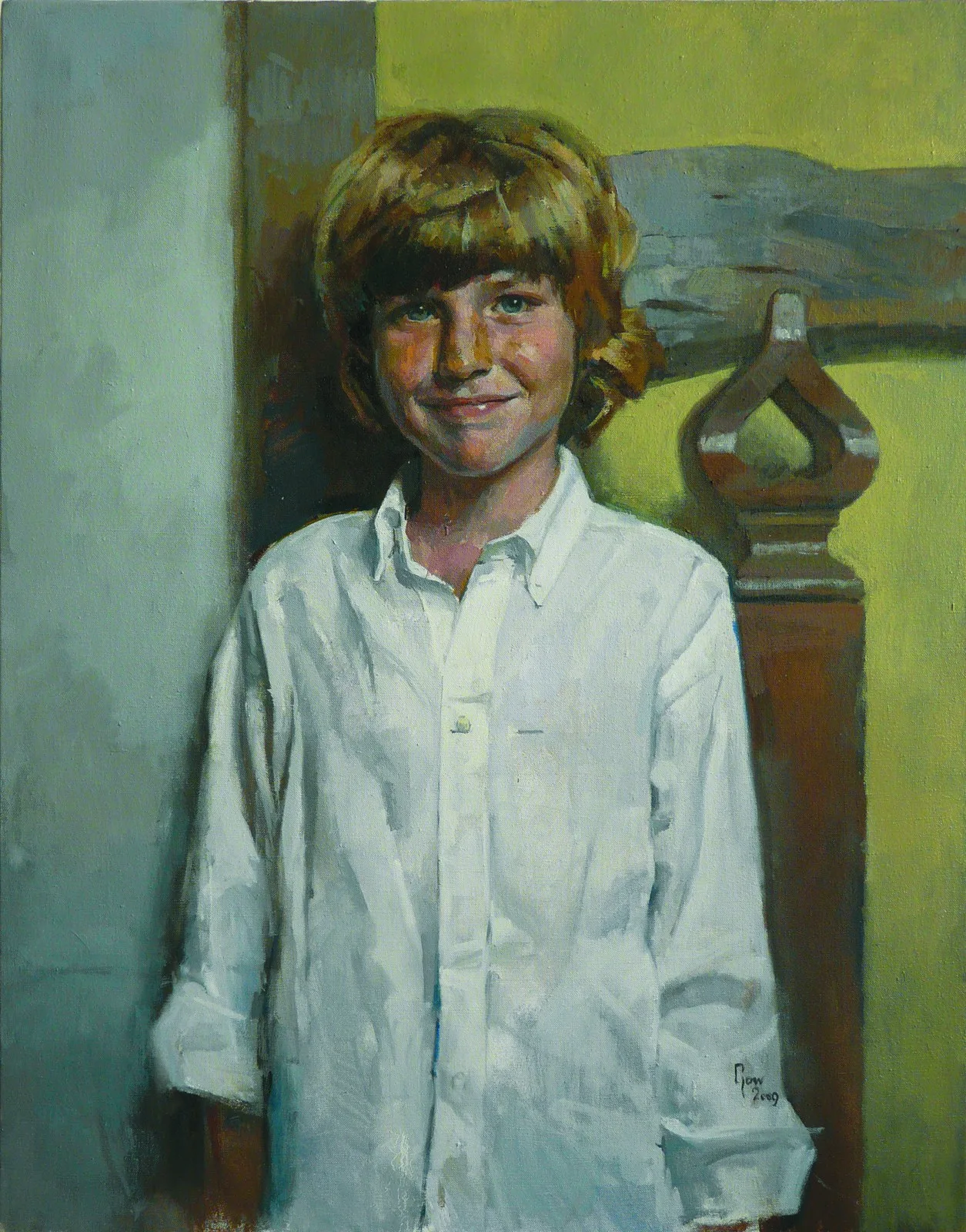
University, however, had other ideas. A remarkable new art facility had recently been built and Andrew found himself increasingly drawn back into making art. During a period studying in Paris he attended a traditional atelier where students drew and painted from life every day. The experience changed everything. He realised he did not want to stand outside art analysing it. He wanted to be inside it, creating it.
A decision that could not wait
Then life shifted again in the most profound way. His mother was diagnosed with cancer, and two years later she died, on the morning of his first solo exhibition. Despite their grief, the exhibition opened as planned.
Her death fundamentally changed Andrew’s outlook. His mother had been disciplined, deeply committed to her Catholic faith, and believed wholeheartedly in working hard today for rewards tomorrow. Yet she died at just 49. Watching that reality unfold forced him to confront a difficult question. What if the future you are working towards never arrives?
If he truly wanted to become an artist, he could not postpone the decision. There would never be a perfect moment. He moved to Florence to study portrait painting.
Cortona, and a very slow beginning
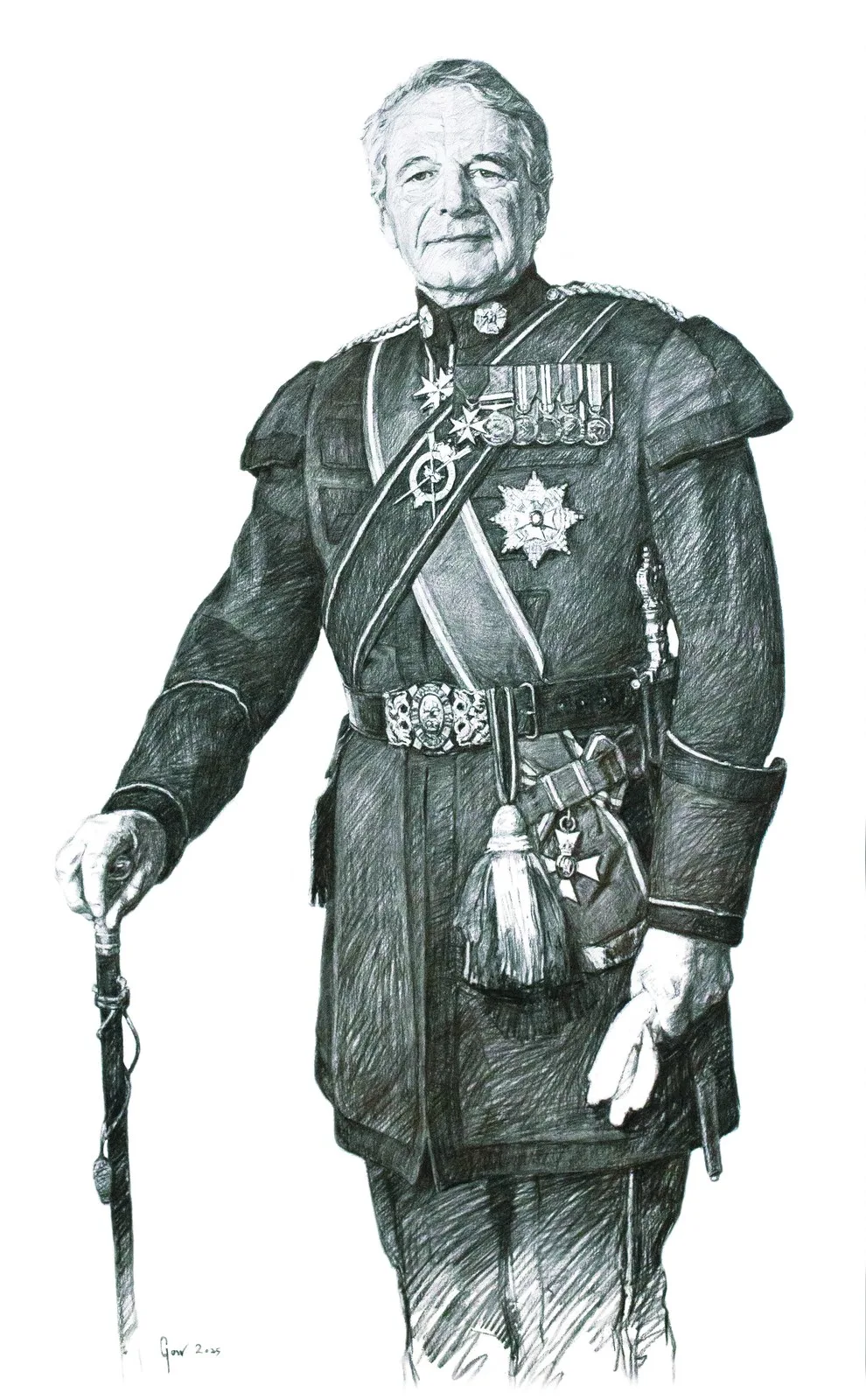
After his first year, Andrew earned enough income through small portrait commissions to finance a second year of study. Throughout the summer he painted continuously, producing portraits and studies while reinvesting every penny into his training. By the end of the second year he was working professionally. There was no dramatic breakthrough or defining moment, simply a steady progression built through persistence.
The early years were extremely difficult. He spent two years at art school in Florence, and when that ended he did not know where to go, so ended up by chance in Cortona in south east Tuscany, the town where St Francis of Assisi had his hermitage. There he lived in a small, freezing studio with little more than a mattress on the floor and a tiny electric heater that hardly worked. Winters were harsh, hot water was scarce and paintings filled every available space.
Yet he was never without work. One commission led quietly to another, recommendations spread, and gradually his reputation grew. He supported charities, attended fundraising events and accepted commissions that often paid very little. Although the process was slow, each opportunity created momentum, and eventually that momentum developed into a successful international career.
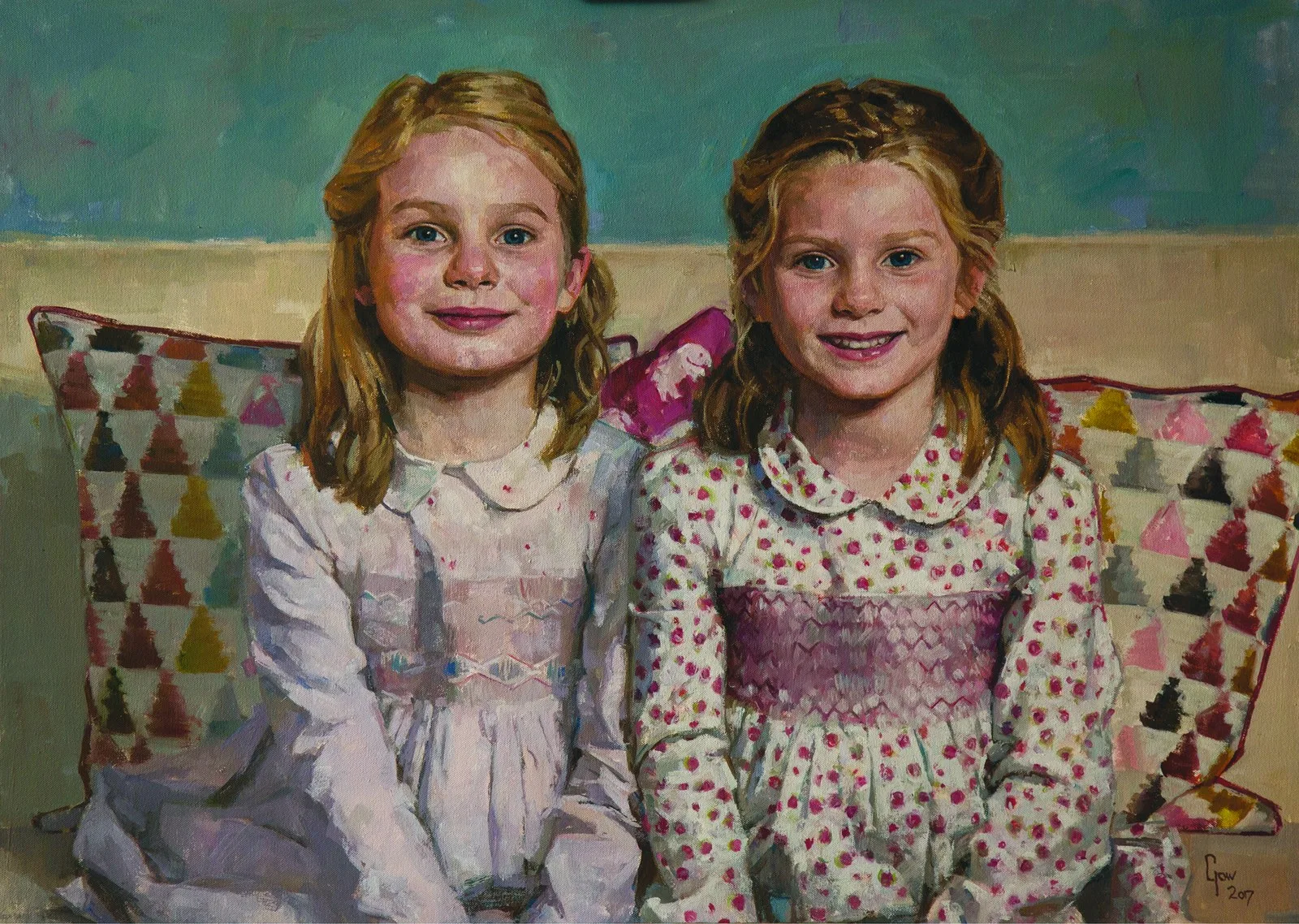
Today Andrew is frequently booked more than a year in advance, completing major portrait commissions throughout the UK, Europe and the United States. Despite this success, the foundation of his practice remains unchanged: one painting at a time, and one relationship at a time.
Every painting still feels like a new challenge
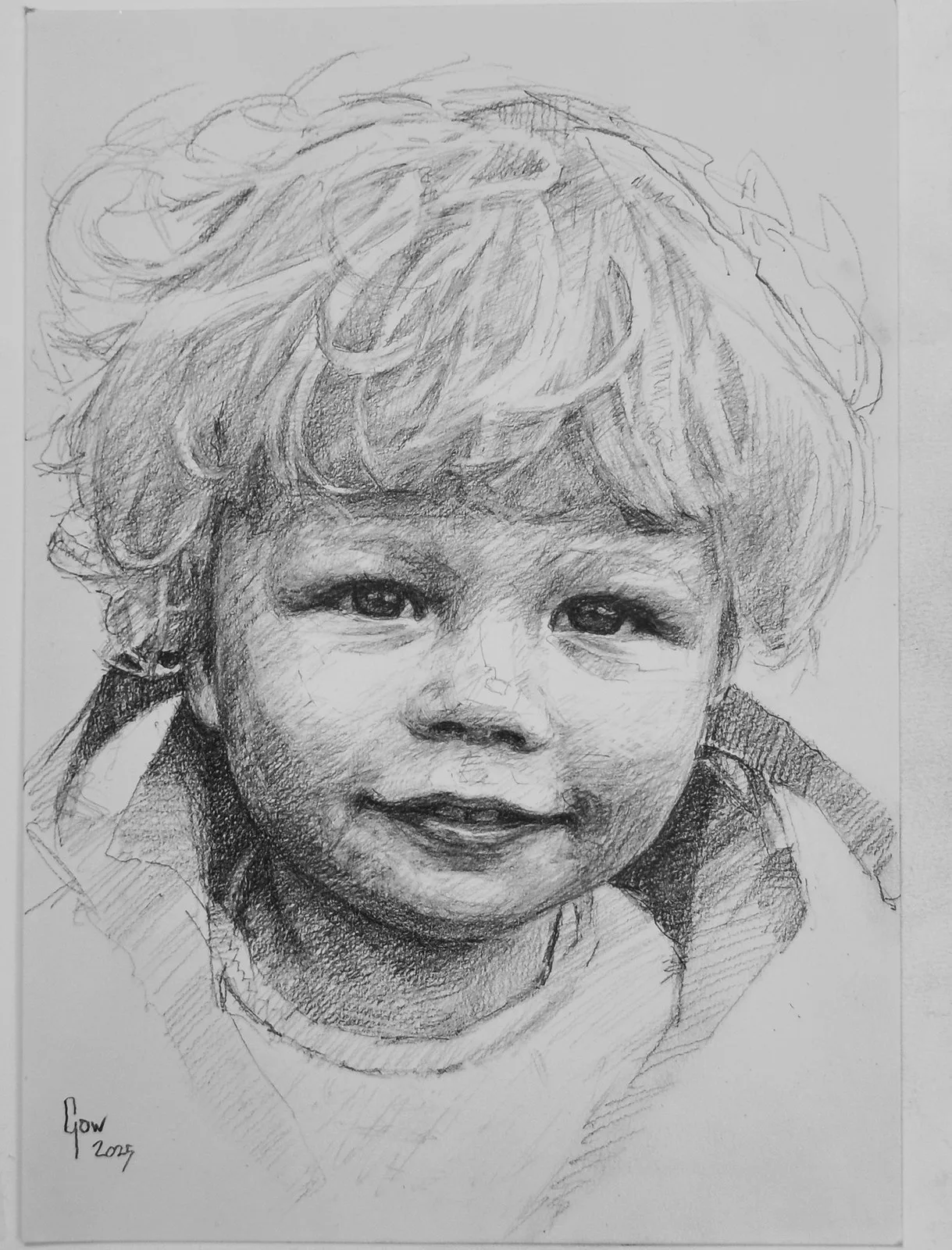
People often ask Andrew when he felt he had made it as an artist. His answer remains the same, because he does not think in those terms. Every painting still feels like a new challenge. The moment he assumes he knows what he is doing is the moment he risks losing it. Each canvas begins as a problem to solve. Paint is applied, observations made, adjustments follow, and slowly the image emerges through correction and careful observation.
“Every painting still feels like a new challenge.”
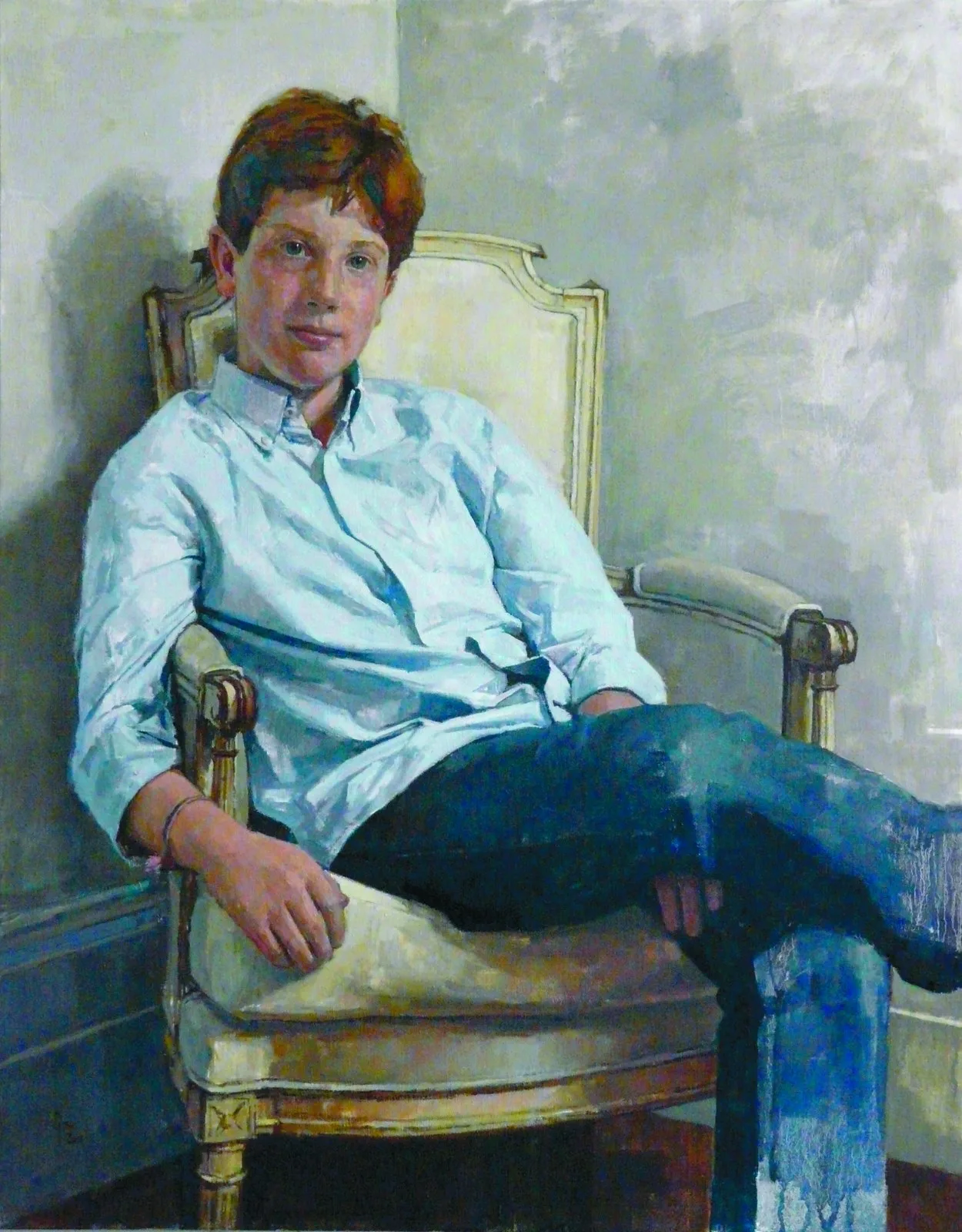
His painting has never been about certainty but about attention. Portraiture is not simply about achieving a physical likeness, because photography achieves that instantly. Instead he strives to capture something deeper, a person’s presence and a sense of who they are beyond appearance. He believes the eyes are the most important part of any portrait, because they carry something unspoken. If the eyes are right, the rest of the painting begins to fall into place. That is what he is constantly pursuing.
Andrew is deeply inspired by portrait painters of the late 19th and early 20th centuries, particularly the period immediately preceding the First World War: Gauguin, John Singer Sargent, Valentin Serov, William Orpen. He is fascinated by the tension that existed between tradition and modernity, between realism and expression. Artists were beginning to push beyond strict representation while retaining the physical presence of the subject. Achieving that balance between control and freedom remains something he aims to capture.
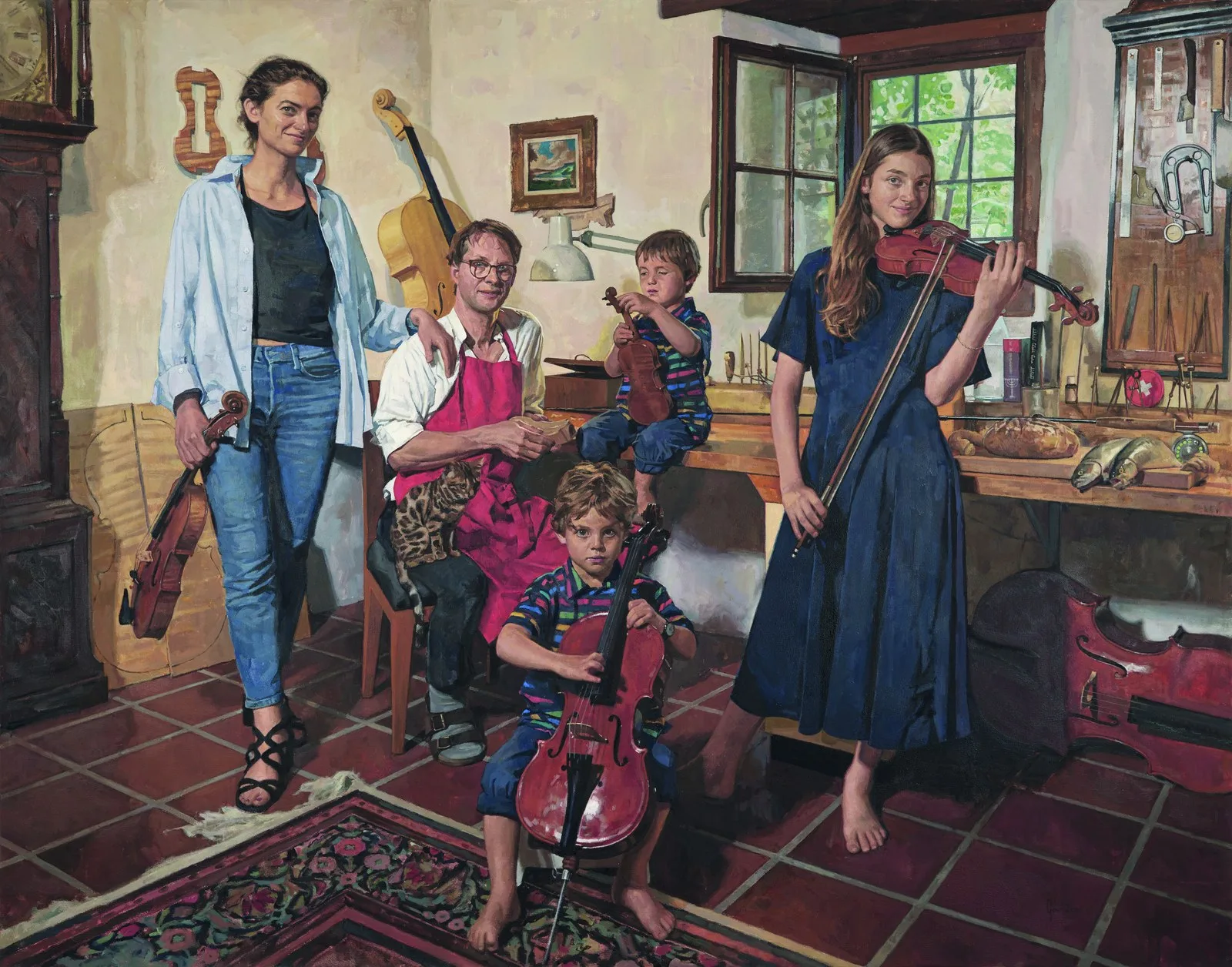
Grand Dukes, Cardinals, and a possible King
Over the years Andrew has been fortunate to have painted a wide range of people, including official commissions such as the Grand Duke of Luxembourg, whose portrait now hangs in the Luxembourg Parliament Chamber. There is only one picture there, and it is always of the reigning Grand Duke.
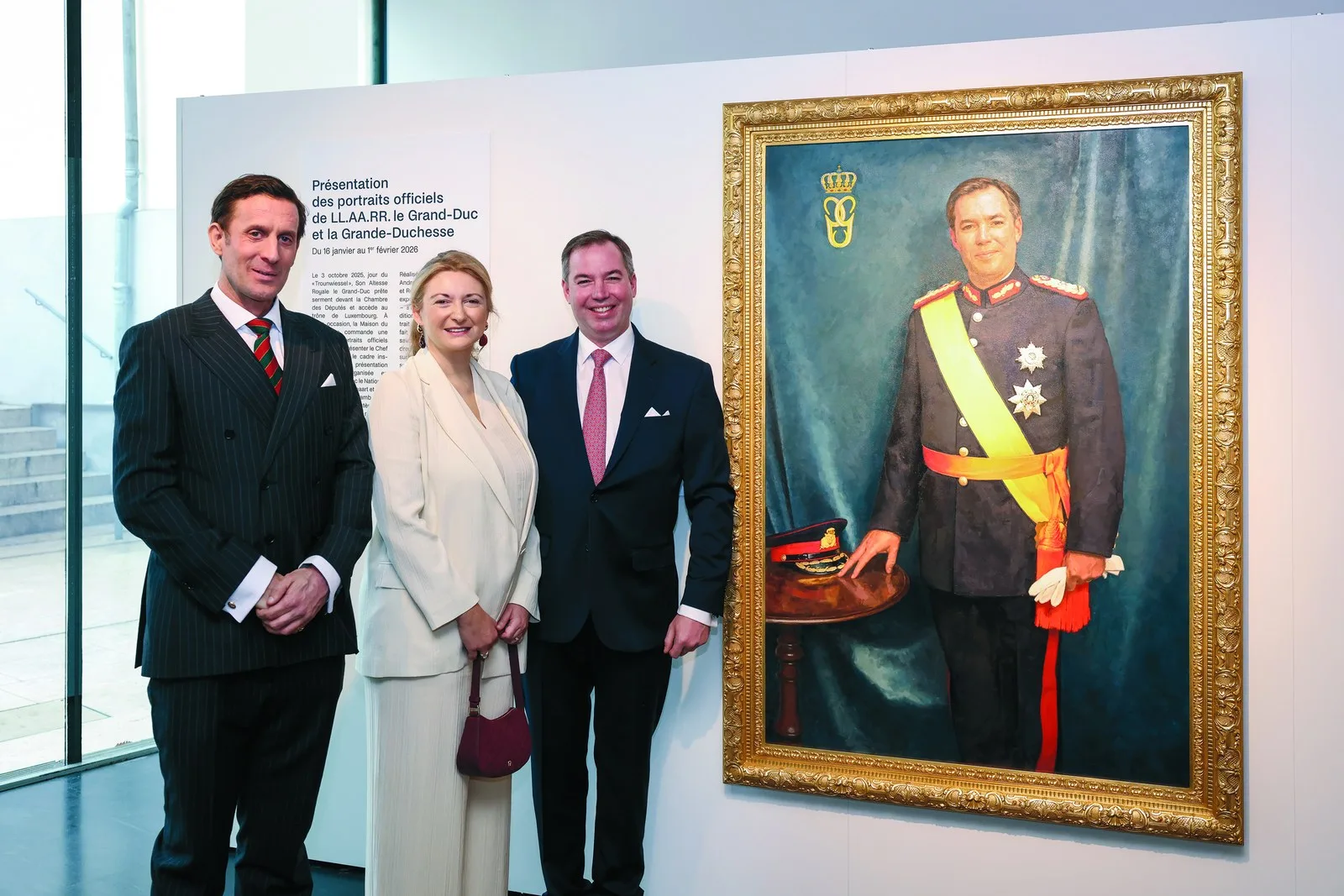
He is currently undertaking further commissions for members of the Grand Duke’s family, alongside significant projects in the United States. There is also the possibility of painting His Majesty The King, which would be an extraordinary honour.
Home is Surrey
Despite these international successes, Andrew remains firmly grounded. He lives in Cranleigh with his fiancée, in a modest home, and still walks the same countryside he explored as a child. Although he has lived in America and Italy, travelled widely and worked in places many people only dream of, he continues to find his greatest sense of peace in Surrey. Cranleigh in particular represents something of a full circle return.
“He continues to find his greatest sense of peace in Surrey.”
He says there is something deeply grounding about being back in this part of Surrey: the rhythm of the seasons, familiar country lanes, and the fields where he walks each morning with his dog Kylie, named after Kylie Minogue, an Australian Doodle. After years of travelling and the intensity of his career, it is here he feels most completely himself. It is not simply where he lives. It is home, and where he belongs.
Andrew has two separate artistic practices and lines of work, which he likens to being a Jekyll and Hyde. On the one hand there are his portraits, where he uses the very best of his ability to paint clients in a positive light. Then there is the work he does for himself, a completely separate body of work which he has shown at the Saatchi Gallery and the London Art Fair. That work is inspired by mythic and religious narratives, and is made as a critique of modern society.
Do not wait for permission
If Andrew were to offer advice to aspiring artists, it would be this. Do not wait for permission. Do not assume there is a perfect moment to begin. Start where you are, with what you have.
Understand that being an artist is not only about making work. It is about building a life around that work. You are not just a painter, you are also an entrepreneur. You have to learn how to communicate, to manage relationships, to sustain yourself financially and to navigate the realities of a creative career. Art school rarely teaches those skills.
Above all, Andrew believes every artist must discover their own voice. Technique matters, but it is not the destination. The real question is what you, as an artist, want to say, and why it matters to you. Everything else develops from that.
Looking back, Andrew does not see his life as a straight path. It has been shaped by chance, loss, opportunity and persistence. Painting has remained the constant thread throughout every chapter. Each day he returns to the studio, begins another canvas, and starts the process again. For Andrew, that is enough.
Contact Andrew Gow for paintings and portraits at andrewgow.co.uk, on Instagram @gow.artist, or on 07789 882830.
This article first appeared in the September 2026 issue of Cranleigh Magazine. Pick up your free copy around the village, or read more at cranleighmagazine.co.uk.