

In this month’s Wild Wonders, Miki Marks celebrates the beech, a tree of cathedral columns and bumper ‘mast’ years, and turns to readers’ garden photographs for a closer look at the small wonders on our doorsteps.
On a hot summer’s day a walk in a beech wood can be a shady relief. And there is seldom any undergrowth to plough through as there are few plants which can tolerate the beech’s summer shade. If a beech grows in an isolated position it makes a magnificent spreading specimen, but in a woodland situation the beautiful trunks rise silvery-grey like soaring cathedral columns. A sprawling network of surface roots anchor the trees to the ground, but because they are not deep rooted a beech is easily toppled in a strong gale. Many were lost in the gales in 1987. The trees can also be affected by drought because there are no roots to reach down deep below the surface for water.
The beech tree grows as a native tree only in Southern England and the South of Wales. It was much planted there and further north for shelter, timber for furniture and its landscape value in grand avenues and hill top clumps. In the past mattresses used to be stuffed with dry beech leaves, fragrant, comfortable but noisy. In France such mattresses were called lit de parliament because of the noise they made!
A bumper year for mast
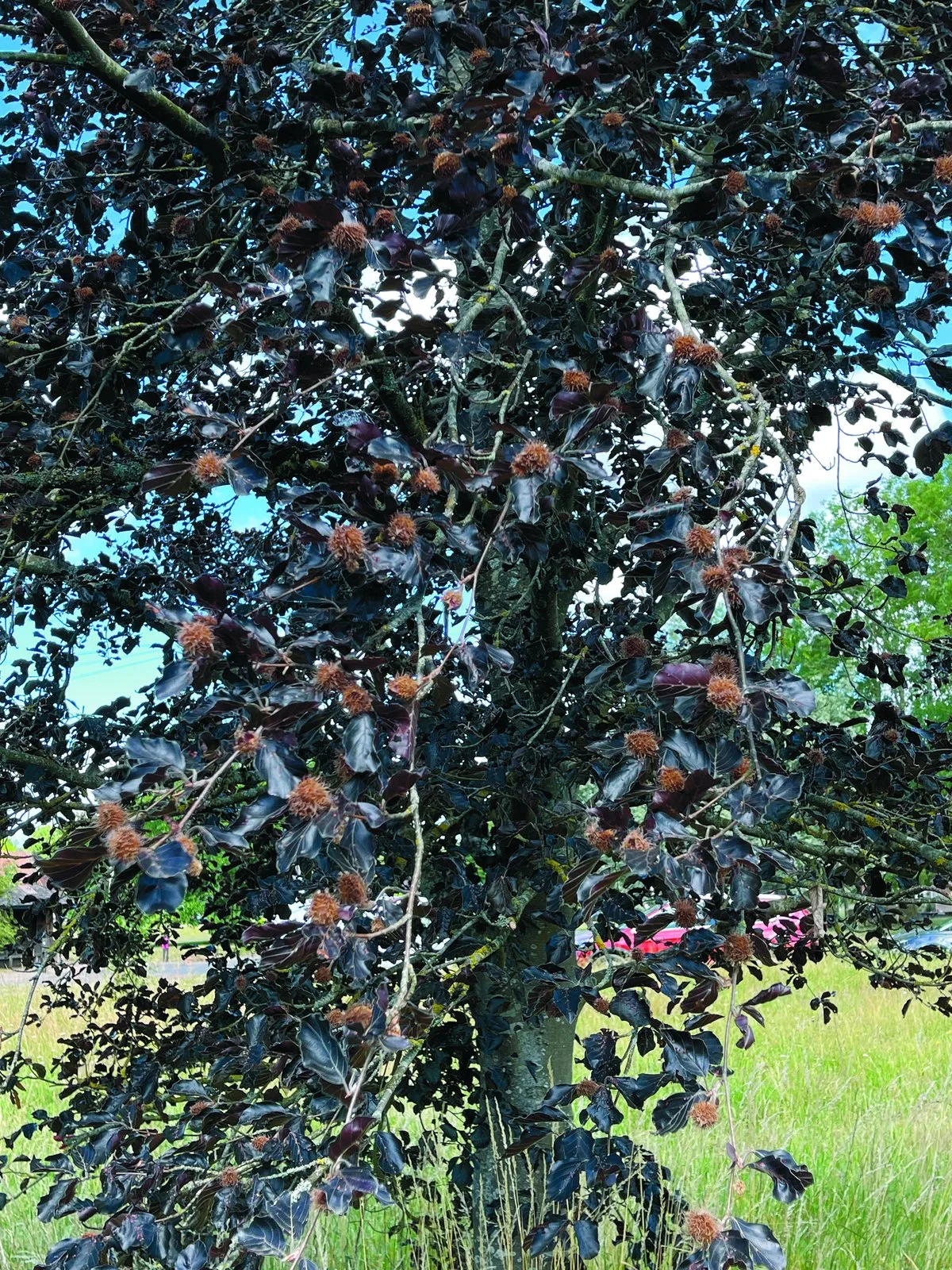
The photo shows a tree in Shamley Green which produced a great crop of potential mast. This is the name for fruit of the tree, as it is with oaks. The beech will produce a bumper crop perhaps every four to six years and scientists have explained that the trees do this to overwhelm the nut predators like mice, stoats, magpies, rats and squirrels. This is a strategy to produce more than the predators can eat some years (and make sure enough seedlings germinate) and some other years have a low nut production which controls the expansion of predator populations. Factors such as a warm dry spring and messages from the underground fungal networks are also involved.
Most beech trees are green and there are mixed feelings about which are called purple beech or copper beech, so named for its stunning autumn colour. Up goes the cry that these trees can’t be native but that’s not so. Purple versions of plants and trees occur naturally, nature does keep experimenting. It is the case that when nature throws up an interesting version, it is likely that it will then be purposely cultivated. The purple colour is caused by an excess of anthrocyanin pigments, which mask the green chlorophyll. The green colour facilitates photosynthesis but purple versions of many plants do not seem to have a problem. There are purple varieties of maple and hazel. We would not like to be without our purple maples on the Common in Cranleigh.
“Purple versions of plants and trees occur naturally, nature does keep experimenting.”
It is not uncommon for some trees and plants to produce different versions of themselves. This is nature experimenting, this is how evolution works. There are purple leafed versions of maple, hazel, beech, berberis, cotinus, plantain and ajuga. And many more.
Traditionally pigs were driven into a beech or oak forest to fatten on the nuts, this was called pannage, possibly from the early High German mash, meaning food. Rights to pannage were rigorously defended.
A garden guardian
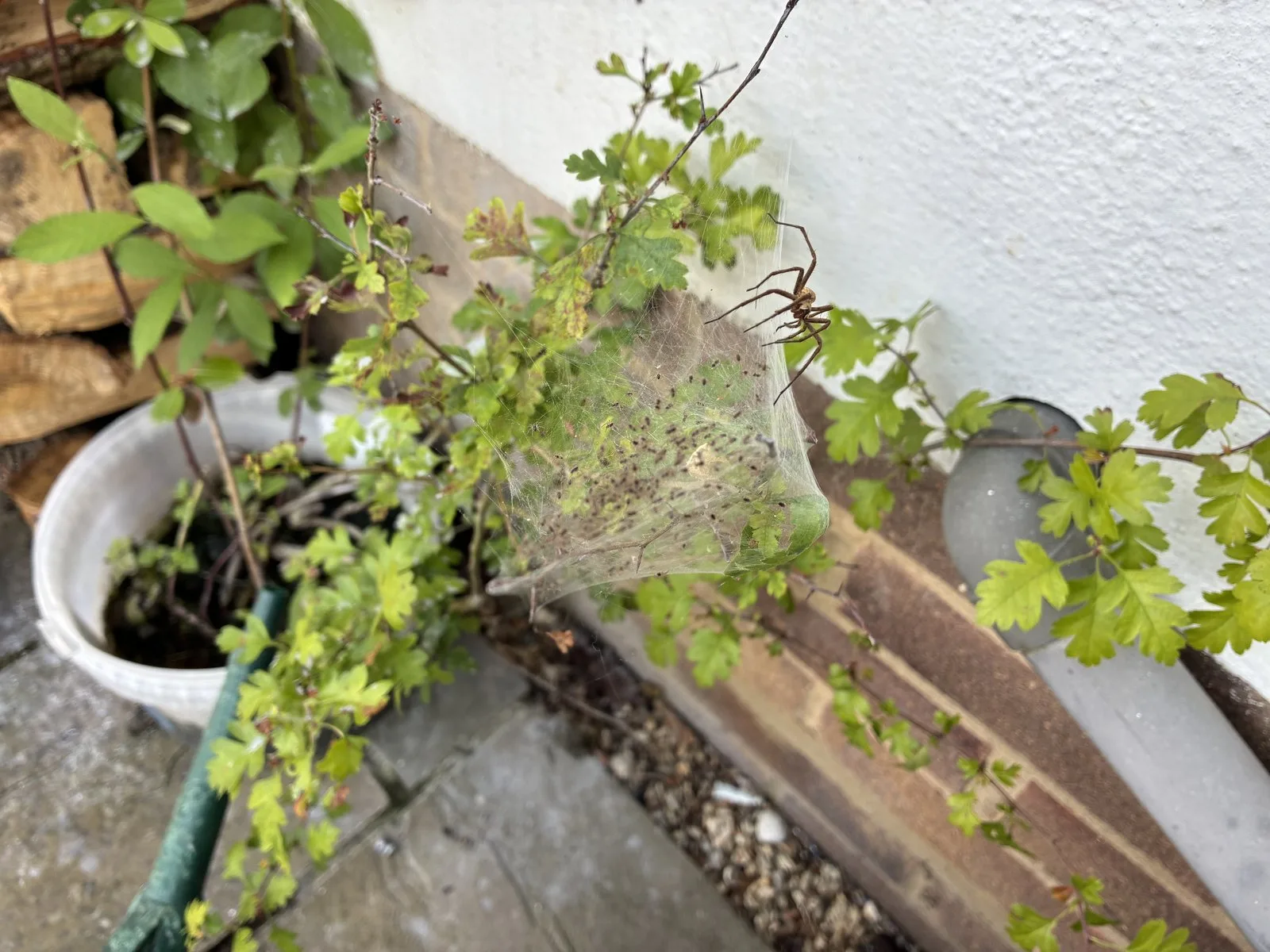
My friend Brenda sent me a couple of stunning photos taken in June in her garden in Cranleigh. The large spider (15 mm excluding the legs) is a Nursery Web female spider. This spider is quite common in gardens and grassland, but the female is not often spotted. When the eggs are about to hatch, the female spider builds a dense tent-like web and places her egg sac inside. If you look closely at the photo you can see the creamy-beige remains of this sac. She then stands guard by the web protecting the numerous little hatchlings.
The insects among us
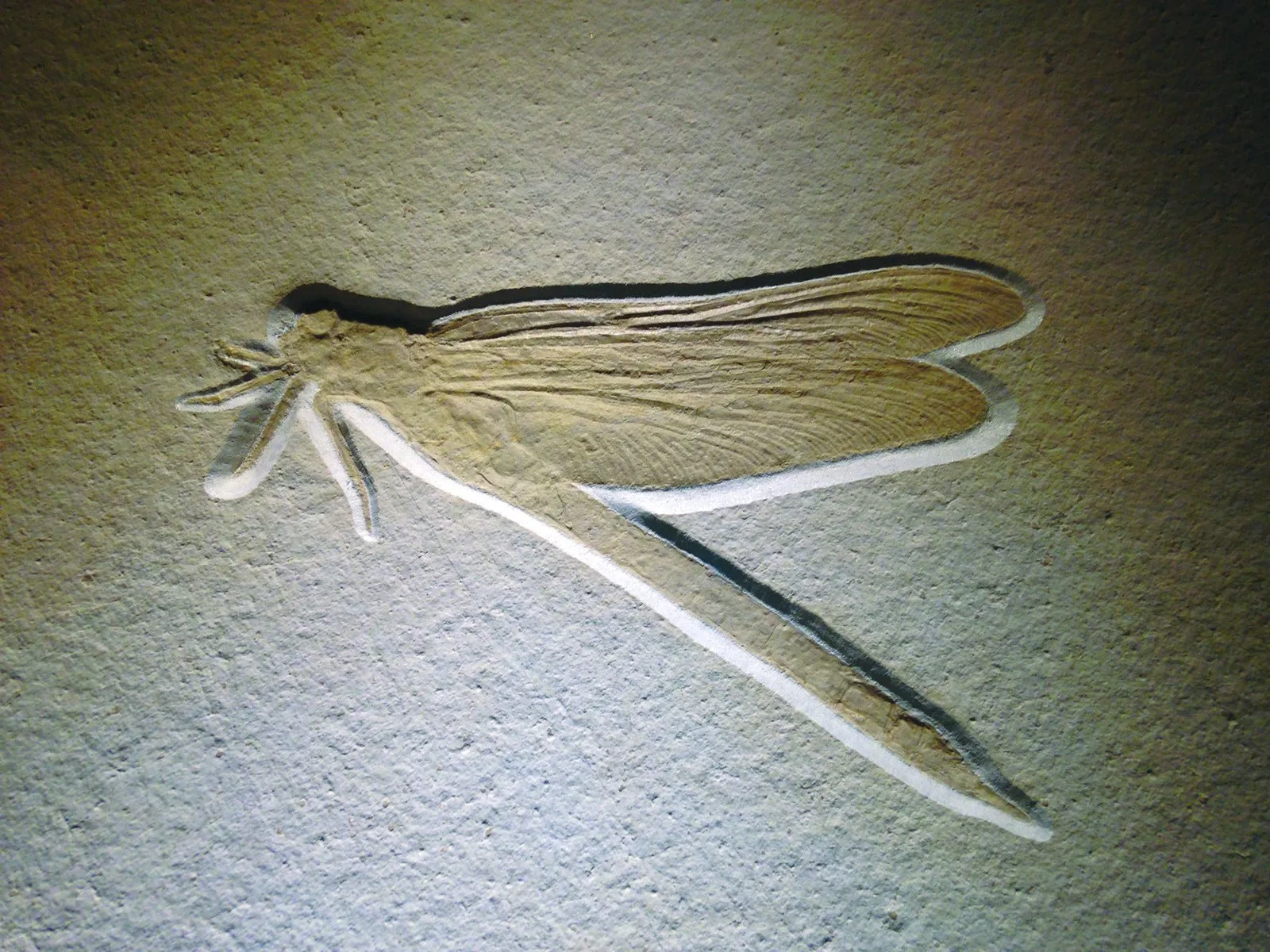
Fossils and specimens embedded in amber have shown us that there have been insects on this earth for several hundred million years. In this time they have developed into a highly varied group of creatures. They have conquered land, air and fresh water. And they are still evolving. Insects play a crucial role in the ecosystem and for centuries they were probably taken for granted. In the last few years there have been warning voices about their decline. A great deal of evidence comes from the so-called ‘windscreen’ test. People report that there are many fewer insects squashed on their car window. I spotted a letter in my newspaper with the following alternative explanation; it seems that modern cars are wind-tunnel designed, which takes insects over and around them. However, drive any distance in a car from the 1960s with its flat front and windscreen and you will be cleaning insects away all day. Thank you to Will Rumsey from Crowthorne for that.
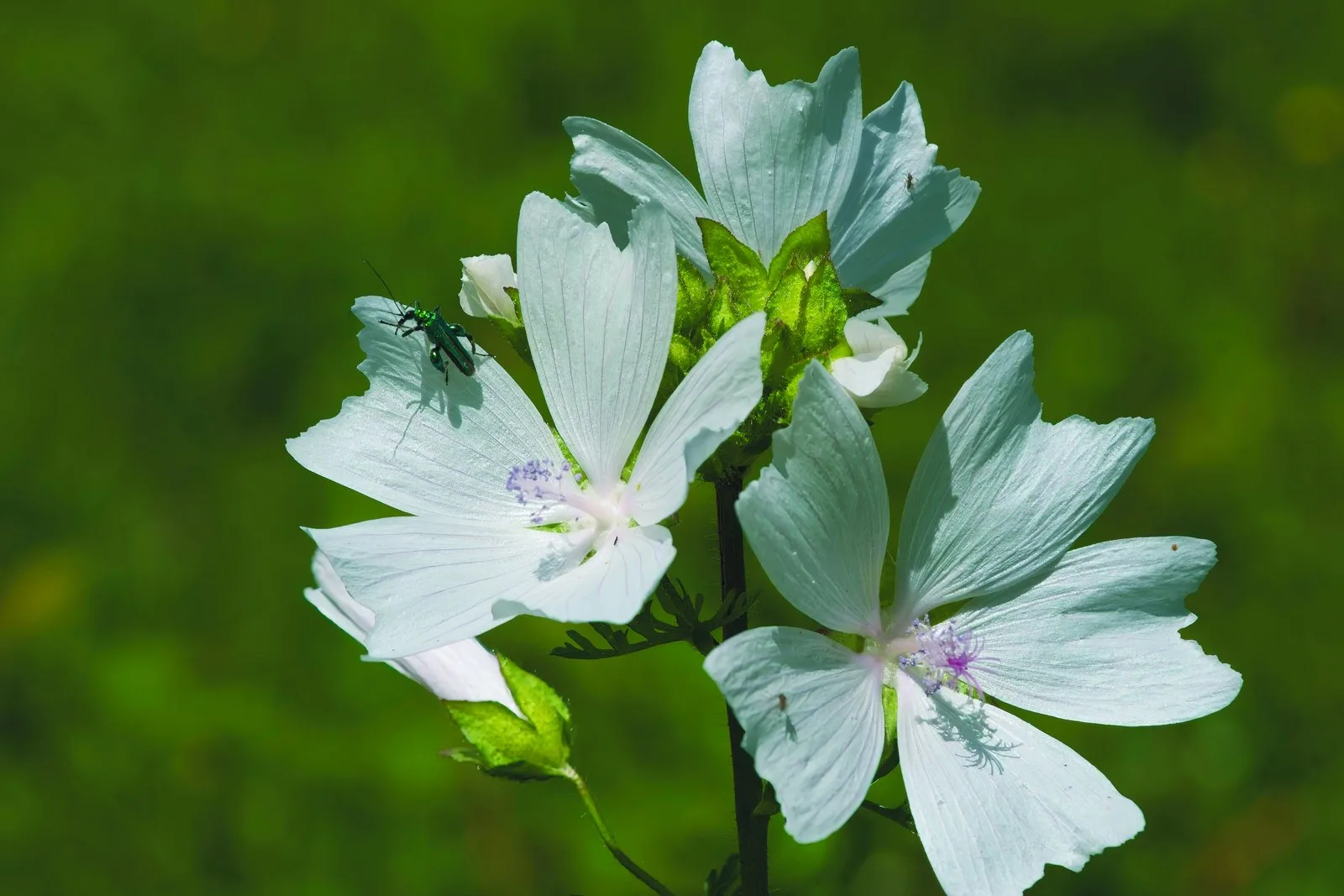
There are plenty of insects on the flowers in Beryl Harvey Field. The photo taken here is of the lovely white mallow flower, plus insects.
If you wish to volunteer at Beryl Harvey Fields, please contact [email protected].
This article first appeared in the August 2026 issue of Cranleigh Magazine. Pick up your free copy around the village, or read more at cranleighmagazine.co.uk.